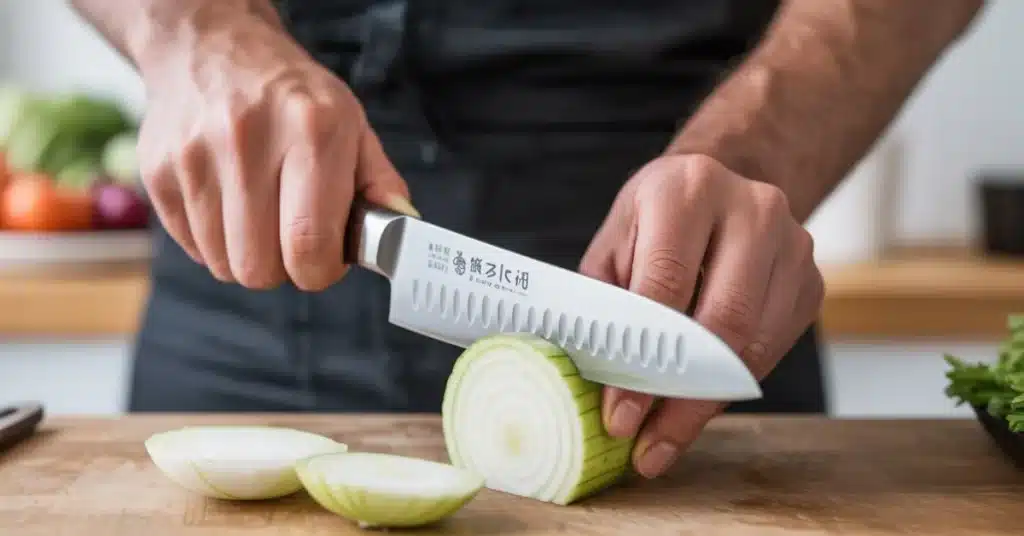
Japanese knives are incredibly sharp — but if you use them the wrong way, you can damage the blade or even hurt yourself.
If you’ve just bought a Japanese knife (or are planning to), it’s completely normal to feel unsure. They work differently from regular Western knives, and using the wrong technique can make cutting harder instead of easier.
The good news? You don’t need any professional skills to use them properly.
Once you learn a simple technique, using a Japanese knife can actually feel easier and more precise than a regular knife.
In this guide, you’ll learn a simple, step-by-step way to use Japanese knives safely and confidently — even if you’re a complete beginner.
What Makes Japanese Knives Different?
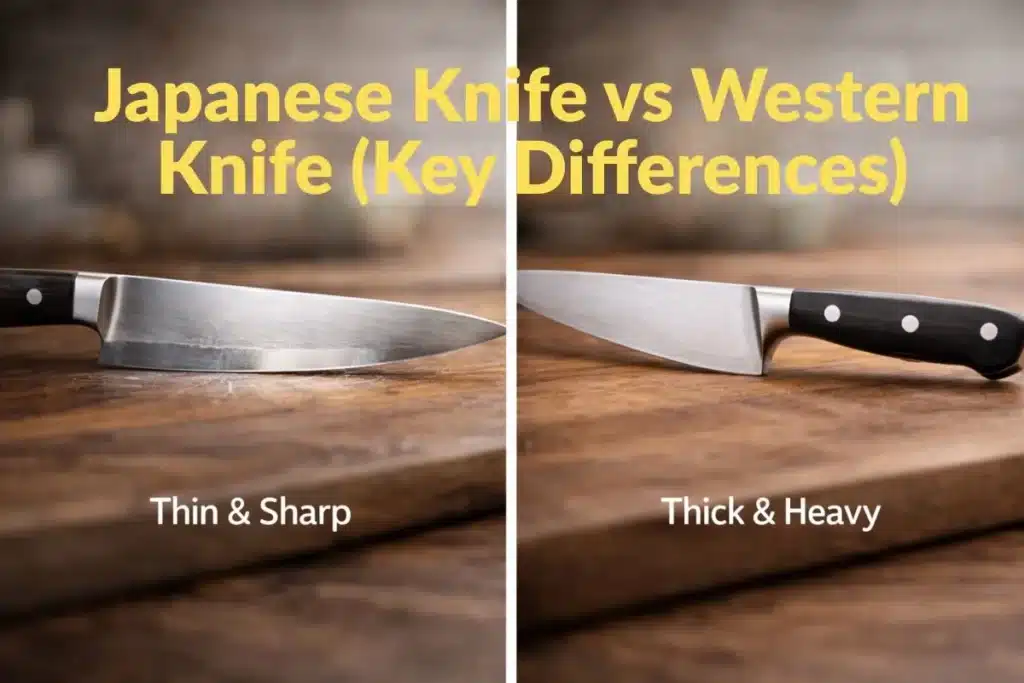
Japanese knives are designed for precision cutting, not force. They are often made with harder steel and thinner edges, which allows for sharper and more precise cuts. According to general knife design principles, blade material and hardness play a key role in cutting performance.
Here’s what makes them different:
- Thinner blades: Cut more cleanly but are more delicate
- Sharper edges: Need less pressure, so cutting feels easier
- Harder steel: Stay sharp longer but can chip if misused
Because of these features, Japanese knives work best with smooth, controlled cutting techniques instead of heavy chopping.
That’s why using the right technique is important.
For a deeper comparison, see our guide on Japanese vs Western knives.
How to Use a Japanese Knife Properly : Step-by-Step
To use a Japanese knife properly, hold it with a pinch grip, keep your food stable, and use a smooth push-cut motion. This method gives you better control, cleaner cuts, and helps protect the blade.
Follow these simple steps:
Step 1: Hold the Knife Correctly (Pinch Grip)
- Place your thumb and index finger on the blade (just in front of the handle)
- Wrap your remaining fingers around the handle
This grip gives you better control and more precise cuts.
Step 2: Position Your Food Properly
- Use a flat, non-slip cutting board
- Hold the food steady with your non-cutting hand
- Curl your fingers inward (this is called the claw grip)
This setup keeps your fingers safe and improves cutting accuracy.
Step 3: Use the Right Cutting Motion (Push Cut)
- Place the blade gently on the food
- Push the knife forward while slicing down
- Let the sharp edge do the work — don’t force it
Avoid aggressive chopping or heavy rocking. This can damage the blade.
A smooth push-cut makes cutting easier and more precise.
Quick Tip for Beginners
Start slow and focus on control, not speed.
Japanese knives are very sharp, so you don’t need to apply pressure.
For more tips, check out our knife safety rules guide.
Basic Japanese Knife Cutting Techniques
Japanese knives are designed for smooth, controlled cutting techniques, not forceful chopping. Proper technique plays a key role in safe and precise cutting, especially when using sharp kitchen tools.
Here are the main techniques you should know:
1. Push Cut (Most Important)
This is the primary technique used with Japanese knives.
- Start with the blade touching the food
- Push the knife forward while slicing down
- Keep the motion smooth and controlled
This method gives you clean, precise cuts and protects the blade.
If you’re a beginner, start with this technique first.
2. Pull Slice
This technique works best for softer foods like fish, herbs, or cooked meat.
- Place the blade gently on the food
- Pull the knife toward you while slicing
This creates thin, even slices — ideal for delicate ingredients.
3. Minimal Rocking (Use Carefully)
Japanese knives are not designed for heavy rocking like Western chef knives.
- Use slight rocking only for soft ingredients like herbs
- Avoid aggressive back-and-forth motion
Too much rocking can chip the blade or make it dull faster.
When in doubt, stick to push cutting.
To learn which knife works best for each technique, see our guide on knife types and uses.
How to Use Different Japanese Knives
Not all Japanese knives work the same way. Each one is designed for a specific task.
Here’s how to use the most common types:
How to Use a Santoku Knife
The Santoku knife is one of the easiest Japanese knives to use — perfect for beginners.
Best for:
- Vegetables
- Boneless meat
- Everyday kitchen tasks
How to use it:
- Use a smooth push-cut motion
- Keep your cuts short and controlled
- Use it for slicing, dicing, and chopping
If you’re new, this is the best knife to start with.
You can also explore our top picks in best Japanese knife sets.
How to Use a Nakiri Knife
The Nakiri knife is designed specifically for cutting vegetables.
Best for:
- Chopping vegetables
- Cutting leafy greens
- Straight, clean cuts
How to use it:
- Use a straight up-and-down push motion
- Keep the blade flat against the cutting board
- Avoid rocking the knife
This gives you clean cuts without crushing the vegetables.
Learn more in our guide on what is a Nakiri knife used for.
How to Use a Gyuto Knife
The Gyuto is the Japanese version of a chef’s knife.
Best for:
- Slicing meat
- Cutting fish
- Multi-purpose tasks
How to use it:
- Use a mix of push cutting and slight rocking
- Use longer, smooth strokes for slicing
It’s more versatile, but it may take a little practice to control.
For more details, see what is a chef’s knife used for.
Quick Tip: Which Knife Should Beginners Use?
If you’re just starting out, go with a Santoku knife.
- Easy to control
- Safer for beginners
- Works well for most kitchen tasks
Once you feel comfortable, you can try other knives like Nakiri or Gyuto.
Real Kitchen Examples: How to Actually Use Japanese Knives
Now let’s make things practical.
Here’s how you can use a Japanese knife in real cooking situations — step by step.
How to Cut Onions
Onions are one of the most common ingredients in any kitchen.
Here’s the right way to cut them:
- Slice the onion in half and place it flat on the board
- Hold it steady using a claw grip
- Use a gentle push-cut motion
- Make smooth, forward strokes instead of chopping
This method gives you clean slices without crushing the onion.
How to Chop Vegetables
Japanese knives work especially well for vegetables — especially Santoku and Nakiri knives.
- Keep the knife straight
- Use a smooth push-down motion
- Avoid rocking the blade
- Let the sharp edge glide through the food
This helps you get neat, even cuts and keeps vegetables looking fresh.
How to Slice Meat
When cutting meat, control and precision matter most.
- Use longer, smooth strokes
- Gently push or pull the knife while slicing
- Avoid sawing back and forth aggressively
This keeps the meat fibers intact and gives you cleaner, more even slices.
Quick Tip
Always let the knife do the work. Japanese knives are very sharp — so you don’t need to apply pressure. This makes cutting easier and safer.
Common Mistakes to Avoid
Most beginners make these mistakes — and they can damage your knife quickly.
❌ Using Too Much Force
Japanese knives are extremely sharp.
You don’t need to apply pressure — just let the blade do the work.
Using force can damage the edge and make cutting harder.
❌ Rock Chopping Aggressively
Heavy rocking is common with Western knives — but not with Japanese knives.
- Avoid aggressive back-and-forth motion
- Don’t press the blade down forcefully
Too much rocking can chip the blade or dull it faster.
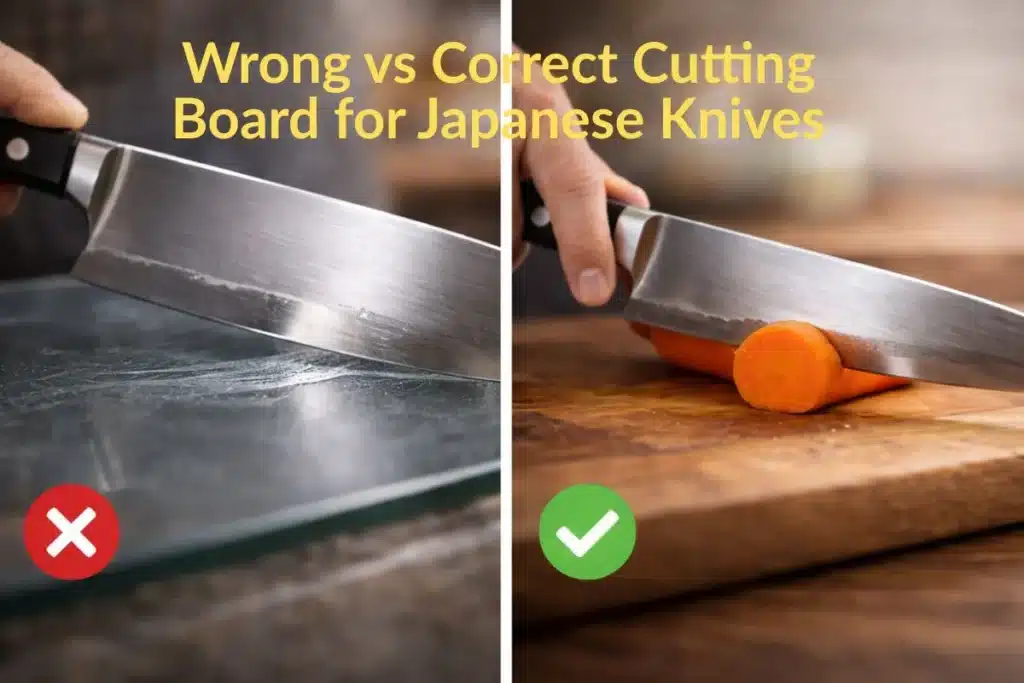
❌ Using the Wrong Cutting Surface
The surface you cut on matters more than you think.
Avoid:
- Glass cutting boards
- Stone or hard surfaces
Always use a wooden or plastic cutting board to protect the blade.
❌ Not Drying the Knife
Leaving moisture on the blade can lead to rust — especially with high-carbon steel.
- Wash your knife by hand
- Dry it immediately with a soft towel
This simple habit keeps your knife in good condition.
Quick Tip
If something feels hard to cut, don’t force it. Instead, check your technique — or make sure you’re using the right knife for the job.
Safety Tips When Using Japanese Knives
Japanese knives can feel intimidating at first. But don’t worry — using them safely is simple if you follow a few basic rules. Following proper kitchen safety practices can help reduce the risk of cuts and injuries.
Use the Claw Grip
- Curl your fingers inward
- Keep your fingertips tucked away from the blade
This simple technique helps protect your fingers while cutting.
Keep Your Cutting Board Stable
- Use a non-slip cutting board
- Place a damp towel underneath if needed
A stable surface prevents slipping and reduces accidents.
Cut Slowly and With Control
- Don’t rush your cuts
- Focus on accuracy, not speed
Speed will come naturally as you get more comfortable.
Stay Aware of the Blade
Japanese knives are thinner and sharper than regular knives.
Always pay attention to where the blade is moving.
Confidence Tip for Beginners
If you feel nervous, that’s completely normal.
Start slow, practice basic cuts, and build your confidence step by step.
Once you get used to it, using a Japanese knife actually feels easier than a regular kitchen knife.
For more detailed safety tips, check out our knife safety tips and storage guide.
How to Care for Japanese Knives After Use
Taking care of your Japanese knife is just as important as using it correctly.
These knives can stay sharp for a long time — but only if you maintain them properly.
Clean It Properly
- Wash your knife by hand after each use
- Use mild soap and warm water
- Avoid putting it in the dishwasher
Dishwashers can damage both the blade and the handle.
Dry It Immediately
- Dry your knife right after washing
- Use a soft cloth or towel
This helps prevent rust, especially with high-carbon steel knives.
Store It Safely
- Use a knife block, magnetic strip, or blade guard
- Avoid tossing it into a drawer
Proper storage protects the blade and keeps your kitchen safer.
Keep It Sharp
- Use a whetstone or a proper knife sharpener
- Sharpen it regularly — don’t wait until it gets dull
A sharp knife is safer, easier to control, and more efficient.
Quick Tip
Good care = better performance. If you clean, dry, and store your knife properly, it will last for years without losing its sharpness.
For a complete guide, check out our knife sharpening and maintenance guide.
Who Should Use Japanese Knives?
Japanese knives are ideal for beginners and home cooks who want precise, clean cuts with less effort. They are best for light to medium kitchen tasks, not heavy-duty work.
Here’s who should use them:
Great for Beginners
- Easy to control once you learn the basics
- Require less force while cutting
- Help you make cleaner, more precise cuts
A Santoku knife is usually the best starting point.
Perfect for Precision Cooking
- Ideal for vegetables, fish, and fine slicing
- Great for clean, neat cuts
- Suitable for cooks who value accuracy and control
If you enjoy detailed, clean cuts, Japanese knives are a great choice.
❌ Not Ideal For
Japanese knives are not designed for heavy-duty tasks.
Avoid using them for:
- Cutting bones
- Frozen foods
- Hard or tough materials
These knives are built for precision — not brute force.
Quick Tip
Use the right knife for the right job. This helps your knife last longer and keeps your cuts clean and safe.
Recommended Knife for Beginners
A Santoku knife is the best choice for beginners because it is easy to control and works well for most kitchen tasks. It helps you learn proper cutting techniques quickly without using much force.
Here’s why it’s a great option:
- Lightweight and easy to handle
- Simple to control, even for new users
- Suitable for vegetables, meat, and everyday cooking
This makes it ideal for learning basic knife skills without feeling overwhelmed.
Quick Tip
Start with one good knife — you don’t need a full set right away. As your skills improve, you can try other types of Japanese knives.
You can explore our picks in best kitchen knives or learn more in best Japanese knife brands.
FAQs About Using Japanese Knives
Are Japanese knives good for beginners?
Yes, Japanese knives are good for beginners because they are sharp, easy to control, and require less force. Once you learn basic techniques, they often feel easier to use than Western knives.
Can you rock chop with a Japanese knife?
You can use light rocking, but heavy rock chopping is not recommended. A push-cut motion works better and helps protect the blade.
Why are Japanese knives so sharp?
Japanese knives are sharp because they use harder steel and thinner edges. This design allows for cleaner, more precise cuts.
Are Japanese knives fragile?
Japanese knives are more delicate than Western knives because of their thin blades. Using proper techniques helps prevent chipping or damage.
What should you avoid when using Japanese knives?
Avoid using Japanese knives for hard or heavy tasks.
- Cutting bones or frozen foods
- Using glass or hard cutting boards
- Applying too much force
These mistakes can damage the blade and reduce performance.
Final Thoughts
Using a Japanese knife doesn’t have to be complicated.
Start with the basics, practice simple techniques, and focus on control instead of speed.
With a little practice, you’ll find that cutting becomes smoother, more precise, and easier to manage.
Take your time, stay safe, and let the knife do the work.