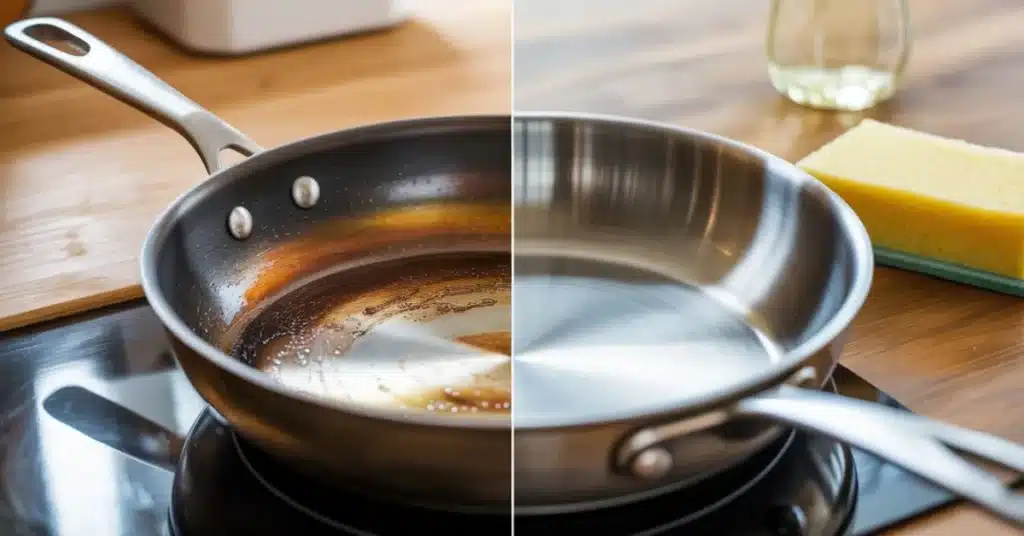
stainless steel pans are amazing to cook with. They heat evenly, look sleek on the stove, and can last for many years. But if you have ever ended up with burnt bits, brown rings, or strange rainbow colors on your pan, you know one thing for sure—cleaning stainless steel can feel confusing.
Should you use vinegar or baking soda? Is the Bar Keeper’s Friend safe? Will you scratch the surface if you scrub too hard? Many home cooks in the United States face the same problems and worry they might ruin their expensive cookware.
This guide will show you exactly how to clean stainless steel cookware the right way, without scratching it. You will learn how to handle daily cleaning, remove burnt food, fix brown and rainbow stains, deal with hard water marks, and bring back a bright, mirror-like shine. You will also see which products are safe—and which ones you should never use.
If your pans look dull, sticky, or stained right now, don’t worry. With a few simple steps and common kitchen items, you can make them look almost new again. Let’s start with a quick answer for busy readers, then move into step-by-step methods you can follow today.
Quick Answer: How to Clean Stainless Steel Cookware
The easiest way to clean stainless steel cookware is to wash it with warm water, mild dish soap, and a soft sponge. For burnt residue or brown stains, soak the pan with vinegar, use a baking soda paste, or apply Bar Keeper’s Friend (BKF) to restore shine without scratching the surface.
Before we learn the full cleaning process, it helps to understand why stainless steel gets dirty. Knowing the cause makes cleaning much easier.
Why Stainless Steel Cookware Gets Dirty
Stainless steel is strong and long-lasting. But heat, oil, water, and food can react with the metal in different ways. These reactions create stains, color changes, or sticky spots. When you know why this happens, you can clean your cookware the right way and keep it looking new for many years.
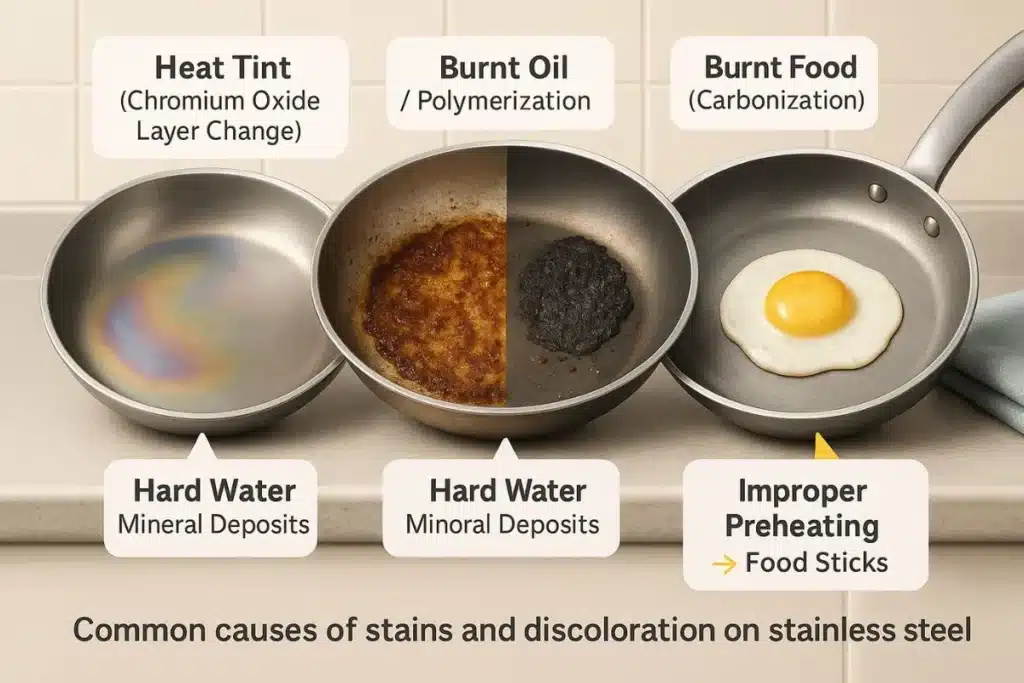
1. Food Residue and Oil Build-Up (Brown Sticky Layer)
When cooking oil gets too hot, it passes its smoke point. At this stage, the oil changes into a hard, sticky layer. This is called polymerization.
You may see:
- brown stains
- sticky residue
- dull patches
These layers bond tightly to the metal, so normal dish soap cannot remove them. This is one of the most common issues people face with stainless steel pans.
2. Burnt Food and Carbonization
Burnt food forms when the heat is too high for too long. As food dries out, it turns into a dark carbon layer that sticks to the pan.
This happens because:
- heat removes moisture from food
- sugars go through the Maillard reaction, which causes browning
- protein and starch turn into a tough black layer
You can learn more about the Maillard reaction here—it explains why food browns at high heat. This burnt layer does not wash off easily. It needs boiling water, baking soda, or a gentle acidic cleaner to loosen it.
3. High Heat Creates Blue, Brown, or Rainbow Colors (Heat Tint)
Stainless steel contains chromium. When you heat the pan too much, a thicker chromium oxide layer forms on the surface. For a deeper explanation of how stainless steel is made and how heat affects it, Britannica has a helpful guide.
This layer bends light and creates colors such as blue, yellow, purple, or rainbow shades. This color change is called heat tint. Here’s a detailed explanation of chromium oxide layers and stainless steel discoloration.
- blue
- yellow or gold
- purple or rainbow shades
This color change is called heat tint. It does not affect the pan’s quality, but many people want to remove it for a cleaner look. You can fix this with vinegar, lemon juice, or a cleaner like BKF.
4. Hard Water Spots (White Chalky Film)
If you live in the United States, you may have hard water in your home. Hard water has more calcium and magnesium. The U.S. Geological Survey explains what hard water minerals are and how they form.
When water dries on your pan, it can leave:
- a white cloudy film
- chalky spots
- marks on the inside of pots
These mineral deposits are easy to clean. Warm vinegar or boiling lemon water breaks down the minerals and clears the stains. To learn more about cookware safety and materials, you can also read: Is Stainless Steel Cookware Safe?
5. Improper Preheating Makes Food Stick
Stainless steel pans are not naturally nonstick. But when you heat them the right way, they can act like one.
Food sticks when:
- the pan is not hot enough
- oil is added too early
- the heat changes during cooking
This can cause:
- stuck food
- burnt marks
- rough, uneven surface spots
Good preheating helps create a smoother cooking surface. It prevents sticking and keeps your cookware in better shape.
Now that you know what creates stains, let’s look at the simple daily routine that keeps stainless steel clean and shiny with almost no effort.
Daily Cleaning Method (Simple 4-Step Routine)
Daily cleaning keeps your stainless steel cookware in good shape. It also helps stop stains and burnt spots from building up over time. This simple four-step routine works well for everyday use and takes only a few minutes.
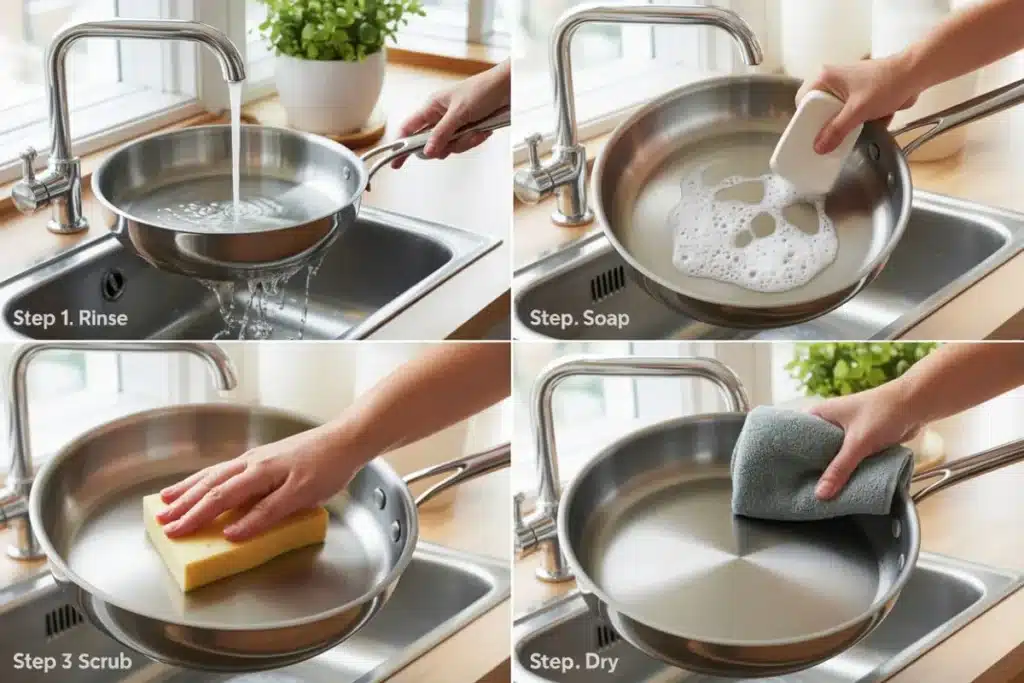
Rinse with Warm Water
Warm water helps loosen food bits and softens grease. This makes the next steps easier and keeps you from scrubbing too hard. Try to rinse the pan right after cooking so the food does not dry on the surface.
Add a Little Dish Soap
Use a mild dish soap to remove oil without hurting the steel. A small amount is enough because stainless steel does not hold odors or flavors. Spread the soap across the whole surface so the pan gets quick and even clean.
Scrub with a Soft Sponge
Use a soft sponge or a non-scratch pad to clean the pan. Avoid metal scrubbers because they can make tiny scratches. Scratches can dull the shine and make food stick later, so gentle scrubbing is best.
Rinse and Dry Right Away
Rinse the pan well to remove all soap. Then dry it with a microfiber towel to stop water spots.
Drying right away also helps prevent hard water marks, which many homes in the United States deal with.
Pro Tip:Do not let stainless steel air-dry. When water sits on the surface, it can leave stains or a cloudy film. Drying with a towel keeps the cookware shiny and clean.
Daily cleaning covers small messes, but burnt food needs stronger methods. Here are the cleaning tricks that work when a pan looks ruined.
How to Clean Burnt Stainless Steel Cookware (3 Proven Methods)
Burnt food is the most common problem people face with stainless steel pans. The good news is that you can clean it with simple tools you already have at home. These three methods work well for burnt food, brown stains, and stuck oil.
Method 1: Vinegar + Baking Soda Boil (Best for Burnt-On Food)
This is the easiest way to clean a burnt pan. The mix of vinegar and baking soda helps loosen the burnt layer without scratching the steel.
Steps:
- Fill the pan with enough water to cover the burnt area.
- Add 1 cup of white vinegar.
- Bring the mix to a boil.
- Turn off the heat.
- Add 2 tablespoons of baking soda. The water will foam.
- Let the pan rest for 10 minutes.
- Scrub gently with a soft, non-scratch sponge.
The natural reaction between vinegar and baking soda helps lift and soften burnt food so it comes off easily.
Method 2: Baking Soda Paste (Great for Brown Stains + Oil Build-Up)
If your pan has thick brown marks or sticky oil, this method works very well.
Steps:
- Mix 3 tablespoons of baking soda with a little water to make a paste.
- Spread the paste on the burnt spots.
- Let it sit for 20 minutes so it can break down the stain.
- Scrub gently in small circles.
- Rinse the pan and dry it right away.
Baking soda is gentle, so it removes burnt oil and brown stains without scratching the stainless steel surface.
Method 3: Bar Keeper’s Friend (BKF) — Best for Deep Cleaning
Bar Keeper’s Friend is a strong cleaner that uses oxalic acid. It works fast on tough burnt spots and dull areas.
How to use BKF safely:
- Wet the pan and sprinkle a little BKF on the surface.
- Rub gently with a soft sponge.
- Rinse well so no cleaner stays on the pan.
- Dry the pan with a towel.
Important Safety Notes:
- Do not let BKF sit on the pan for too long.
- Rinse the pan well after cleaning.
You can also check BKF’s official cleaning guide for safe usage instructions. If you are looking for pans that resist burning better, check the Best Stainless Steel Frying Pan.
My Experience Cleaning Burnt Stainless Steel Pans
I tested BKF on my All-Clad D3 skillet after a burnt chicken mishap. The pan went from dark brown to shiny silver in less than two minutes. It looked almost new again. If your current pans burn too easily or discolor often, you may want to upgrade to a better-quality set. You can check my guide on the best stainless steel cookware sets for safer and more durable options.
After removing burnt residue, many people struggle with rainbow colors caused by high heat. Luckily, heat tint is easy to fix.
How to Remove Rainbow Stains (Heat Tint)
Rainbow stains show up when stainless steel gets too hot. These colors do not harm the pan, but they can make it look dull. The good news is that you can remove heat tint easily with simple kitchen items.
Why Rainbow Stains Form
Stainless steel has a thin chromium oxide layer that protects the metal. When the pan gets very hot, this layer changes in thickness.
As a result, light bends on the surface and creates colors like:
- blue
- purple
- yellow
- rainbow shades
This color change is called heat tint. It is normal and can be cleaned with gentle acidic methods.
Vinegar Wipe (Best for Light Heat Tint)
Warm vinegar is one of the easiest ways to fix rainbow stains.
Steps:
- Warm a small amount of white vinegar.
- Dip a soft cloth in the vinegar.
- Wipe the stained area gently.
- Repeat until the color fades.
Vinegar works because its mild acid helps break down the heat tint without hurting the steel.
Lemon + Salt (Great for Medium Stains)
Lemon has citric acid, which is very good at removing discoloration.
Steps:
- Cut a fresh lemon in half.
- Sprinkle a little salt on the cut side.
- Rub the lemon over the stain in small circles.
- Rinse and dry the pan.
The mix of lemon and salt helps restore the clean silver color.
BKF Polish (Best for Strong Rainbow Stains)
Bar Keeper’s Friend (BKF) removes heavy rainbow stains fast. It uses oxalic acid, which lifts the discoloration and polishes the surface.
Steps:
- Wet the pan lightly.
- Add a small amount of BKF.
- Rub gently with a soft sponge.
- Rinse well and dry right away.
This method restores shine almost instantly.
Warning:
Do not use metal scrubbers or rough pads. These can scratch the surface and damage the protective chromium layer.
Rainbow stains are different from brown, sticky stains. Brown spots come from overheated oil and need a separate cleaning approach.
How to Remove Brown Stains from Stainless Steel Cookware
Brown stains often appear when the pan gets too hot. When oil reaches its smoke point, it turns into polymerized fat, which sticks to the surface and forms a brown or dark layer. These stains can look tough, but you can remove them with simple and safe cleaning steps.
Baking Soda Scrub (Best for Sticky Brown Residue)
Baking soda works well on brown stains caused by burnt oil. It cleans the pan without scratching.
Steps:
- Sprinkle baking soda over the brown spots.
- Add a little warm water to make a soft paste.
- Scrub the area with a soft sponge.
- Rinse and dry the pan right away.
Baking soda helps break down oil residue and stuck grease, so the pan looks clean again.
Vinegar Soak (Best for Old or Deep Stains)
Old brown stains are harder to remove because the burnt oil becomes thick and dry. Vinegar works well for these stubborn marks.
Steps:
- Pour white vinegar into the pan until it covers the stain.
- Let it sit for 10–15 minutes so the acid can loosen the layer.
- Scrub gently with a soft sponge.
- Rinse the pan and dry it with a towel.
Vinegar softens caramelized fat and heat discoloration, making the stain easier to remove.
Lemon Juice Rub (Natural Stain Remover)
Lemon juice has citric acid, which helps clean light brown stains and brings back the shine.
Steps:
- Squeeze fresh lemon juice over the stain.
- Let it rest for a few minutes.
- Rub with a soft cloth or sponge.
- Rinse and dry the pan.
This method is great for quick cleaning and leaves the pan smelling fresh.
Why Brown Stains Form
Brown stains form because of these common reasons:
- The pan gets too hot.
- Oil reaches its smoke point and turns into burnt fat.
- Food sticks and burns on the surface.
- Heat creates rough areas where grease collects.
These stains are very common in everyday cooking, especially in US kitchens where high-heat frying is popular.
Pro Tip: To reduce brown stains, use low-smoke oils like avocado oil or refined coconut oil. Also, try to avoid overheating the pan.
Even if your pan is clean, hard water can leave a cloudy film that ruins the shine. Here’s how to remove those mineral marks.
How to Remove White Cloudy Film (Hard Water Stains)
If your stainless steel cookware looks cloudy or chalky, it is usually because of hard water stains. Hard water contains calcium and magnesium, and these minerals leave a white film when the water dries on the pan. The stains look rough, but they are easy to clean with a few simple steps.
Vinegar Soak (Best for Mineral Build-Up)
Vinegar works well because its mild acid helps break down calcium buildup.
Steps:
- Pour white vinegar into the pan.
- Heat it gently for a few minutes.
- Turn off the heat and let the vinegar sit.
- Rinse the pan well.
- Dry the pan with a microfiber towel.
This method removes most hard water spots and brings back the pan’s smooth finish.
Lemon Water Boil (Natural Descaling)
Lemon has citric acid, which helps remove chalky stains.
Steps:
- Fill the pan with water.
- Add a few slices of fresh lemon.
- Bring the water to a boil.
- Let it cool, then pour it out.
- Rinse and dry the pan.
This is a gentle and natural way to clean mineral residue.
BKF Polish (Best for Tough Hard Water Stains)
If the cloudy film does not come off easily, Bar Keeper’s Friend (BKF) can help. It removes tough stains fast.
Steps:
- Wet the pan lightly.
- Sprinkle a little BKF on the cloudy area.
- Rub gently with a soft sponge.
- Rinse the pan well so no powder stays behind.
- Dry the pan right away.
BKF works on thick mineral layers that everyday cleaners cannot remove.
Pro Tip: Hard water stains are very common in many US homes. To prevent them, dry your pan right after washing. Do not let water sit on the surface.
Once stains are gone, the next step is restoring the bright, mirror-like shine that stainless steel is known for.
How to Restore Shine to Stainless Steel Cookware
Over time, stainless steel can look dull even when it is clean. Heat, water spots, and oil residue can all reduce the shine. The good news is that you can bring back the bright finish with a few easy methods.
Vinegar Polish (Best for Natural Shine)
Vinegar is great for restoring shine because its mild acid removes dull spots and leftover grease.
Steps:
- Pour a little white vinegar onto a microfiber cloth.
- Wipe the pan in gentle, even strokes.
- Rinse and dry the pan right away.
Vinegar helps remove light stains and brings back a smooth, bright finish.
Oil Buffing (Adds Smooth Shine)
A small amount of oil can make stainless steel look fresh and polished.
Steps:
- Add 1 teaspoon of olive oil or coconut oil to a soft cloth.
- Rub the oil over the pan in small circles.
- Buff the surface until it looks shiny.
Oil buffing works well on pans that look dry or dull after many washes.
Stainless Steel Polish (For Premium Cookware)
For high-end cookware like All-Clad or Made In, a stainless steel cleaner can add a strong, long-lasting shine.
Steps:
- Apply a small amount of stainless steel polish to a soft cloth.
- Rub gently over the surface.
- Wipe the pan clean and dry it fully.
A stainless steel polish helps restore the original look of the cookware and protects the finish.
Pro Tip:Always dry your pan after polishing. Water drops can leave marks and reduce shine, especially in homes with hard water.
Before you finish, it’s important to know which cleaners and tools can actually harm stainless steel. Avoiding these mistakes protects your cookware.
What NOT to Use on Stainless Steel Cookware
Some cleaners and tools can damage stainless steel and make your cookware look old before its time. To keep your pans safe, shiny, and long-lasting, avoid the items below.
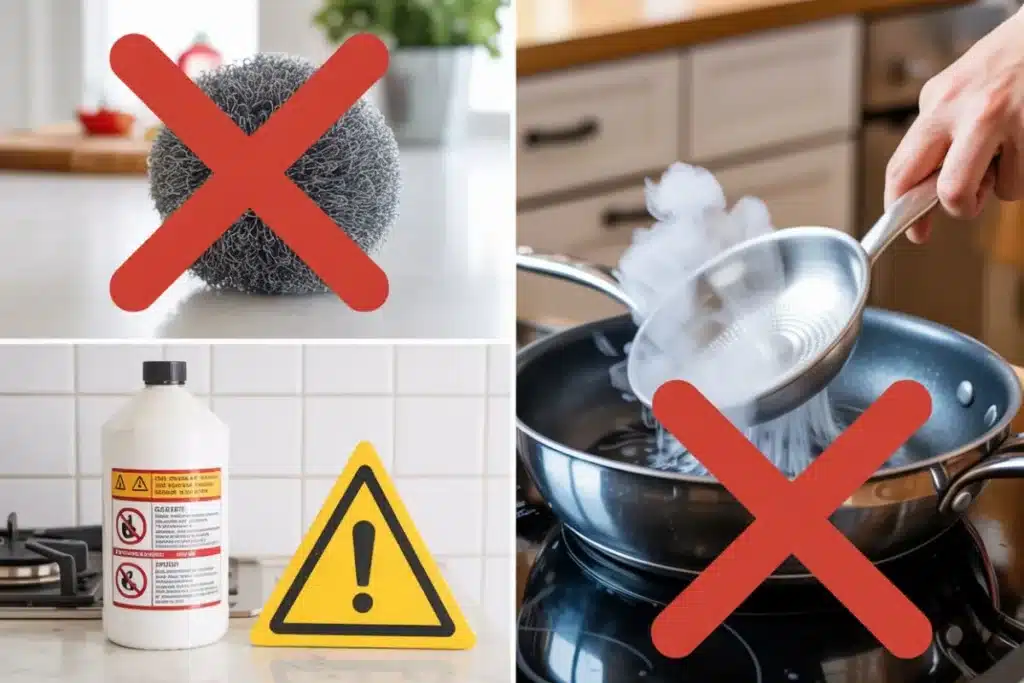
Steel Wool or Rough Scrubbers
Steel wool can make deep scratches on the surface. These scratches trap food, reduce shine, and make cleaning harder later. Always use a soft sponge or non-scratch pad instead.
Bleach or Strong Chemicals
Bleach can corrode stainless steel and weaken the protective layer. It may also leave marks that never come off. Clorox also warns against using bleach on stainless steel surfaces, and experts agree that harsh chemicals can permanently damage the protective layer. For a full breakdown of what to avoid, see Bob Vila’s guide on how to clean stainless steel safely.
Oven Cleaner
The oven cleaner is too strong for stainless steel cookware. It can damage the finish and remove the natural shine. Avoid it, even if the pan has heavy stains.
Abrasive Scrubbers
Scrubbers with a rough surface can scratch the steel. Scratches make the pan dull and allow grease to stick. Soft tools are always the safest choice.
Cold Water on a Hot Pan (Thermal Shock)
If you pour cold water on a hot stainless steel pan, the metal can warp. This bending is called thermal shock, and it changes the shape of the pan. Always let the pan cool before rinsing.
Dishwasher (Use With Caution)
The high heat and strong detergent in dishwashers can dull the finish over time. It may also leave white spots from hard water. Hand washing keeps the pan shiny and smooth.
Pro Tip:Following these simple rules keeps your stainless steel cookware safe, shiny, and scratch-free.
If you want your cookware to stay shiny and smooth for years, a monthly deep-clean routine makes a huge difference.
Monthly Deep-Cleaning Routine (Pro Cookware Care)
A monthly deep clean helps keep your stainless steel cookware shiny and smooth. It removes hidden grease, mineral spots, and dull areas that daily cleaning may leave behind. This routine is simple and helps your cookware last longer.
Vinegar Rinse (Removes Mineral Build-Up)
White vinegar works well for removing hard water deposits and dull patches.
Steps:
- Pour a little vinegar into the pan.
- Swirl it around or warm it for a minute.
- Rinse the pan and dry it lightly.
This step removes minerals and prepares the pan for deeper cleaning.
Baking Soda Scrub (Lifts Hidden Grease)
Baking soda helps clean oil residue and makes the surface smooth.
Steps:
- Sprinkle baking soda over the pan.
- Add a few drops of warm water to form a paste.
- Scrub gently with a soft sponge.
- Rinse the pan well.
Baking soda helps lift stuck grease without scratching the metal.
Polish the Surface (Restores Shine)
A soft polish brings back the bright stainless steel finish.
Steps:
- Use a microfiber cloth to wipe the surface.
- Add a few drops of vinegar or a little oil if the pan looks dull.
- Buff in small circles until the shine returns.
This step helps with shine restoration and gives the cookware a smooth look.
Dry the Pan Thoroughly (Prevents Water Spots)
Water left on the surface can cause mineral stains, especially in homes with hard water.
Steps:
- Use a clean towel to dry the pan fully.
- Check edges and handles for drops.
Proper drying keeps the surface clean and shiny for longer.
Pro Tip: Do this deep-clean routine once a month to maintain long-lasting shine and top performance. Your cookware will stay bright, smooth, and easier to clean every day.
Still have questions? Here are the answers to the most common stainless steel cleaning problems home cooks search for.
FAQ About Cleaning Stainless Steel Cookware
What is the best cleaner for stainless steel?
The best cleaner for stainless steel is a mix of warm water and mild dish soap. For tougher stains, use vinegar or Bar Keeper’s Friend. These cleaners remove grease, fingerprints, and dull spots without damaging the surface. Always dry the pan after cleaning to prevent water marks.
Can you use baking soda and vinegar on stainless steel?
Yes, you can use baking soda and vinegar on stainless steel. They are safe when used for short cleaning sessions. Vinegar loosens stains, and baking soda helps scrub them away. Avoid mixing them at the same time, as the reaction reduces cleaning power. Always rinse and dry afterward.
What not to use on stainless steel cookware?
Do not use steel wool, bleach, oven cleaner, or rough scrubbers on stainless steel cookware. These items scratch or damage the protective surface. Also avoid pouring cold water on a hot pan, as it can cause warping. Gentle tools and mild cleaners work best.
What is the trick to cleaning stainless steel?
The trick to cleaning stainless steel is using warm water, mild soap, and a soft sponge. Always dry the pan right away to prevent water spots. For burnt or stubborn stains, use vinegar, baking soda, or Bar Keeper’s Friend. Gentle cleaning keeps the shine longer.
Does olive oil clean stainless steel?
Yes, olive oil can clean stainless steel by adding shine and removing light marks. Rub a small amount of oil on the surface with a soft cloth, then buff until the shine appears. It works well for fingerprints and dull areas but does not remove heavy stains.
How do you make stainless steel shine?
You can make stainless steel shine by wiping it with vinegar and polishing it with a microfiber cloth. For extra shine, add a few drops of olive oil and buff in small circles. A stainless steel polish also works for a bright, smooth finish.
Can stainless steel be permanently stained?
Yes, stainless steel can be permanently stained if scratches, burnt residue, or harsh chemicals damage the surface. However, most stains come from heat, oil, or minerals and can be removed with vinegar, baking soda, or Bar Keeper’s Friend. Proper cleaning helps prevent permanent marks.
What is the best homemade product to clean stainless steel?
The best homemade cleaner for stainless steel is a mix of warm water, mild soap, and vinegar. Baking soda paste also works well for burnt or brown stains. These natural cleaners remove grease and marks without scratching the surface.
How do chefs clean stainless steel?
Chefs clean stainless steel using hot water, dish soap, and a soft sponge. For burnt spots, they boil vinegar in the pan and add baking soda to loosen the stain. Many chefs also use Bar Keeper’s Friend to restore shine after heavy cooking.
Why should you not mix baking soda and vinegar to clean?
You should not mix baking soda and vinegar because they react and turn into water and gas, reducing their cleaning strength. It’s better to use vinegar first to loosen the stain, then scrub with baking soda afterward. This method cleans more effectively.
Can Dawn dish soap clean stainless steel pans?
Yes, Dawn dish soap is safe and effective for stainless steel pans. It removes grease and food residue without harming the surface. Use warm water and a soft sponge for best results. Rinse well and dry the pan to avoid water spots.
How do you remove brown or black stains from stainless steel pans?
You can remove brown or black stains by scrubbing with baking soda paste or soaking the pan in vinegar. For heavy stains, boil vinegar in the pan, add baking soda, and scrub once cool. Bar Keeper’s Friend also works for deep discoloration.
Final Verdict: Clean Stainless Steel Cookware the Right Way
Stainless steel cookware is built to last, and with the right care, it can stay shiny, strong, and smooth for many years. Most stains—whether brown spots, burnt food, rainbow colors, or cloudy film—come from heat, oil, and minerals. The good news is that these marks are easy to fix with simple tools like vinegar, baking soda, lemon, and a soft sponge.
Daily cleaning keeps your pans looking fresh, while monthly deep cleaning restores long-term shine and removes hidden build-up. Avoid harsh tools, strong chemicals, and sudden temperature changes to protect the steel’s smooth finish. With gentle cleaning and proper preheating, stainless steel becomes one of the easiest and most reliable materials to cook with.
If you follow the steps in this guide, your cookware will look brighter, perform better, and last much longer—no scratches, no stains, and no stress. Stainless steel is forgiving, and with the right routine, you can keep it looking like new after every meal.
And if you want cookware that stays shiny and lasts even longer, explore my top picks for the best stainless steel cookware set.