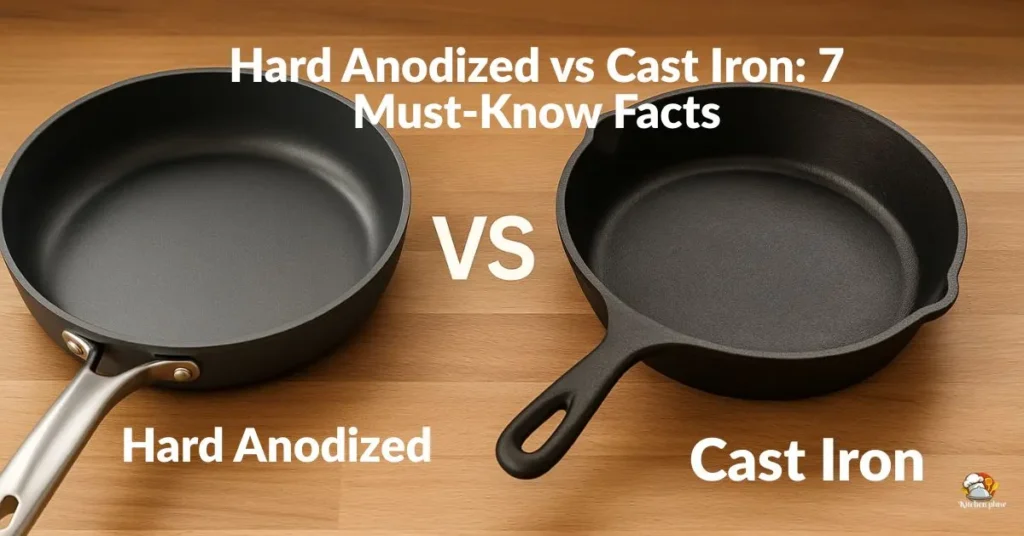
Choosing between hard anodized and cast iron cookware is one of the biggest kitchen dilemmas for U.S. households in 2025. Families often ask: Which lasts longer, hard anodized or cast iron cookware?
Quick Answer: Hard anodized pans usually last 5–10 years, while cast iron skillets can last for decades if seasoned and cared for properly.
I’ve tested both in my own U.S. kitchen — from fluffy pancakes in anodized pans to sizzling steaks in cast iron skillets — using trusted brands like Calphalon, Circulon, Lodge, and Le Creuset.
In this guide, you’ll get:
- ✅ Science-backed comparisons
- ✅ Real cooking tests
- ✅ A clear verdict on durability, safety, cooking, cleaning, and price
So you can confidently choose the right cookware for your family.
👉 Want my tested picks? Check my Best Hard Anodized Cookware 2025 Guide.
👇Now let’s break it down — starting with hard anodized cookware, a modern option that balances durability and convenience for busy U.S. families.
What is Hard Anodized Cookware?
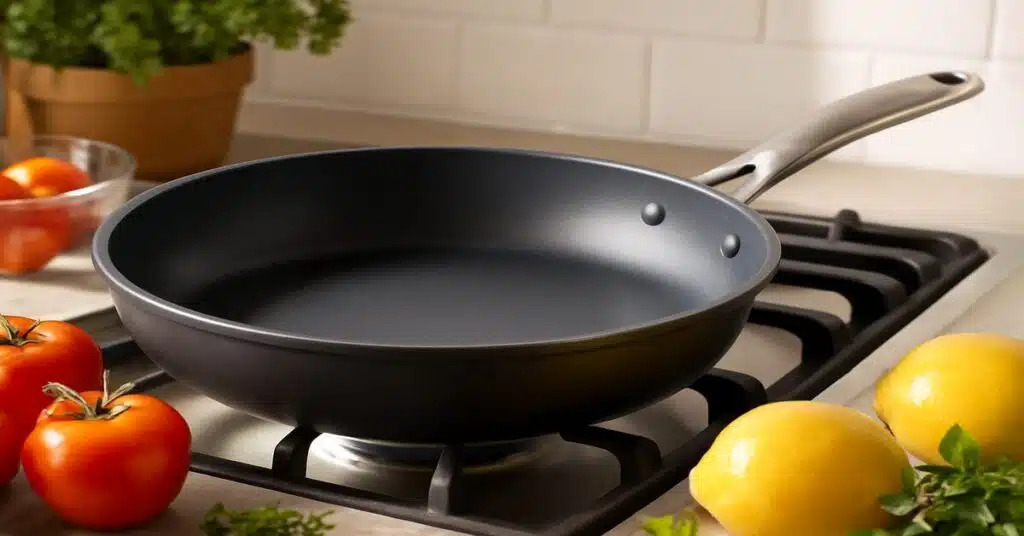
Hard anodized cookware is a type of aluminum pan that goes through an electrochemical anodization process. This treatment makes the surface harder, scratch-resistant, and non-reactive — much stronger than regular aluminum pans.
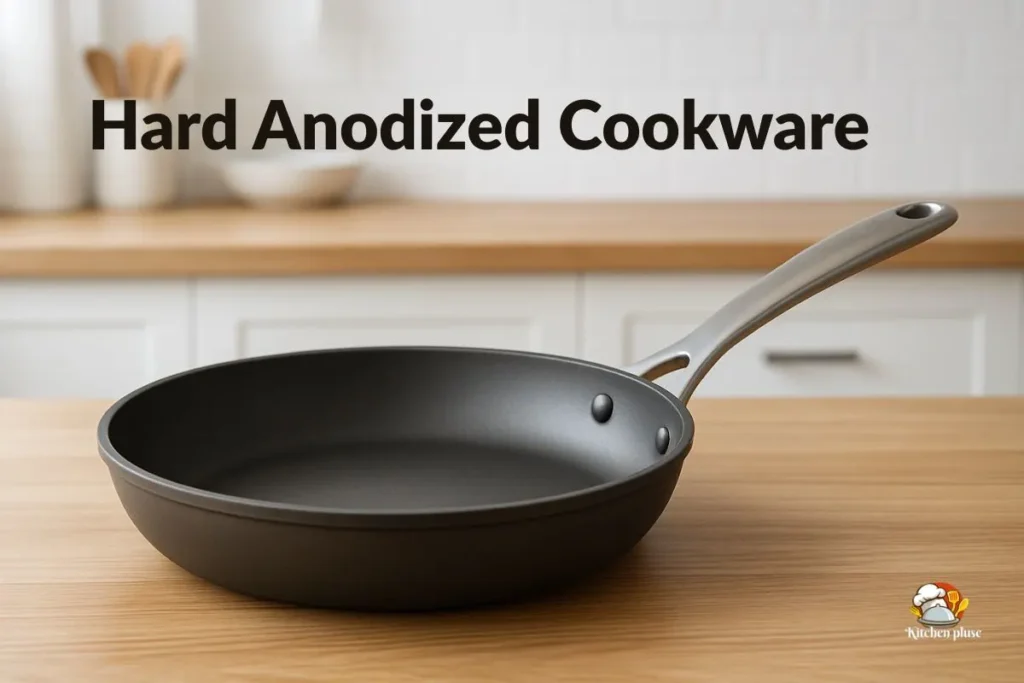
Hard anodized pans are lightweight, durable (5–10 years), and safe for everyday cooking.
Key Features of Hard Anodized Cookware:
- ✅ Durability: Lasts 5–10 years with proper care
- ✅ Even Heating: Heats quickly and distributes heat evenly
- ✅ Nonstick-like Surface: Smooth, so food sticks less
- ✅ Tough Build: Scratch- and dent-resistant
- ✅ Lightweight: Easier to handle than cast iron
Trusted Brands:
Popular brands include Calphalon, Circulon, All-Clad, and Anolon — all well-known in U.S. households.
Safety:
According to the FDA cookware safety guidelines, anodized aluminum is sealed and non-reactive. As long as the surface stays intact, it will not leach into food, making it safe for daily use
👉 For a complete analysis of FDA findings, see my detailed post on FDA safety for anodized aluminum (full guide)
👇While hard anodized cookware brings modern science to your kitchen, cast iron represents tradition and timeless durability. Let’s explore why cast iron remains a favorite across generations
What is Cast Iron Cookware?
Cast iron cookware is one of the oldest and most reliable types of pans. It is made by pouring molten iron into molds, which makes it heavy, durable, and excellent at holding heat. That’s why cast iron is perfect for searing steaks, slow cooking, and oven baking.
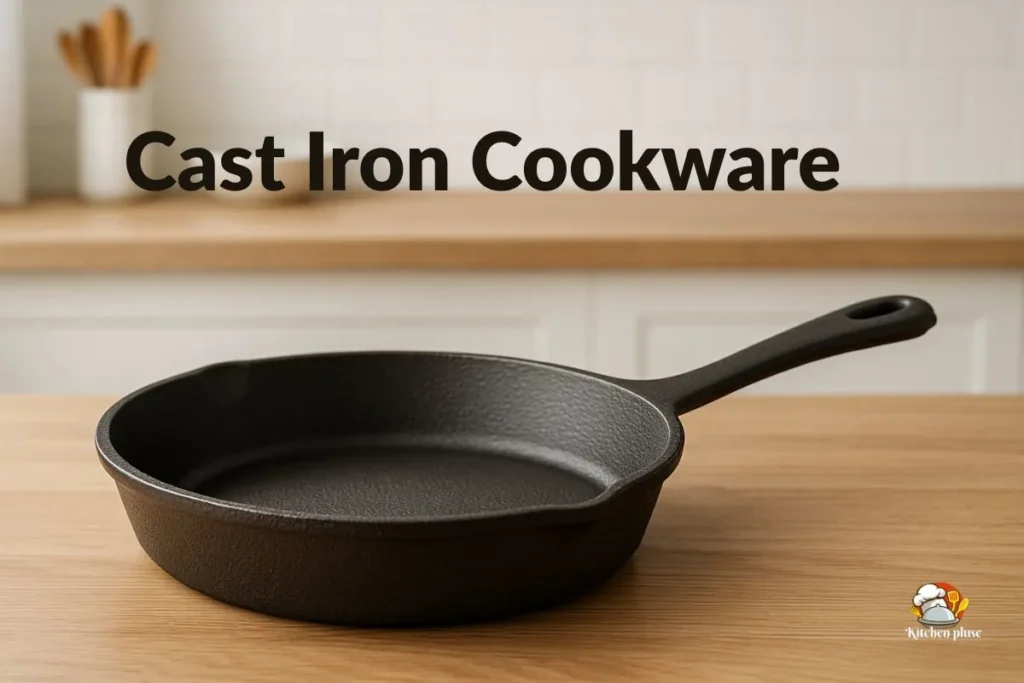
Cast iron skillets can last for generations, create a natural nonstick layer with seasoning, and even add small amounts of iron to food.
Types of Cast Iron Cookware:
- Traditional Cast Iron: Heavy and requires seasoning, but nearly indestructible and gets better with use.
- Enameled Cast Iron: Covered with enamel, easier to clean, no seasoning needed, and rust-resistant.
Key Features of Cast Iron:
- ✅ Excellent Heat Retention: Holds heat for a long time, ideal for high-heat cooking
- ✅ Natural Nonstick: Improves over time with seasoning
- ✅ Versatile: Works on stovetops, in ovens, or over open flames
- ✅ Long-Lasting: With proper care, it can last for decades or even generations
Trusted Brands:
Well-known cast iron brands include Lodge, Le Creuset, and Staub. These are popular in U.S. households and professional kitchens around the world.
Safety:
Cast iron is naturally safe and chemical-free. It also adds a small amount of dietary iron to your meals, which is healthy for most people. However, those with iron overload (hemochromatosis) may need to limit use. With regular seasoning, cast iron stays rust-free and non-reactive.
👇Now that you know what each cookware is, it’s time to compare them side by side — from durability to price — to see which one fits your kitchen better.
Hard Anodized vs Cast Iron – Key Differences
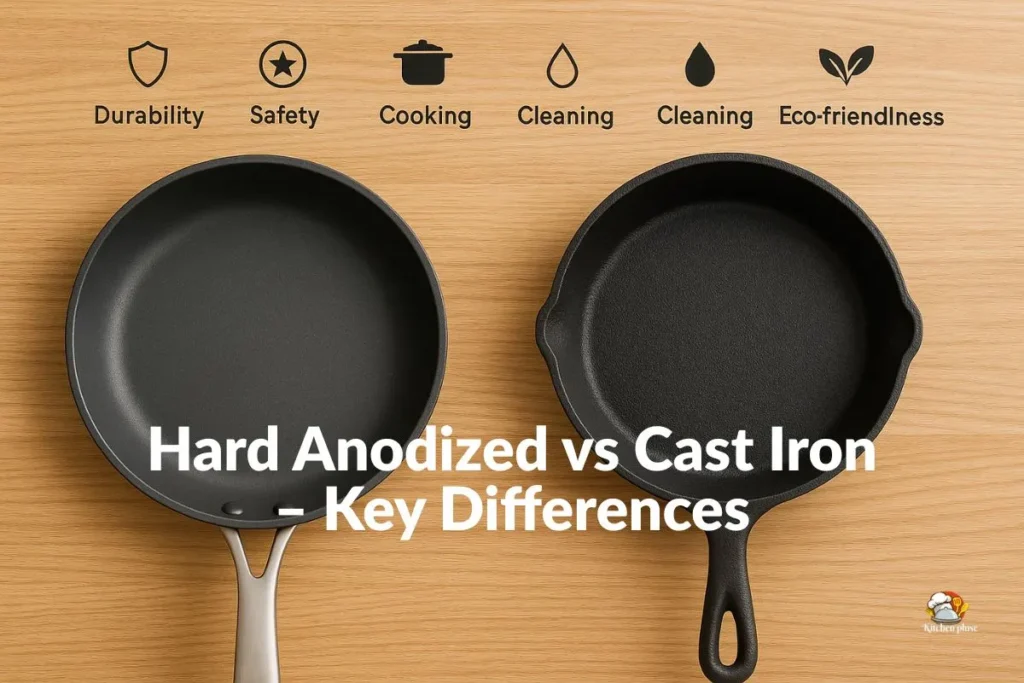
Durability & Lifespan:
Which lasts longer, hard anodized or cast iron cookware?
Hard anodized pans last 5–10 years, while cast iron can last for decades — even generations with proper care.
- Hard Anodized: Scratch-resistant, dent-proof, and much lighter than cast iron. However, the coating eventually wears out.
- Cast Iron: Can rust if neglected, but when seasoned, it becomes almost indestructible. Many U.S. families still cook with skillets passed down for generations.
👇Durability is important, but handling also matters in daily cooking. Let’s compare how lightweight anodized pans differ from the heavier cast iron skillets.
Weight & Handling:
Which cookware is easier to handle — hard anodized or cast iron?
- Hard Anodized: Lightweight and easier to lift, making it a practical choice for families, beginners, or older cooks. It’s less tiring to move around the kitchen.
- Cast Iron: Much heavier but very stable. Its weight improves heat retention and makes it perfect for oven-to-table serving.
If you prefer lightweight pans for everyday cooking, hard anodized pans are easier to manage. But for searing and baking, cast iron’s weight is a clear advantage.
👇Weight isn’t the only factor — safety and health concerns often play a big role when choosing cookware.
Safety & Health Concerns:
Is hard anodized cookware safer than cast iron?
- Hard Anodized: FDA-approved, non-reactive, and safe as long as the surface stays intact.
- Cast Iron: 100% natural and chemical-free. It also adds dietary iron to food, which benefits most people but can be an issue for those with hemochromatosis (iron overload).
- EPA Note: Nonstick fumes are not relevant here since neither hard anodized nor cast iron uses PTFE coatings.
❌ Myth-busting: Cast iron does not cause iron overload under normal cooking conditions.
When it comes to health, both are safe: hard anodized is FDA-approved and non-reactive, while cast iron naturally adds iron to food — a bonus for most people but something to monitor if you have high iron levels.
👉 Read The Full Guide: Hard Anodized vs Ceramic Safety
👇Now that safety is clear, let’s look at what truly matters in the kitchen — cooking performance.
Cooking Performance:
Which cooks better — hard anodized or cast iron?
- Hard Anodized: Heats up quickly and distributes heat evenly. Excellent for stir-fries, sautéed veggies, and sauces.
- Cast Iron: Retains heat for a long time, making it ideal for searing steak, slow cooking, or baking cornbread.
Example: Pancakes come out lighter in hard anodized pans, while cast iron skillets give steaks a restaurant-quality sear.
👇Great cooking comes with responsibility. Here’s how cleaning and maintenance differ between these two cookware types
Cleaning & Maintenance:
Which cookware is easier to clean?
Hard Anodized: Needs gentle handwashing with mild soap. Avoid dishwashers and steel wool to protect the surface.
👉 Need step-by-step care tips? See my guide: How to Clean Hard Anodized Cookware.
Cast Iron: Must be seasoned regularly. Avoid leaving it wet or it can rust. Traditional cast iron should not be scrubbed with harsh soap.
Quick Tip: After washing, wipe cast iron dry and coat with a thin layer of oil to keep it rust-free.
👇Besides cleaning, another practical concern is whether your pan will work on modern induction cooktops.
Induction Compatibility:
Which cookware works better on induction cooktops?
- Cast Iron: Works perfectly on induction stoves because it’s naturally magnetic. Reliable for all induction cooking.
- Hard Anodized: Not all pans are induction-ready. Only anodized cookware with a stainless steel or magnetic base works.
👉 Read The Full Guide: hard anodized vs stainless steel
If you cook on induction daily, cast iron is the safer choice, while anodized may require you to double-check the base.
👇Cooking compatibility is crucial, but price and long-term value often decide the final purchase. Let’s compare costs.
Price & Value:
Which cookware offers better value?
- Hard Anodized: Costs more upfront but lasts 5–10 years. A good choice for busy U.S. families who prefer convenience.
- Cast Iron: Cheaper initially but lasts a lifetime, making it a smarter long-term investment.
👉 Want tested brand picks? Check my Best Hard Anodized Cookware in the U.S.
Budget vs Premium Cookware (2025)
| Category | Hard Anodized | Cast Iron |
| Budget Choice | ❌ Less common in low-cost pans | ✅ Lodge skillets → affordable & long-lasting |
| Premium Choice | ✅ All-Clad, Calphalon sets → modern & convenient | ✅ Le Creuset, Staub → stylish but expensive |
| Best ROI | 5–10 years durability | Lifetime+ durability |
For U.S. buyers in 2025, cast iron dominates budget cookware, while hard anodized shines in premium modern kitchens.
👉Want a deeper breakdown? Read my full guide on Best Budget vs Premium Cookware in 2025
👇Price isn’t everything. More U.S. buyers today also care about sustainability — so let’s see how eco-friendly these two options are
Eco-Friendliness & Sustainability
Which cookware is more eco-friendly — hard anodized or cast iron?
- Hard Anodized: Made from aluminum with a modern chemical process. Strong and long-lasting, but once the coating wears out, recycling is more difficult.
- Cast Iron: 100% natural, chemical-free, and reusable for generations. Widely considered one of the most eco-friendly cookware choices in U.S. kitchens.
For eco-conscious buyers, cast iron is the greener and more sustainable option
👇To make things clearer, here’s a quick pros and cons comparison between hard anodized and cast iron.
Pros & Cons Comparison Table
Here’s a quick side-by-side look at the pros and cons of hard anodized vs cast iron cookware
| Feature | Hard Anodized Cookware | Cast Iron Cookware |
| Durability | Lasts 5–10 years with proper care | Can last for decades or generations if seasoned |
| Safety | FDA-approved, non-reactive surface (safe if not scratched) | Naturally safe, adds iron to food (beneficial for most) |
| Cooking | Heats fast and evenly, best for stir-fries, sauces, pancakes | Retains heat for a long time, best for steak, slow cooking, baking |
| Cleaning | Needs gentle hand washing; not dishwasher-safe | Needs seasoning, avoid harsh soap; can rust if neglected |
| Price & Value | Higher upfront cost, 5–10 years ROI | Lower upfront cost, lifetime ROI; popular choice for U.S. families |
Quick Takeaway:
- Hard Anodized = best for busy cooks who want quick heating and easy handling.
- Cast Iron = best for long-term value and heat retention in U.S. family kitchens.
👉 Want a deeper breakdown? Read my full guide on Hard Anodized Cookware Pros and Cons.
👇So, when should you choose hard anodized, and when should you go with cast iron? Let’s simplify it.
When to Choose Hard Anodized vs Cast Iron
Which cookware is best for your kitchen?
It depends on your cooking style, family needs, and how much time you want to spend on care and cleaning.
Choose Hard Anodized If:
- You want lightweight, scratch-resistant pans that are easy to handle.
- You cook daily but prefer quick cleanup with less maintenance.
- You often use medium to high heat for stir-fries, sauces, and sautéed veggies.
- You’re a busy U.S. family that values durability without the hassle of seasoning.
Choose Cast Iron If:
- You want cookware that can last for generations — true heirloom quality.
- You enjoy searing steak, baking cornbread, or slow cooking stews.
- You don’t mind seasoning and extra care to keep your pans in top condition.
- You prefer eco-friendly cookware alternatives that are chemical-free and naturally safe.
Best Cookware for Families:
For busy families in the U.S., hard anodized is the best choice — lighter, quicker to clean, and perfect for daily dinners.
For traditional home cooks who want long-lasting pans with a timeless feel, cast iron is unbeatable.
👇Now that we’ve seen the scenarios, it’s time to give the final verdict on which cookware wins overall.
Final Verdict: Hard Anodized vs Cast Iron
Which is better — hard anodized or cast iron cookware?
Quick Answer:
- Hard Anodized is best for families and busy home cooks who want pans that are scratch-resistant, lightweight, and easy to clean.
- Cast Iron is best for durability and heat retention — with care, it can last for decades or even generations.
Scenario-Based Recommendations:
- Everyday U.S. kitchens: Hard anodized saves time, heats quickly, and makes daily cooking easier.
- Generational heirloom cookware: Cast iron is unbeatable for searing, baking, and long-term use.
- Health-conscious cooks: Cast iron naturally adds iron, while hard anodized is FDA-approved and non-reactive.
- Budget vs Premium: Cast iron is the budget-friendly heirloom choice, while hard anodized is better for buyers who want modern convenience.
Final Takeaway:
For U.S. households cooking daily dinners, hard anodized is the practical winner. But if you want a timeless classic that can be passed down for decades, cast iron remains the ultimate choice.
👉 Want tested brand picks? Check my Best Hard Anodized Cookware 2025.
👇Still have questions? Here are the most common FAQs that U.S. families ask about hard anodized vs cast iron cookware
FAQs: Hard Anodized vs Cast Iron
Which is better, hard anodized or cast iron cookware?
Hard anodized is better for daily convenience and quick meals, while cast iron is best for durability and heat retention.
Does cast iron last longer than anodized cookware?
Yes. Cast iron can last for generations, while hard anodized cookware usually lasts only 5–10 years.
Do cast iron pans add iron to food?
Yes. Cast iron naturally releases small amounts of iron, which can boost dietary intake for most people.
Is hard anodized cookware non-reactive?
Yes. Hard anodized is FDA-approved and non-reactive, as long as the surface remains intact and scratch-free.
👉 Read The Full Guide: is hard anodized aluminum cookware safe?
How to maintain cast iron vs anodized cookware?
Cast iron needs seasoning and oiling; hard anodized should be handwashed gently with mild soap and soft sponges.
Can you use cast iron on induction cooktops?
Yes. Cast iron works perfectly on induction, while anodized pans may need a magnetic stainless steel base.
Which cookware is best for families?
Hard anodized suits busy U.S. families who want quick cleanup, while cast iron fits traditional cooks who value heirloom durability.
What cookware lasts the longest?
Cast iron and stainless steel last the longest, often decades or even generations with proper care.
What is the best cookware for beginners — hard anodized or cast iron?
Hard anodized cookware is better for beginners because it’s lightweight, easier to clean, and works like a nonstick. Cast iron needs seasoning and care, so it’s better for experienced or traditional cooks.
About the Author:
MD Soazim is a U.S.-based cookware reviewer and home chef who has personally tested leading brands like Calphalon, Circulon, Lodge, and Le Creuset. With years of hands-on kitchen experience, he helps families compare cookware materials like hard anodized vs cast iron to find the best option for durability, safety, and everyday cooking.