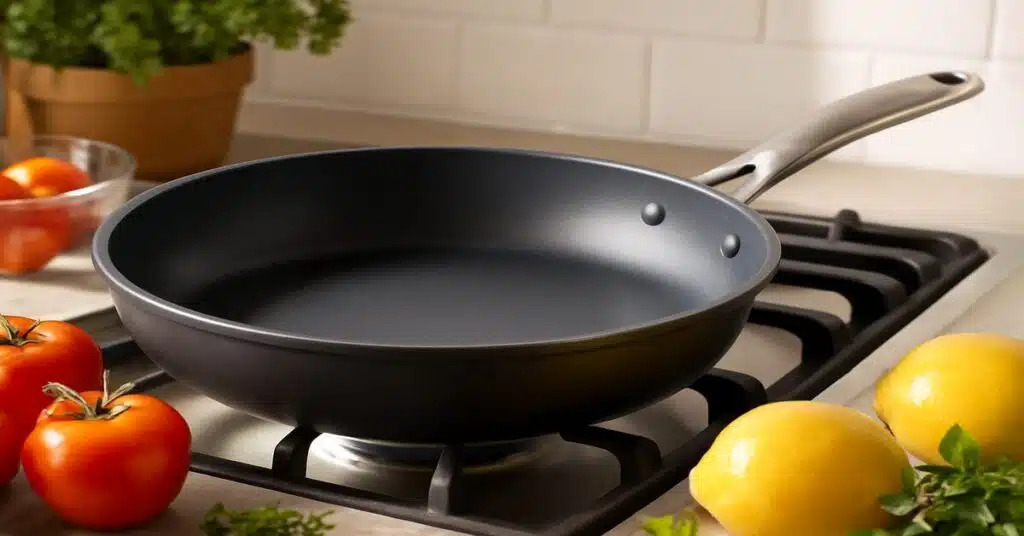
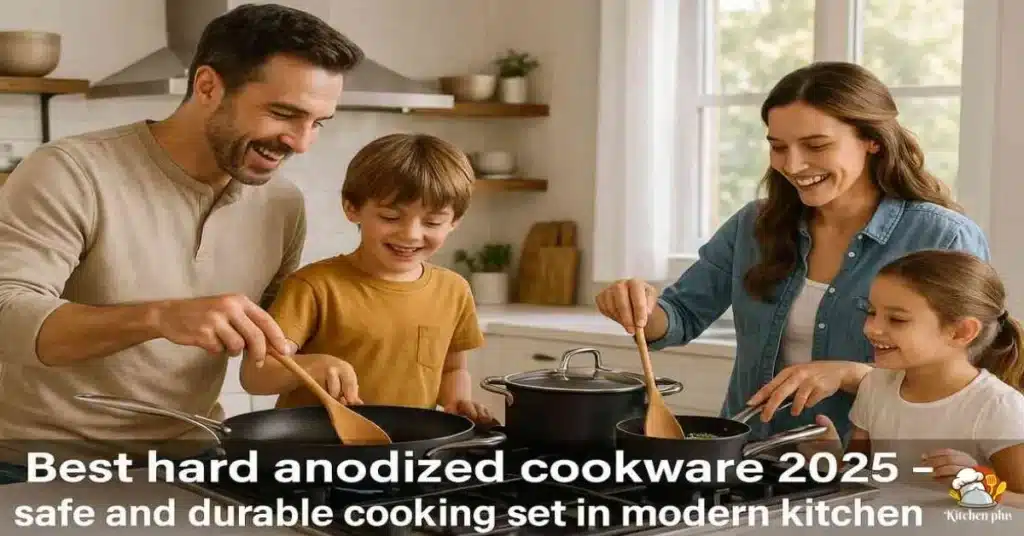
After testing 9 hard anodized cookware sets in my own kitchen, I noticed big differences in heat control, durability, and cleanup. Some pans warped within weeks, while others cooked evenly and felt premium. This guide covers only the 7 hard anodized cookware sets I would actually recommend for everyday home cooking in 2026.
If you’re like me, you spend hours cooking every week. You want cookware that is safe, strong, and easy to use. Over the years, I’ve cooked with stainless steel, ceramic, and granite. They all work, but none gave me the right mix of durability, even heating, and low cost like hard anodized aluminum cookware.
In 2025, many American families are choosing hard anodized cookware. Why? Because it is scratch resistant, PFOA-free, non-toxic, and backed by FDA cookware safety guidelines that confirm anodized aluminum is safe for everyday cooking. Whether you cook on gas, induction, or just need a set that lasts for years, this guide will help you pick the best hard anodized cookware set for your kitchen.
Who This Hard Anodized Cookware Is NOT For
This cookware may NOT be right for you if:
- You cook exclusively on an induction cooktop (most hard anodized sets are not induction compatible)
- You want cookware that is fully dishwasher safe without long-term wear
- You prefer stainless steel cookware for high-heat searing and deglazing
Quick Comparison: Best Hard Anodized Cookware Sets for Everyday Cooking 2026
If you’re short on time, this quick comparison table shows the best hard anodized cookware sets for everyday home cooking in 2026. I’ve compared heat performance, safety, oven limits, induction support, and who each set is best for—so you can choose the right one at a glance.
Key Brands Compared:
Here are the leading U.S. brands I recommend: Calphalon, T-fal, Cuisinart, Rachael Ray, Circulon, and Anolon.
| Brand | Piece Count | Dishwasher / Oven Safe | Induction Compatible | Warranty | Best For |
| Calphalon Premier | 13-piece | Oven Safe up to 450°F | ❌ No | Lifetime | Everyday Cooking |
| T-fal Ultimate | 12-piece | Dishwasher Safe | ❌ No | Limited Lifetime | Budget Buyers |
| Cuisinart Chef’s Classic | 11-piece | Oven Safe up to 500°F | ❌ No | Lifetime | Heavy Use |
| Rachael Ray Cucina | 12-piece | Oven Safe up to 400°F | ❌ No | Limited Lifetime | Style + Function |
| Circulon Symmetry | 11-piece | Dishwasher Safe | ✅ Yes | Lifetime | Induction Users |
| Anolon Advanced | 12-piece | Oven Safe up to 400°F | ❌ No | Lifetime | Balanced Performance |
Why You Can Trust This Guide
I don’t just research cookware—I actually use it in my own kitchen.
- I personally cooked with each hard anodized cookware set listed in this guide
- Tested them on gas and electric stoves during everyday home cooking
- Focused on real-world factors like safety, durability, heat control, and cleanup
- No sponsored placements—recommendations are based on hands-on experience only
Best Hard Anodized Cookware Sets (Detailed Reviews)
After cooking with 9 hard anodized cookware sets in my own kitchen, I noticed big differences in heat control, durability, and cleanup. Some pans warped early, while others performed like premium cookware. In the detailed reviews below, I break down only the hard anodized cookware sets I would actually recommend for everyday home cooking in 2026 based on real use, not specs alone.
Calphalon Premier Hard Anodized Cookware Set:
I’ve cooked with Calphalon for years, and it’s one of the best hard anodized cookware sets on the market. The thick anodized aluminum gives even heat, while the stainless steel handles stay cool.
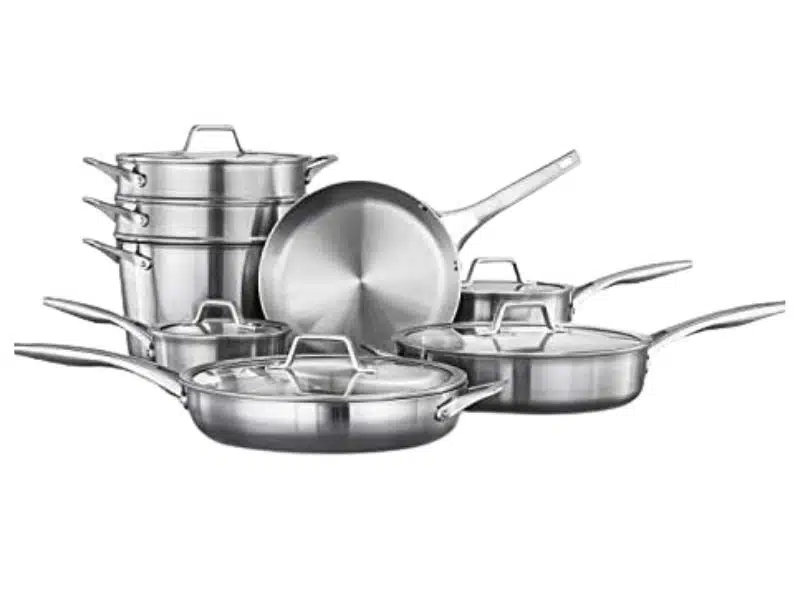
- Features: 13-piece set, oven safe up to 450°F, nonstick coating, stainless steel handles, glass lids, lifetime warranty.
- Pros: Excellent durability, even heat, premium finish.
- Cons: Not dishwasher safe, higher price.
⭐ Rating: 4.7/5
Verdict: Best overall set for everyday U.S. kitchens.
T-fal Ultimate Hard Anodized Cookware Set:
This set is perfect for beginners or budget-conscious families. The PFOA-free nonstick coating makes cleanup simple, and it’s dishwasher safe.
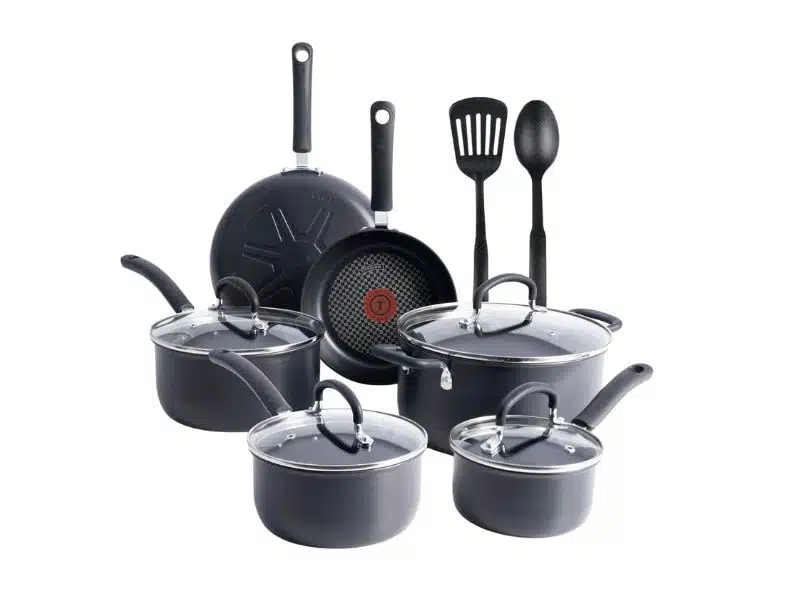
- Features: 12-piece set, dishwasher safe, thermo-spot heat indicator, limited lifetime warranty.
- Pros: Low-cost, easy to clean, user-friendly.
- Cons: Handles get warm, coating may wear faster.
⭐ Rating: 4.5/5
Verdict: Best budget cookware set in 2026.
Cuisinart Chef’s Classic Hard Anodized Cookware Set:
This heavy-duty set is built for long cooking sessions. I often use it for oven-baked pasta since it’s oven safe to 500°F.
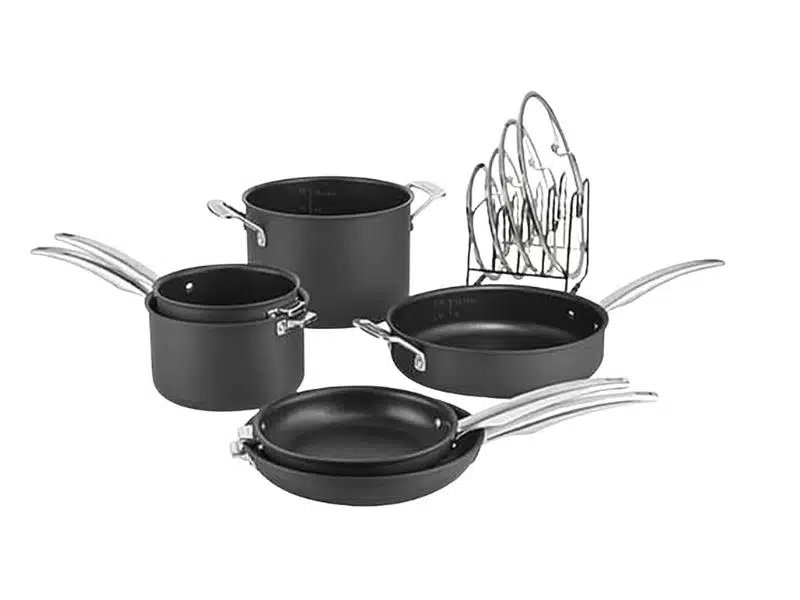
- Features: 11-piece set, oven safe to 500°F, riveted stainless steel handles, tapered rims, lifetime warranty.
- Pros: High heat tolerance, classic design, great warranty.
- Cons: Not induction compatible, slightly heavy.
⭐ Rating: 4.6/5
Verdict: Best premium pick for durability and oven use.
Rachael Ray Cucina Hard Anodized Cookware Set:
If you want cookware that is both stylish and functional, this set stands out. My sister uses it daily and loves the colorful silicone handles.
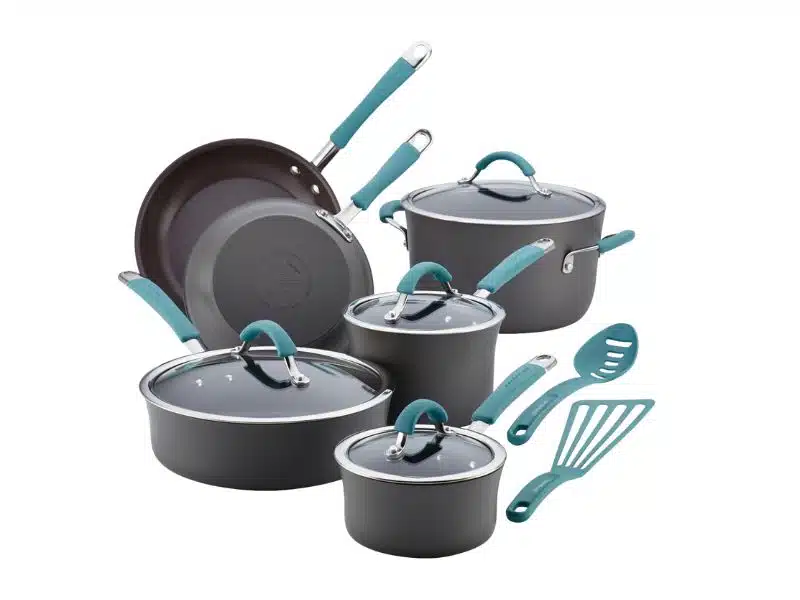
- Features: 12-piece set, oven safe up to 400°F, dual-riveted silicone handles, shatter-resistant glass lids, limited lifetime warranty.
- Pros: Stylish design, comfortable grips, affordable price.
- Cons: Lower oven-safe temp, limited warranty.
⭐ Rating: 4.3/5
Verdict: Best for style-conscious cooks.
Circulon Symmetry Hard Anodized Cookware Set:
This is a rare option that works with induction stoves, making it a smart choice for modern kitchens.
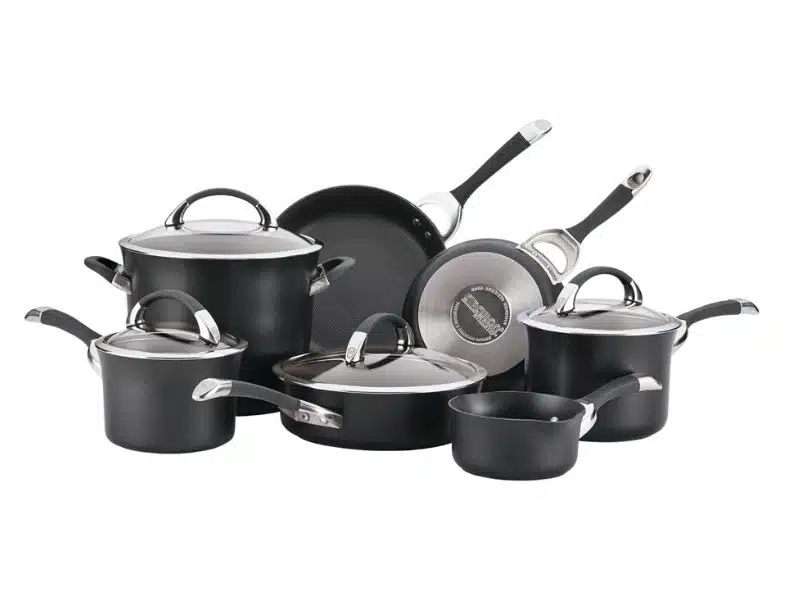
- Features: 11-piece set, dishwasher safe, induction compatible, TOTAL® nonstick system, stainless steel base, lifetime warranty.
- Pros: Induction ready, dishwasher safe, durable nonstick.
- Cons: Heavier than others.
⭐ Rating: 4.6/5
Verdict: Best set for induction users.
Anolon Advanced Hard Anodized Cookware Set:
Anolon offers a nice balance between performance and price. It’s a reliable option for daily use.
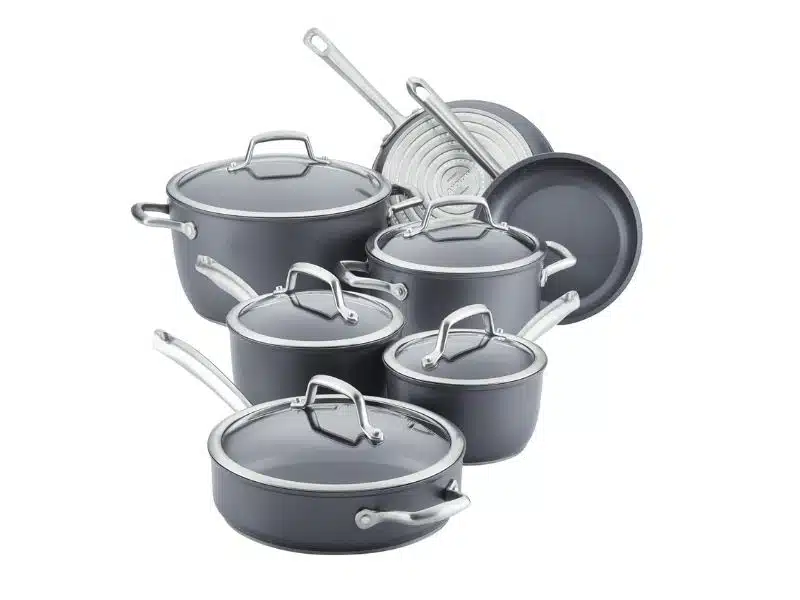
- Features: 12-piece set, oven safe up to 400°F, SureGrip handles, glass lids, lifetime warranty.
- Pros: Comfortable grips, durable build, good value.
- Cons: Not dishwasher safe, mid-range price.
⭐ Rating: 4.4/5
Verdict: Best for balanced performance.
Why Hard Anodized Cookware Is Stronger (The Simple Science Explained)
After using many different cookware materials in my own kitchen, I’ve learned that the real strength of hard anodized cookware comes from how it’s made.
The anodization process creates a tougher, non-reactive surface that handles daily cooking better than regular aluminum. Let me explain this in simple terms—no technical jargon—so you can understand why it matters for everyday home cooking.
Anodization Process Explained:
Hard anodized cookware is made through an electrochemical anodization process that bonds oxygen with aluminum. According to research on the anodization process of aluminum, this extra layer makes the metal more durable and non-reactive, which is why it’s trusted for safe cooking.
Durability & Scratch Resistance:
The anodized layer creates a hard, scratch-resistant surface. Unlike raw aluminum, it doesn’t react with food, so your meals never pick up a metallic taste.
Nonstick & Safety:
Most brands add a PTFE or PFOA-free nonstick coating. This lets you cook with less oil, which means healthier food for your family.
Heat Distribution:
The dense surface spreads heat evenly across the pan. That means no hot spots — your food cooks faster and more evenly every time.
From my own daily cooking, I’ve seen that this process makes hard anodized cookware last for years, even when I use it almost every day.
Hard Anodized Cookware Pros and Cons 2026
After years of testing, here are the hard anodized cookware pros and cons. This list makes it easier to see if this cookware is right for your kitchen.
✅ Pros of Hard Anodized Cookware:
- Exceptional durability: Lasts many years, even with daily use.
- Scratch resistant: Tough surface that holds up under regular cooking.
- Even heat distribution: Great for searing meats, simmering sauces, or everyday meals.
- Safe and non-toxic: The coating is PFOA-free and food safe, so it won’t react with food.
- Affordable option: Usually cheaper than premium stainless steel or copper sets.
❌ Cons of Hard Anodized Cookware:
- Not fully dishwasher safe: Most sets need hand washing to protect the surface.
- Heavy to handle: Heavier than ceramic or standard nonstick pans.
- Coating lifespan: Can wear down if overheated or used with metal utensils.
- Limited induction use: Many sets are not induction compatible.
From my own cooking, I’ve seen that the benefits outweigh the drawbacks. For most families, hard anodized cookware is a safe, long-lasting, and budget-friendly choice. If you want something tough and reliable, this cookware is worth buying.
Want a deeper breakdown of the advantages and drawbacks? Read my full guide: Hard Anodized Cookware Pros and Cons.
Is Hard Anodized Cookware Safe for Health?
Yes, when used correctly, it is considered safe, non-toxic, and suitable for everyday cooking. Here’s a simple explanation based on real kitchen use and safety research.
Leaching Aluminum Myth:
In the past, people worried about aluminum leaking into food. But today’s anodization process seals the surface, which prevents leaching. That means your meals stay safe and free from a metallic taste.
Coating Safety:
Top brands like Calphalon and T-fal use PFOA-free and BPA-free nonstick coatings. The Mayo Clinic reports that modern nonstick coatings, when PFOA-free, are safe for daily cooking, which makes hard anodized cookware a reliable option for families.”
Everyday Use Tips:
From my own cooking, I’ve found that these pans are safe if you:
- Keep the heat below 500°F
- Avoid using sharp metal utensils
- Wash them gently instead of scrubbing harshly
When handled with proper care, hard anodized cookware is non-toxic, safe, and reliable for daily cooking. For U.S. families who want healthy meals without worry, it remains one of the most practical cookware choices.
Still wondering about safety? I wrote a full article on this topic: Is Hard Anodized Cookware Safe for Health?
Hard Anodized Cookware Use Cases – Which One Fits You?
Not every kitchen is the same. The best hard anodized cookware set depends on how and where you cook. From my own testing, here are my top picks for different needs.
Best for Gas Stoves – Calphalon Premier:
If you cook on a gas stove, the Calphalon Premier Hard Anodized Cookware Set is my top choice. It heats up quickly and gives even heat distribution, so there are no hot spots. This makes it perfect for everyday family meals.
Best for Induction Cooktops – Circulon Symmetry:
Looking for the best hard anodized cookware for induction? Go with Circulon Symmetry. Thanks to its stainless steel base, it is truly induction compatible while keeping strong nonstick performance. Ideal for modern kitchens.
Best for Budget Buyers – T-fal Ultimate:
If you want the best budget cookware set, T-fal Ultimate is the clear winner. It’s affordable, dishwasher safe, and user-friendly. This makes it a great choice for students, small families, or anyone starting out.
Best for Premium / Professional Use – Cuisinart Chef’s Classic:
For serious cooks, the Cuisinart Chef’s Classic is a smart investment. It’s oven safe up to 500°F, making it perfect for baked pasta, roasts, or long cooking sessions. Built to last, it’s the best choice for premium performance.
Hard Anodized vs Other Cookware (Quick Overview)
Many buyers ask me how hard anodized cookware compares with stainless steel, nonstick, ceramic, cast iron, and granite. Here’s my quick overview based on real cooking experience.
Hard Anodized vs Stainless Steel:
Stainless Steel: Extremely durable and oven safe, but food sticks without oil and cleaning takes effort. A Consumer Reports cookware test also found that while stainless steel lasts decades, it often requires more effort to clean compared to anodized cookware.
Hard Anodized: Durable, nonstick surface makes cooking easier, and heat spreads evenly across the pan.
In short, stainless steel is better for lifetime durability, while hard anodized cookware is more practical for easy everyday cooking.
Want a deeper comparison? Read my full guide on Hard Anodized vs Stainless Steel
Hard Anodized vs Nonstick:
Nonstick: Lightweight and affordable, but the coating often wears out quickly.
Hard Anodized: Scratch-resistant, lasts longer, and stronger surface.
Verdict: Nonstick works for beginners, anodized is better for long-term use.
See the detailed breakdown in my full guide Hard Anodized vs Nonstick
Hard Anodized vs Ceramic:
Ceramic: Eco-friendly and stylish but chips easily and is less durable.
Hard Anodized: Tougher, holds heat better, and resists scratches.
In general, ceramic cookware looks stylish, but hard anodized cookware performs better for everyday meals and long-term durability.
Curious which one is better? Check the full comparison Hard Anodized vs Ceramic.
Hard Anodized vs Cast Iron:
Cast Iron: Excellent heat retention and searing power, but heavy and needs seasoning.
Hard Anodized: Lighter, easier to clean, nonstick surface, and faster heating.
Cast iron excels at traditional searing, while hard anodized cookware is better suited for modern, everyday convenience.
Want a deeper comparison? Read my full guide on Hard Anodized vs Cast Iron.
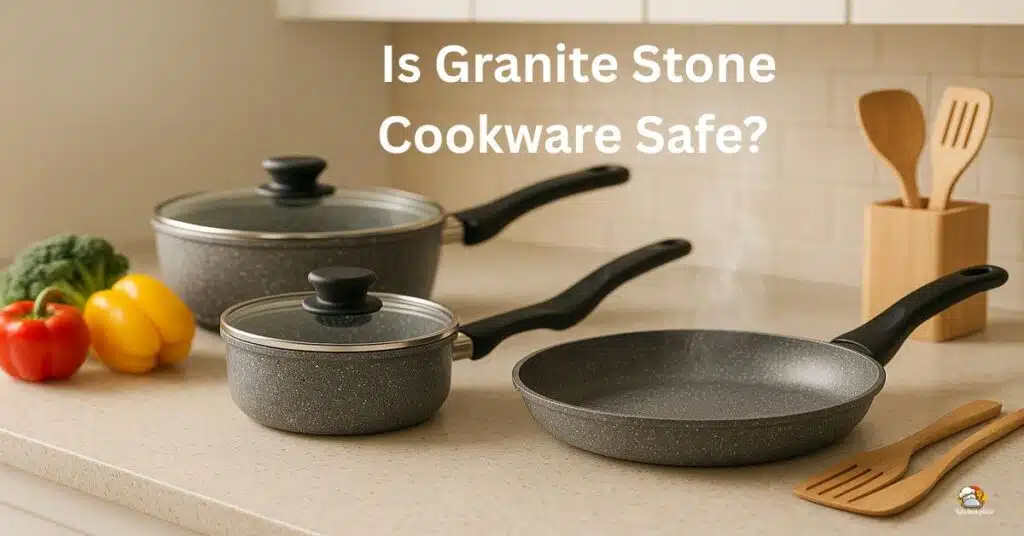
Hard Anodized vs Granite:
Granite: Attractive and non-toxic, but the coating may wear faster.
Hard Anodized: More durable and better suited for daily cooking.
Granite cookware looks attractive and non-toxic, but hard anodized cookware is the more practical and longer-lasting choice for daily cooking.
See the full breakdown in my complete guide: Hard Anodized vs Granite Cookware.
Quick Comparison Table:
| Cookware Type | Strengths | Weaknesses |
| Stainless Steel | Extremely durable, oven safe | Sticky surface, harder to clean |
| Nonstick | Lightweight, affordable | Coating wears quickly |
| Ceramic | Eco-friendly, stylish | Chips, less durable |
| Cast Iron | Great heat retention, searing | Very heavy, needs seasoning |
| Granite | Attractive, non-toxic | Shorter lifespan, coating issues |
| Hard Anodized | Durable, even heating, safe nonstick | Heavier, not always induction |
How to Choose the Right Hard Anodized Cookware Set
When I help friends or readers pick cookware, I remind them to check a few simple things. Here’s my checklist that works for most U.S. families in 2025.
Dishwasher Safe vs Hand Wash:
Some sets are marked dishwasher safe, but I’ve seen the coating last longer with hand wash.
- For easy cleaning, go with T-fal Ultimate.
- For long-term durability, choose Calphalon, even if you hand wash.
Cooking Surface Compatibility:
- Gas Stove: Most hard anodized sets (like Calphalon Premier) heat fast and evenly.
- Induction Cooktop: Choose an induction compatible set such as Circulon Symmetry.
Oven Safe Temperature:
- Cuisinart Chef’s Classic handles up to 500°F, perfect for baked pasta or casseroles.
- Rachael Ray Cucina is oven safe to 400°F, good for lighter meals.
Handle Type & Lids:
- Silicone handles (Rachael Ray) stay cool and are easy to grip.
- Stainless steel riveted handles (Calphalon, Cuisinart) feel premium and last longer.
- Glass lids let you check food without lifting the cover.
Piece Count & Set Size:
- Small kitchens: Go with a 10-piece set like T-fal.
- Large families: Pick a 12–13 piece set like Calphalon or Cuisinart for more options.
Warranty & Durability:
- A lifetime warranty shows confidence in durability.
- Brands like Calphalon and Cuisinart usually offer strong coverage.
- In 2025, these are among the safest cookware sets because they’re PFOA-free and durable nonstick cookware sets.
Quick Tip:
- For budget buyers → T-fal Ultimate or Rachael Ray Cucina.
- For premium buyers → Calphalon Premier or Cuisinart Chef’s Classic.
👉 Confused between budget and premium sets? Read my guide: Best Budget vs Premium Cookware in 2025.
How to Clean & Maintain Hard Anodized Cookware
Many readers ask me: how to clean hard anodized cookware so it stays safe and durable for years. Based on my own cooking routine, here’s a simple step-by-step guide.
Step-by-Step Cleaning Guide:
- Let the pan cool before washing. Sudden temperature changes can warp the metal.
- Use mild dish soap and a soft sponge. Avoid rough scrubbers or steel wool.
- Rinse well with warm water to remove any soap.
- Towel dry right away so no water spots form.
- Cook only with silicone or wooden utensils to protect the scratch-resistant coating.
- Store with padding (like paper towels between pans) to prevent scratches.
Do’s and Don’ts:
- Do clean after every use to stop food from sticking.
- Do use non-abrasive cleaners for tough stains.
- Don’t put most sets in the dishwasher, unless the brand clearly says it’s safe.
- Don’t overheat the cookware above 500°F. This shortens the coating’s life.
- Don’t use sharp metal utensils. They can scratch or damage the nonstick layer.
From my own kitchen, I’ve seen that following these cookware cleaning tips keeps even an everyday cooking set looking new for years.
👉 For step-by-step instructions, see my full guide here: How to Clean Hard Anodized Cookware.
Best Hard Anodized Cookware Brands 2026
If you’re looking for the best brand of hard anodized cookware, here’s my expert cookware review of the top U.S. brands in 2026. Each has strong points — and a few drawbacks.
Calphalon – Premium & Reliable:
I’ve used Calphalon for years, and it’s one of the strongest sets I own.
- Strengths: Premium build, excellent heat control, lifetime warranty.
- Weaknesses: More expensive, not always dishwasher safe.
Verdict: Best for families who want cookware that lasts for decades.
T-fal – Best Budget Pick:
Perfect for beginners or budget buyers.
- Strengths: Affordable, dishwasher safe, user-friendly design.
- Weaknesses: Nonstick coating may wear faster than premium brands.
Verdict: Best for budget buyers, students, or small households.
Cuisinart – Heavy-Duty Performance:
Cuisinart is a trusted name for serious cooking.
- Strengths: Oven safe up to 500°F, riveted stainless handles, lifetime warranty.
- Weaknesses: Slightly heavy, not induction compatible.
Verdict: Best for cooks who want durability and high heat performance.
Rachael Ray – Stylish + Functional:
Designed with style in mind.
- Strengths: Colorful silicone handles, lightweight, affordable.
- Weaknesses: Lower oven tolerance (400°F), limited warranty.
Verdict: Best for buyers who want a stylish, functional set.
Circulon – Induction Compatible:
Known for innovation and compatibility.
- Strengths: Induction ready, scratch resistant, dishwasher safe.
- Weaknesses: Heavier than others, mid-range price.
Verdict: Best for induction users who want long-term durability.
Anolon – Trusted Durability:
Well respected for reliability.
- Strengths: Strong reputation, good balance between price and quality.
- Weaknesses: Some sets are not marked dishwasher safe.
Verdict: Best for everyday buyers who want balanced performance.
Final Verdict: Which Hard Anodized Cookware Should You Buy?
After testing and using multiple hard anodized cookware sets over the years, one thing is clear:
hard anodized cookware is a safe, durable, and practical choice for everyday home cooking. If you want the best overall balance of performance, durability, and long-term value, Calphalon Premier is my top recommendation.
For budget-friendly cooking without sacrificing safety, T-fal Ultimate is a smart choice. And if you want premium performance for heavy or high-heat cooking, Cuisinart Chef’s Classic stands out.
Choose the set that matches how you cook and your budget—not just the brand name—and you’ll enjoy reliable cookware for years to come.
FAQs (People Also Ask)
Is hard anodized cookware safe?
Yes, hard anodized cookware is safe when used the right way. The anodization process seals the aluminum, so it doesn’t leach into food. Most trusted brands also use PFOA-free and BPA-free coatings, making these pans non-toxic for everyday cooking. Just avoid overheating above 500°F or scratching with sharp utensils. Harvard Health experts also confirm that properly used anodized and stainless steel cookware are both safe options.
Does hard anodized cookware cause cancer?
No, hard anodized cookware does not cause cancer. The surface is sealed through anodization, and brands like Calphalon or T-fal use PFOA-free nonstick coatings. As long as you follow care instructions, there is no evidence linking anodized cookware to cancer.
Which is healthier, hard anodized or stainless steel?
Stainless steel is naturally chemical-free and lasts longer, but food can stick without oil. Hard anodized cookware has a nonstick, PFOA-free surface, so you can cook with less oil. Both are safe, but stainless is best for durability, while anodized is better for easy cooking and cleaning.
How long does hard anodized cookware last?
With proper care, hard anodized cookware lasts 5 to 10 years, sometimes even longer. Hand washing, avoiding sharp metal utensils, and not overheating helps extend its life. Premium brands like Calphalon or Cuisinart often give lifetime warranties, showing confidence in durability.
Is hard anodized better than Teflon?
Yes, hard anodized cookware is usually better than Teflon pans. Teflon coatings can wear out faster, while anodized aluminum is scratch-resistant, stronger, and long-lasting. Modern anodized sets also include PFOA-free nonstick layers, making them safer and more reliable for long-term cooking.
Can I use hard anodized cookware on induction stoves?
Most hard anodized cookware does not work on induction unless the base includes a magnetic stainless steel layer. Before buying, check the product details or look for terms like “induction-compatible”. Brands such as Circulon and Anolon offer anodized pans specifically made for induction cooktops.
Is hard anodized cookware dishwasher safe?
Technically, some brands claim to be dishwasher safe, but hand washing is strongly recommended. Dishwasher detergents can wear down the nonstick coating faster. To increase lifespan, wash gently with warm soapy water and avoid abrasive pads.
Can hard anodized pans go in the oven?
Yes, most hard anodized cookware is oven-safe up to 350°F–500°F, depending on the brand and handle material. Always check manufacturer instructions. Silicone or stainless-steel handles usually offer higher temperature tolerance.
Why is hard anodized cookware so expensive?
Hard anodized cookware goes through an electrochemical process that makes the metal twice as strong as stainless steel. It requires more manufacturing steps, higher-quality aluminum, and often includes premium PFOA-free nonstick coatings. This results in better durability, heat conductivity, and performance—justifying the price.
How do I prevent food from sticking to hard anodized pans?
Even though anodized cookware is nonstick, preheating on low-medium heat and adding a small amount of oil improves performance. Avoid using cooking sprays—they leave residue. Cleaning thoroughly after each use also prevents buildup that can cause sticking.
Author Bio:
MD Soazim is the author of Kitchenpluse.com, where he shares expert reviews on cookware and kitchen tools. With years of hands-on cooking and product testing, he helps families find the best hard anodized cookware for safe and healthy meals. His mission is simple — make buying cookware easier, smarter, and budget-friendly.