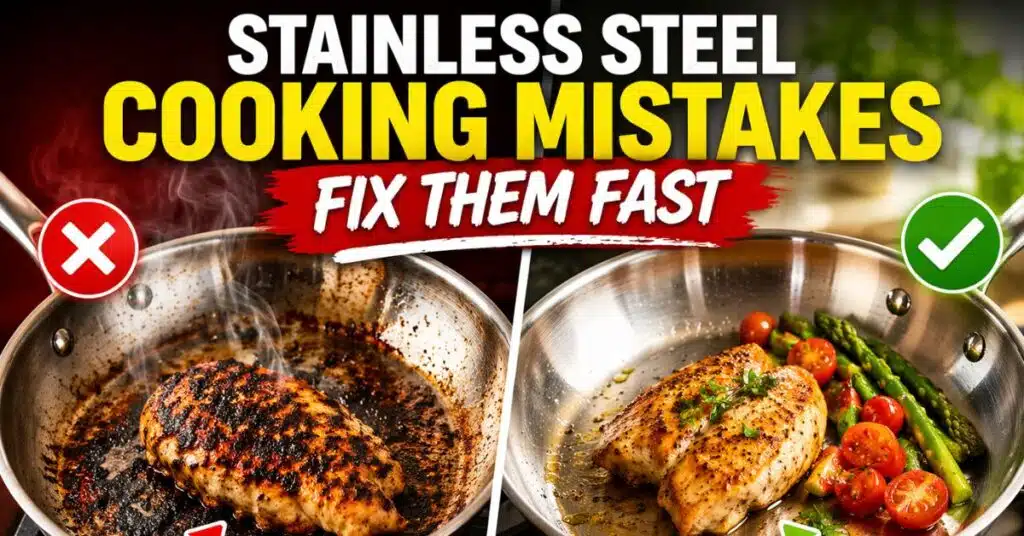
If your food keeps sticking to your stainless steel pan, you’re not alone.
Many beginners struggle with burning, sticking, and stubborn stains — even when using high-quality cookware. It can feel frustrating, especially if you’re used to nonstick pans.
The problem isn’t the cookware — it’s the technique.
Stainless steel works differently, and small mistakes like improper preheating, wrong heat levels, or poor timing can completely change your cooking results.
In this guide, you’ll discover the most common stainless steel cooking mistakes — and exactly how to fix them step by step.
I’ve personally made many of these mistakes when I first started, and once I fixed them, my results improved instantly.
Quick Answer: Common Stainless Steel Cooking Mistakes
The most common stainless steel cooking mistakes include:
- Not preheating the pan properly
- Using heat that is too high
- Adding food before the oil is ready
- Choosing the wrong type of oil
- Overcrowding the pan
These mistakes often lead to food sticking, burning, or uneven cooking. Fixing them can quickly improve your results and make cooking with stainless steel much easier.
Why Cooking with Stainless Steel Feels Difficult for Beginners
If you’re used to nonstick cookware, switching to stainless steel can feel frustrating at first.
Unlike nonstick pans, stainless steel doesn’t have a coating to prevent food from sticking. Instead, it depends on proper technique — especially heat control and timing.
Without the right approach, food can easily stick, burn, or cook unevenly.
If you’ve ever wondered why food sticks to stainless steel pans, it usually happens because the pan isn’t preheated properly or the oil is added at the wrong time.
The good news? Once you understand these basics, cooking with stainless steel becomes much easier — and far more reliable in the long run.
15 Common Stainless Steel Cooking Mistakes (And How to Fix Them)
Mistake 1: Not Preheating the Pan
One of the most common mistakes beginners make is adding food to a cold pan.
When the pan isn’t properly preheated, food is much more likely to stick. This happens because the metal surface hasn’t fully expanded, and tiny pores can trap the food instead of letting it release naturally.
As a result, you may notice sticking, uneven cooking, or even tearing when flipping.
How to Fix It:
- Heat the pan on medium heat for 2–3 minutes
- Add a few drops of water — if they form beads and glide across the surface (water droplet test), the pan is ready
- Add oil and let it heat for a few seconds
- Then add your food
This method is known as the water droplet test, which happens due to the Leiden frost effect when the pan reaches the right temperature.
Proper preheating is the #1 secret to preventing food from sticking in stainless steel pans.
Mistake 2: Using Too Much Heat
Many beginners believe that higher heat means faster cooking. But with stainless steel, this often does more harm than good.
Using too much heat can burn your food on the outside while leaving it undercooked inside. It can also cause stubborn brown or rainbow discoloration on the pan, which is harder to clean.
Stainless steel holds heat very well, so excessive heat is rarely necessary.
How to Fix It:
- Cook on medium or medium-low heat for most foods
- Let the pan heat up gradually instead of rushing
- Increase the heat only when needed (for searing or boiling)
Stainless steel retains heat efficiently — using moderate heat gives you better control and more consistent results.
Mistake 3: Adding Food Too Early
Even if your pan is heating, adding food too soon is a common mistake that leads to sticking.
If the oil hasn’t reached the right temperature, it can’t create a proper barrier between the food and the metal surface. As a result, the food sticks, tears, and cooks unevenly.
This is one of the main reasons beginners struggle with stainless steel cookware.
How to Fix It:
- Preheat the pan first on medium heat
- Add oil and let it heat for a few seconds
- Wait until the oil starts to shimmer slightly
- Then add your food gently
Getting the timing right between heat and oil is key to preventing food from sticking.
Mistake 4: Using the Wrong Type of Oil
Not all oils perform well when cooking with stainless steel.
Using oils with a low smoke point can cause them to burn quickly, leaving behind sticky residue and affecting the flavor of your food. It can also make cleaning more difficult and increase the chances of food sticking.
Understanding the smoke point of cooking oils is important for choosing the right oil and preventing burning.
Choosing the right oil is essential for better heat control and smoother cooking.
How to Fix It:
Use oils with a high smoke point, such as:
- Avocado oil
- Canola oil
- Grapeseed oil
Avoid using:
- Butter alone at high heat (it burns quickly)
- Olive oil on very high heat (it can smoke and break down)
Using the right oil helps create a proper barrier, preventing sticking and improving overall cooking results.
Mistake 5: Not Letting Food Release Naturally
A very common mistake is trying to flip or move food too early.
When food sticks to a stainless steel pan, it’s usually because it hasn’t developed a proper crust yet. At this stage, the food is still bonding with the surface — forcing it to move will only make it tear or break apart.
But if you give it a little more time, the food will naturally release on its own.
How to Fix It:
- Let the food cook undisturbed for a few minutes
- Gently try to lift it — if it sticks, give it more time
- Flip only when the food releases easily from the pan
Patience is key — when the crust forms properly, stainless steel becomes naturally nonstick.
Mistake 6: Overcrowding the Pan
One of the most common mistakes is adding too much food to the pan at the same time.
When the pan is overcrowded, its temperature drops quickly. Instead of searing, the food starts to release moisture, which causes it to steam rather than brown. This results in less flavor, uneven cooking, and a higher chance of sticking.
Proper spacing is essential for achieving a good sear and better texture.
How to Fix It:
- Cook food in small batches instead of all at once
- Leave enough space between each piece
- Make sure each piece touches the pan surface directly
Proper spacing helps maintain heat, giving you a better sear and reducing sticking.
Mistake 7: Not Drying the Pan Properly
Even a small amount of water left in the pan can affect your cooking results.
When moisture is present, it lowers the pan’s temperature and prevents the oil from heating properly. This can lead to sticking, uneven cooking, and poor searing.
Water can also cause oil to splatter, making cooking messier and less controlled.
How to Fix It:
- Always dry the pan completely before heating
- After washing, wipe it with a clean cloth or let it air dry fully
- Make sure no moisture remains before adding oil
A dry pan ensures proper heat control, better oil performance, and smoother cooking. For more care tips, check our guide on how to clean stainless steel cookware
Mistake 8: Skipping Seasoning (Common Confusion)
Many beginners believe that stainless steel cookware needs to be seasoned like cast iron — which often creates confusion.
In reality, seasoning is not required for stainless steel. However, applying a light seasoning layer can help reduce sticking and improve cooking performance in some cases.
It’s an optional technique, not a must.
How to Fix It:
- Heat the pan on medium heat
- Add a thin layer of oil
- Let it heat until it begins to lightly smoke
- Turn off the heat and allow it to cool
This process creates a temporary nonstick effect, making cooking easier. For a step-by-step method, check our guide on how to season a stainless steel pan
Mistake 9: Cleaning with Harsh Methods
Cleaning your stainless steel cookware the wrong way can reduce its performance over time.
Scrubbing too aggressively or using harsh chemicals can damage the surface and create tiny scratches. These scratches make it easier for food to stick and harder to clean in the future.
Over time, improper cleaning can affect both the look and performance of your pan.
How to Fix It:
- Use warm water and mild dish soap for regular cleaning
- For stubborn stains, use baking soda or vinegar
- Avoid using steel wool or abrasive scrubbers unless absolutely necessary
Gentle cleaning helps maintain a smooth surface, preventing sticking and extending the life of your cookware.
For a complete step-by-step guide, check how to clean stainless steel cookware safely
Mistake 10: Ignoring Heat Distribution
Stainless steel cookware heats differently than nonstick pans, and understanding this is key to better cooking.
If heat isn’t evenly distributed, some areas of the pan can become too hot while others stay cooler. This can cause food to burn in one spot while remaining undercooked in another.
Uneven heat is a common reason behind inconsistent results, especially for beginners.
How to Fix It:
- Use cookware with multi-ply construction for better heat distribution
- Preheat the pan evenly on medium heat
- Stir or move food when needed to prevent hot spots
Multi-ply construction helps distribute heat more evenly across the pan, reducing hot spots and improving cooking consistency.
Understanding how heat moves across the pan helps you cook more evenly and avoid burning.
Mistake 11: Cooking Delicate Foods Incorrectly
Delicate foods like eggs, fish, or pancakes are more likely to stick if you don’t use the right technique.
Unlike nonstick pans, stainless steel requires proper heat control and enough oil to create a protective layer. Without this, delicate foods can easily stick, tear, or fall apart.
This is one of the most frustrating issues beginners face when switching to stainless steel.
How to Fix It:
- Preheat the pan properly before adding anything
- Use enough oil to create a light barrier
- Cook on medium-low heat for better control
- Let the food set before flipping — don’t rush
Delicate foods need patience and proper timing to release naturally without sticking.
Beginners often struggle with eggs — learn the right method in our guide on how to cook eggs in a stainless steel pan
Mistake 12: Using Cold Ingredients
Adding cold ingredients directly into a hot pan is a common mistake that affects cooking results.
This sudden temperature change (often called temperature shock) can lower the pan’s heat and cause uneven cooking. It also increases the chances of food sticking, especially when cooking meat or delicate items.
Cold ingredients can also release extra moisture, which prevents proper searing.
How to Fix It:
- Let meat or other ingredients sit at room temperature for 10–15 minutes before cooking
- Pat dry any excess moisture with a paper towel
- Add food gently to the pan to maintain heat stability
Balanced temperature between the pan and ingredients helps ensure even cooking, better searing, and less sticking.
Mistake 13: Not Using Enough Oil
Using too little oil is a common reason why food sticks to stainless steel pans.
Oil acts as a protective barrier between the food and the metal surface. Without enough oil, food comes into direct contact with the pan, making it more likely to stick, tear, or cook unevenly.
This is especially important when cooking delicate or high-protein foods.
How to Fix It:
- Use enough oil to lightly coat the entire surface of the pan
- Let the oil heat for a few seconds before adding food
- Adjust the amount of oil based on what you’re cooking
The right amount of oil creates a proper barrier, helping prevent sticking and improving texture.
Mistake 14: Letting Food Burn Too Long
Letting food burn in a stainless steel pan doesn’t just ruin the taste — it also creates stubborn residue that’s difficult to clean.
Burnt food can leave behind tough stains and discoloration, making your cookware look worn and affecting its performance over time.
This is a common issue when heat is too high or cooking is left unattended.
How to Fix It:
- Monitor your food closely while cooking
- Use medium heat instead of high heat
- Remove food at the right time to avoid overcooking
Controlling heat and timing helps prevent burning and keeps your cookware in better condition.
If you already have burnt residue, check our guide on how to remove burnt food from stainless steel pots
Mistake 15: Not Understanding Stainless Steel Behavior
One of the biggest mistakes beginners make is expecting stainless steel to work like nonstick cookware.
Unlike nonstick pans, stainless steel doesn’t prevent sticking automatically. It requires the right technique, proper heat control, and good timing to get the best results.
Without understanding how it behaves, cooking can feel difficult and frustrating.
How to Fix It:
- Learn proper preheating techniques before cooking
- Control heat carefully — avoid using high heat unnecessarily
- Use the right oil and timing for each type of food
Once you understand how stainless steel works, it becomes much easier to use — and delivers more consistent, professional results.
Pro Tips for Cooking with Stainless Steel
Follow these simple tips to improve your cooking results right away:
- Always preheat your pan before adding oil or food
- Use medium heat instead of high for better control
- Add oil only after the pan is properly heated
- Don’t rush — let food release naturally before flipping
- Clean your pan properly after each use to maintain performance
Small adjustments in technique can make a big difference in preventing sticking, burning, and uneven cooking.
Beginner Cheat Sheet
If you remember only a few things, follow these simple rules:
- Preheat the pan first
- Add oil after heating
- Add food last — never too early
- Avoid overcrowding the pan
- Use medium heat for better control
Master these basics, and you’ll avoid most common stainless steel cooking mistakes.
Stainless Steel Cooking Questions
Why does food stick to stainless steel pans?
Food usually sticks when the pan is not properly preheated or when oil is added too early. This causes food to bond with the metal surface instead of releasing naturally. Using the right heat and timing can significantly reduce sticking.
Learn more in our guide on why stainless steel pans stick
How do you prevent burning in stainless steel cookware?
Burning often happens بسبب using too much heat or leaving food unattended. Cooking on medium heat and monitoring your food closely helps prevent burning and ensures even cooking results.
Is stainless steel cookware hard to use?
Stainless steel can feel difficult at first, especially for beginners. However, once you understand preheating, oil timing, and heat control, it becomes easy to use and delivers consistent cooking results.
What oil is best for stainless steel cooking?
Oils with a high smoke point work best, such as avocado oil, canola oil, or grapeseed oil. These oils handle heat better and help prevent sticking during cooking.
Do you need to season stainless steel pans?
Seasoning is not required for stainless steel cookware. However, a light seasoning layer can help reduce sticking in some cases and improve cooking performance.
You can follow a step-by-step method in our guide on how to season a stainless steel pan
How long should you preheat a stainless steel pan?
Most stainless steel pans should be preheated for about 2–3 minutes on medium heat. You can test it by adding a few drops of water — if they form beads and glide, the pan is ready.
Now that you understand the most common stainless steel cooking mistakes and how to fix them, using the right cookware can make a big difference in your results.
Recommended Stainless Steel Cookware
Now that you understand the most common stainless steel cooking mistakes and how to fix them, using the right cookware can make your cooking much easier and more consistent.
Low-quality pans often heat unevenly and make sticking worse — even if you follow the right technique.
Our Top Picks:
Best Stainless Steel Cookware Sets Perfect for beginners who want even heat distribution and reliable performance.
Best Stainless Steel Frying Pan Ideal for everyday cooking, especially for eggs, meat, and delicate foods.
Final Thoughts
Cooking with stainless steel doesn’t have to feel frustrating or complicated.
Most issues — like food sticking, burning, or stubborn stains — usually come down to a few simple mistakes. Once you understand how heat, oil, and timing work together, everything starts to make sense.
With a little practice, stainless steel can actually give you better control, better flavor, and more consistent results than nonstick cookware.
Focus on the basics, avoid these common mistakes, and you’ll quickly see a big improvement in your cooking.
And if you pair the right technique with high-quality cookware, the entire process becomes even easier and more enjoyable.