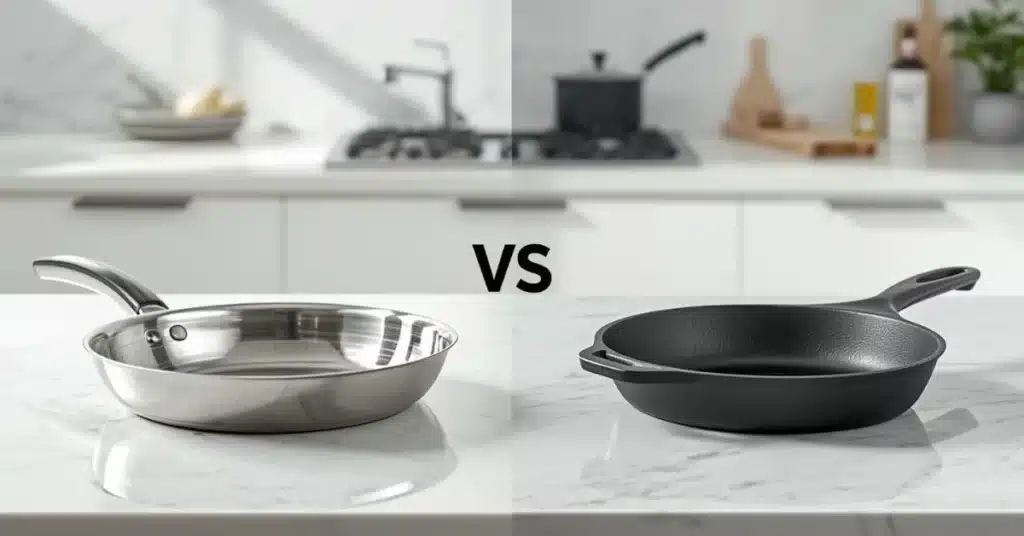
Choosing between stainless steel vs cast iron cookware can be confusing for many home cooks. Both materials are durable and widely used in kitchens, but they perform differently depending on how you cook.
Stainless steel cookware is known for its versatility, easy maintenance, and non-reactive surface. Cast iron cookware, on the other hand, stands out for excellent heat retention and powerful searing performance.
In this guide, we’ll compare cast iron vs stainless steel cookware side by side, including cooking performance, durability, maintenance, and overall value. By the end, you’ll know which cookware material is the best fit for your kitchen and cooking style.
If you’re planning to upgrade your kitchen, you may also want to explore our guide to the best stainless steel cookware sets to find high-quality options for everyday cooking.
Quick Comparison: Stainless Steel vs Cast Iron
Here is a quick comparison of stainless steel vs cast iron cookware based on the most important cooking factors. This overview helps you quickly understand how these two cookware materials differ.
| Feature | Stainless Steel | Cast Iron |
| Heat Retention | Moderate | Excellent |
| Heat Responsiveness | Fast | Slow |
| Weight | Lightweight to medium | Heavy |
| Maintenance | Easy to clean | Requires seasoning |
| Reactivity | Non-reactive with acidic foods | Can react with acidic foods |
| Durability | Highly durable and rust-resistant | Extremely durable but can rust |
| Best Use | Everyday cooking, sauces, vegetables | High-heat cooking and steak searing |
Stainless steel cookware is more versatile, lighter, and easier to maintain. Cast iron cookware retains heat better and performs best for high-heat cooking and steak searing. The better choice depends on your cooking style and the types of dishes you prepare most often.
What Is Stainless Steel Cookware?

Stainless steel cookware is made from a metal alloy that usually contains iron and chromium. The chromium forms a protective layer that helps prevent rust and corrosion. According to materials science research on stainless steel, this alloy is valued for its durability, corrosion resistance, and long lifespan.
Most high-quality stainless steel cookware uses multi-ply construction, often called tri-ply or multi-layer cookware. In this design, an aluminum or copper core sits between layers of stainless steel. This layered structure improves heat distribution and helps the pan cook food more evenly.
Another important advantage is its non-reactive surface. Stainless steel does not react with acidic ingredients like tomatoes, vinegar, or citrus. Because of this, stainless steel pans are commonly used for cooking sauces, vegetables, and other delicate dishes that need steady heat control.
Stainless steel cookware is also easy to maintain. Unlike cast iron, it does not need seasoning. Many stainless steel pans are also dishwasher safe, which makes cleanup easier for everyday cooking.
If you want a deeper look at the advantages and limitations of this material, you can explore our detailed guide on stainless steel cookware pros and cons.
Overall, stainless steel cookware is valued for its versatility, durability, and ease of use. That is why it remains a popular choice in both home kitchens and professional restaurants.
What Is Cast Iron Cookware?
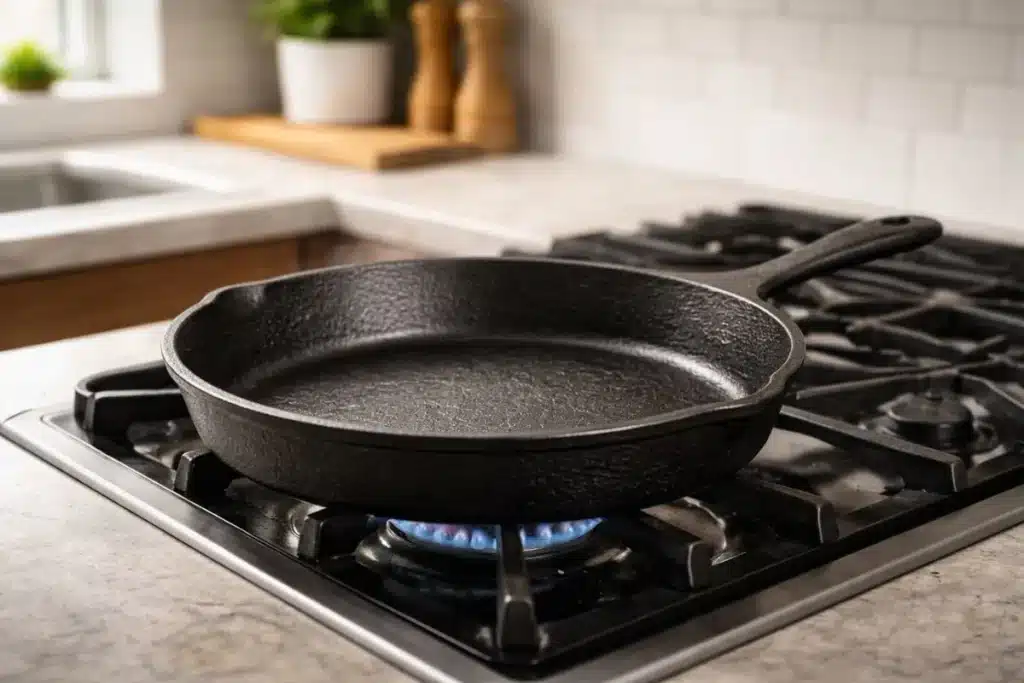
Cast iron cookware has been used for centuries and is known for its durability and excellent heat retention. Traditional cast iron cookware remains popular in many kitchens because it can withstand very high temperatures and last for decades with proper care.
One of the most notable features of cast iron cookware is its ability to retain heat for long periods. Once heated, a cast iron pan stays hot much longer than most other cookware materials. This makes it ideal for cooking techniques that require steady high heat, such as searing steaks, frying, and oven roasting.
Another important feature of cast iron cookware is seasoning. Seasoning is a layer of oil that is baked onto the surface of the pan. This layer creates a natural non-stick coating and helps protect the iron from rust.
When properly seasoned and maintained, cast iron cookware can develop a smooth cooking surface that improves over time. Many cooks value this natural non-stick quality.
However, cast iron cookware requires more maintenance than stainless steel. It usually should not be cleaned in a dishwasher. The pan may also need occasional re-seasoning to prevent rust and maintain its cooking surface.
Despite the extra care required, cast iron cookware is extremely durable and can last for decades or even generations. Because of its strong heat retention and long lifespan, many cooks consider cast iron cookware a valuable addition to any kitchen.
Stainless Steel vs Cast Iron: Key Differences
Both stainless steel cookware and cast iron cookware are durable and widely used in kitchens. However, they perform differently depending on the cooking task.
Understanding these differences can help you choose the right cookware for your cooking style. Below are the most important factors that separate these two materials.
Cooking Performance
When comparing stainless steel vs cast iron cooking performance, both materials have advantages.
Stainless steel cookware is highly versatile. It responds quickly to temperature changes, allowing you to adjust heat more easily. Because of this, stainless steel pans work well for sauces, sautéing vegetables, and delicate foods that need precise heat control.
Cast iron cookware performs best in high-heat cooking. It retains heat extremely well, which makes it ideal for searing meat, frying, and cooking foods that need steady high temperatures.
In general, stainless steel works better for everyday cooking, while cast iron excels at high-heat searing.
Heat Retention
One of the biggest differences between stainless steel and cast iron cookware is heat retention.
Cast iron is known for holding heat for a long time. Once heated, the pan stays hot even when food is added. This makes cast iron ideal for cooking thick cuts of meat or dishes that require stable temperatures.
Stainless steel pans heat up faster and cool down more quickly. Many stainless steel pans use aluminum or copper cores to improve heat distribution.
Because of this, cast iron provides stronger heat retention, while stainless steel offers faster heat control.
Durability
Both materials are known for their long lifespan, but they handle wear differently.
Stainless steel cookware resists rust, corrosion, and stains. The chromium in stainless steel forms a protective layer that helps protect the surface from moisture and acidic foods.
Cast iron cookware is also extremely durable and can last for decades. Many vintage cast iron pans are still used today. However, cast iron can rust if it is not properly seasoned or if it stays wet for too long.
Overall, both materials are very durable, but stainless steel usually requires less maintenance.
Maintenance and Cleaning
Maintenance is one of the biggest differences between these two cookware types.
Stainless steel cookware is generally easy to clean. Many pans are dishwasher safe and do not require seasoning. Even when food sticks to the surface, soaking and gentle scrubbing usually solve the problem.
Even when food sticks to the surface, soaking and gentle scrubbing usually solve the problem. If stubborn residue builds up, learning how to clean stainless steel cookware properly can help restore the pan and maintain its performance.
Cast iron cookware requires more care. The surface must be seasoned with oil to maintain its protective layer and prevent rust. Dishwashers and strong detergents should usually be avoided.
For this reason, stainless steel is easier to maintain, while cast iron needs regular seasoning.
Weight and Handling
Weight can also affect your cooking experience.
Stainless steel pans are usually lighter and easier to move around the kitchen. This makes them convenient for everyday cooking tasks.
Cast iron cookware is much heavier because it is made from solid iron. The weight helps improve heat retention, but it can also make the pan harder to handle for some cooks.
If you prefer lightweight cookware, stainless steel is typically the more comfortable option.
Reactivity With Food
Another important difference is how these materials react with certain foods.
Stainless steel cookware is non-reactive. This means it does not interact with acidic ingredients like tomatoes, citrus, or vinegar. Because of this, it works well for sauces and acidic dishes.
Cast iron cookware can react with acidic foods if the seasoning layer becomes weak. This reaction may slightly affect flavor and can damage the seasoning layer.
For acidic dishes, stainless steel is usually the better choice.
Price and Value
Price is another factor many cooks consider.
Cast iron cookware is usually more affordable. Basic cast iron skillets are widely available at low prices and can last for many years.
Stainless steel cookware is often more expensive, especially multi-ply or tri-ply designs. These pans cost more because they use layered metal construction to improve heat performance.
However, many cooks believe the higher price is worth it because stainless steel cookware offers versatility, durability, and easier maintenance.
Pros and Cons of Stainless Steel Cookware
Stainless steel cookware is widely used in both home and professional kitchens. It is known for its durability, versatility, and non-reactive cooking surface. However, it also has some limitations compared with other cookware materials.
Pros of Stainless Steel Cookware
- Versatile cooking performance – Stainless steel pans work well for sautéing, simmering, boiling, and everyday cooking tasks.
- Non-reactive surface – Stainless steel does not react with acidic foods like tomatoes, vinegar, or citrus.
- Easy to maintain – Unlike cast iron, stainless steel cookware does not require seasoning and is usually easy to clean.
- Rust and corrosion resistant – The chromium in stainless steel helps protect the cookware from rust and staining.
- Lightweight and easy to handle – Most stainless steel pans are easier to lift and move than cast iron cookware.
Although stainless steel cookware is versatile and durable, some beginners may notice food sticking when using stainless steel pans. Learning why stainless steel pans stick can help you avoid this issue and improve your cooking results.
Cons of Stainless Steel Cookware
- Food can stick – If the pan is not heated properly or enough oil is not used, food may stick to the surface.
- Lower heat retention – Stainless steel pans do not hold heat as long as cast iron cookware.
- Premium cookware can be expensive – High-quality stainless steel cookware sets often cost more because of multi-layer construction.
Pros and Cons of Cast Iron Cookware
Cast iron cookware has been used for centuries and is valued for its durability and powerful heat retention. However, it typically requires more maintenance than stainless steel cookware.
Pros of Cast Iron Cookware
- Excellent heat retention – Cast iron pans stay hot for a long time, making them ideal for searing meat and high-heat cooking.
- Extremely durable – With proper care, cast iron cookware can last for decades or even generations.
- Naturally non-stick when seasoned – A well-seasoned cast iron pan develops a natural non-stick cooking surface.
- Great for oven cooking – Cast iron cookware can handle very high temperatures, making it ideal for roasting and baking.
Cons of Cast Iron Cookware
- Heavy cookware – Cast iron pans are significantly heavier than stainless steel pans.
- Requires seasoning – Cast iron must be seasoned regularly to maintain its protective coating.
- Can rust without proper care – If exposed to moisture, cast iron can develop rust.
- Not ideal for acidic foods – Cooking highly acidic ingredients may damage the seasoning layer.
Real Cooking Scenarios: Which One Works Better?
To better understand the difference between stainless steel vs cast iron cookware, it helps to look at real cooking situations.
For Everyday Cooking
For daily cooking tasks like sautéing vegetables, making sauces, or preparing quick meals, stainless steel cookware is usually the better choice.
It heats quickly, is easier to maintain, and works well with many different ingredients.
For Steak and High-Heat Searing
If you want a strong sear on steaks or other meats, cast iron cookware performs better.
Cast iron retains heat extremely well. This helps create a crispy, caramelized crust on the surface of the meat.
For Beginner Home Cooks
Beginners often prefer cookware that is simple to use and easy to maintain.
In this case, stainless steel cookware is usually more beginner-friendly because it does not require seasoning and is easier to clean.
For Oven Cooking
Cast iron cookware works very well in the oven.
Dishes like cornbread, roasted vegetables, and baked meals benefit from the steady heat retention that cast iron provides.
Who Should Choose Stainless Steel Cookware?
Stainless steel cookware is a great choice for home cooks who want versatile, low-maintenance cookware for everyday meals.
You should choose stainless steel cookware if:
- ✓ You want cookware that is easy to clean and maintain
- ✓ You often cook acidic foods, such as tomato sauces, vinegar-based dishes, or citrus recipes
- ✓ You prefer lighter cookware that is easier to handle on the stovetop
- ✓ You want versatile cookware for everyday cooking, including sautéing, simmering, and boiling
- ✓ You are a beginner home cook who prefers cookware that does not require seasoning
Because of its versatility and easy maintenance, stainless steel cookware is widely used in professional kitchens and modern home kitchens.
Who Should Choose Cast Iron Cookware?
Cast iron cookware is ideal for cooks who want strong heat retention and traditional cooking performance.
You should choose cast iron cookware if:
- ✓ You often cook steaks, burgers, or other meats that require strong searing
- ✓ You want cookware with excellent heat retention for high-temperature cooking
- ✓ You enjoy oven cooking, such as baking cornbread or roasting vegetables
- ✓ You prefer traditional cookware that can last for decades
- ✓ You don’t mind occasional seasoning and maintenance to keep the pan in good condition
While cast iron cookware requires regular seasoning, some cooks also experiment with techniques like how to season a stainless steel pan to reduce sticking and improve cooking performance.
Because of its durability and heat retention, cast iron cookware is widely appreciated by experienced cooks. It is especially useful for creating a rich, browned crust on meats.
Stainless Steel vs Cast Iron: Final Verdict
Both stainless steel cookware and cast iron cookware are excellent options. The better choice depends on how you like to cook and what types of meals you prepare most often.
For beginners and everyday cooking, stainless steel cookware is usually the better option. It is versatile, easy to maintain, and non-reactive with acidic foods.
For high-heat cooking and strong searing, cast iron cookware performs better. Its heavy construction allows it to retain heat for longer periods.
Quick Decision Guide
- Best for beginners → Stainless Steel
- Best for versatility → Stainless Steel
- Best for steak searing → Cast Iron
- Best heat retention → Cast Iron
If you prefer versatile cookware for everyday meals, you may also want to explore our recommendations for the best stainless steel frying pan to find reliable options for daily cooking.
In the end, the best cookware for your kitchen depends on your cooking style, maintenance preference, and the types of dishes you cook most often.
Stainless Steel vs Cast Iron: Common Questions
Is cast iron better than stainless steel?
Cast iron is better for high-heat cooking and searing because it retains heat longer. Stainless steel, however, is more versatile and easier to maintain for everyday cooking. The better option depends on your cooking style and the types of meals you prepare most often.
Which lasts longer: cast iron or stainless steel?
Both cast iron and stainless steel cookware are highly durable and can last for many years. Cast iron pans can last for generations if they are properly seasoned and maintained. Stainless steel cookware also lasts long because it resists rust, corrosion, and staining.
Which pan is better for steak: stainless steel or cast iron?
Cast iron is usually the better choice for cooking steak. Its strong heat retention helps create a powerful sear and a crispy crust on the meat. Stainless steel can cook steak as well, but cast iron typically produces better browning.
Can stainless steel replace cast iron?
Stainless steel can replace cast iron for many everyday cooking tasks, such as sautéing vegetables or cooking sauces. However, cast iron performs better for high-heat cooking and steak searing because it holds heat longer.
Is stainless steel cookware safe for cooking?
Yes, stainless steel cookware is considered safe for cooking. It has a non-reactive surface that does not react with acidic foods like tomatoes, citrus, or vinegar. Because of this, it is widely used in both home and professional kitchens.
What cookware do professional chefs prefer?
Many professional chefs prefer stainless steel cookware because it provides excellent heat control and versatility. It works well for sautéing, simmering, and pan frying. However, chefs also use cast iron cookware when strong heat retention is needed for searing.

![Is Carote Cookware Safe? Real-Life Test & Non-Toxic Facts [2025]](https://kitchenpluse.com/wp-content/uploads/2025/08/Is-Carote-Cookware-Safe-1024x536.webp)