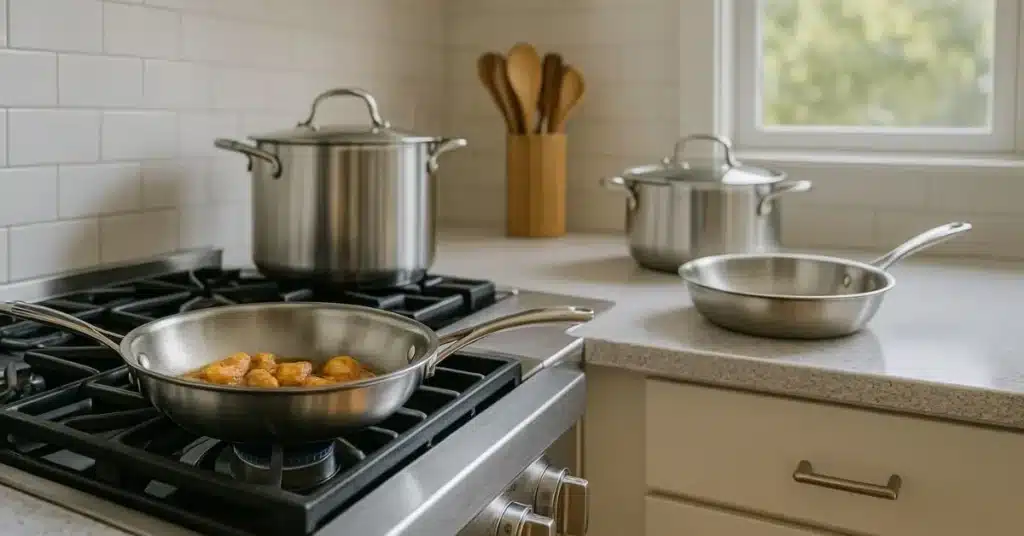
Stainless steel cookware is one of the most popular choices in US kitchens. Many home cooks trust it for daily cooking, while others avoid it because food sticks or cleaning feels harder.
So, is stainless steel cookware really worth it?
The answer depends on how you cook and what you expect from your cookware. Stainless steel offers strong durability, safe cooking, and great heat control. At the same time, it requires some technique and patience.
In this guide, we break down the pros and cons of stainless steel cookware in a simple and honest way. You will learn when it works best, when it does not, and whether it fits your kitchen needs.
If you are deciding between stainless steel and nonstick cookware, this guide will help you make a clear and confident choice.
If you are already comparing options, you may also want to explore some of the best stainless steel cookware sets available for US home kitchens.
Now that you have a general idea, here is a quick answer for fast clarity.
Quick Answer:Stainless Steel Cookware Pros and Cons
Stainless steel cookware is durable, non-toxic, and ideal for high-heat cooking, but it has a learning curve and can cause food to stick if not used properly. For most US home cooks who value long-term performance and health safety, stainless steel cookware is worth the investment.
Why You Can Trust This Guide
I use stainless steel cookware regularly in my home kitchen. I do not test it once or twice. I cook with it almost every day.I use stainless steel pans and pots for many tasks. For example, I sauté vegetables, sear chicken and steak, boil pasta, make sauces, and deglaze pans after high-heat cooking.
Real Kitchen Experience, Not Marketing Claims
This guide comes from hands-on cooking experience, not brand promises. I did not write it using product descriptions or sponsored content.I have seen both sides of stainless steel cookware. It works very well for some tasks. However, it also has challenges like food sticking, heat control, and extra cleaning after cooking.
What You Will Learn From This Guide
Everything shared here reflects real US home kitchens. This is especially helpful for home cooks who switch from nonstick cookware to stainless steel.
In this guide, I clearly explain:
- What stainless steel cookware does well
- Where it needs proper technique
- Who it works best for
- Who may want to avoid it
My goal is simple. I want to help you decide if stainless steel cookware fits your cooking style before you buy it.
Now that you know what this guide covers, let’s first understand what stainless steel cookware actually is.
What Is Stainless Steel Cookware?
Stainless steel cookware is cookware made from food-grade stainless steel that is strong, non-toxic, and designed for long-term cooking use. It does not use chemical coatings and works well with high heat.
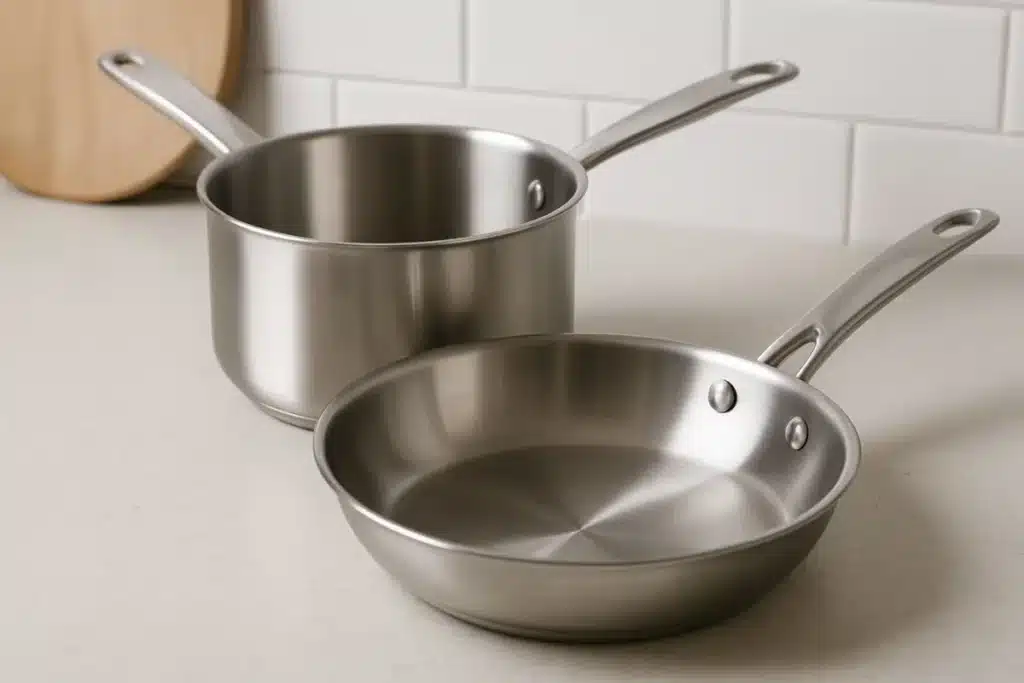
Home cooks and professional chefs across the United States use stainless steel cookware because it is durable, safe, and versatile.
Most high-quality stainless steel cookware works on gas, electric, and induction cooktops, which makes it a practical choice for modern US kitchens.
In the United States, materials used for cooking and food contact follow strict safety standards, and you can learn more through the FDA food contact safety guidelines.
To understand why it performs this way, we need to look at what stainless steel is made of.
What Is Stainless Steel Made Of?
Most stainless steel cookware is made from 18/10 or 18/8 stainless steel.
- 18/10 stainless steel contains 18% chromium and 10% nickel
- 18/8 stainless steel contains 18% chromium and 8% nickel
Chromium helps prevent rust and stains. Nickel adds strength and improves corrosion resistance.Together, these metals create food-grade stainless steel that is safe for daily cooking.
Many common stainless steel grades are described as 18% chromium and 8% nickel stainless steel, which helps explain their corrosion resistance and durability in cookware.
Material matters, but construction plays an even bigger role in cooking results.
How Stainless Steel Cookware Is Constructed
The way stainless steel cookware is built affects how it cooks.
Most high-quality cookware uses:
- Tri-ply construction Stainless steel on the outside with an aluminum core in the center
- 5-ply construction Multiple metal layers for better heat control
The aluminum or copper core spreads heat evenly. This helps prevent hot spots and improves cooking performance.
Now that you know how stainless steel cookware is built, let’s look at its main benefits.
Pros of Stainless Steel Cookware
Stainless steel cookware offers many benefits for everyday cooking. It is strong, safe, and built to last for many years.Below are the main advantages that make stainless steel cookware a popular choice in US home kitchens.
Durable and Long-Lasting
One of the biggest benefits of stainless steel cookware is durability. It is made to handle daily use without damage.
Stainless steel cookware is:
- Rust-resistant
- Scratch-resistant
- Resistant to warping from high heat
With proper care, stainless steel cookware can last 20 years or more. This makes it a long-term kitchen investment, not a disposable product.
Safe and Non-Toxic for Daily Cooking
Many people choose stainless steel cookware for health reasons. It does not rely on chemical coatings to work.
Stainless steel cookware is:
- Free from PFAS and PFOA
- Non-toxic when used correctly
- Approved for food contact
For health-conscious US households, this cookware offers peace of mind. It is a safer option than old or damaged nonstick pans. If you want to understand why many cooks avoid certain chemical coatings, the PFAS information from the U.S. EPA is a helpful starting point.
Non-Reactive With Acidic Foods
Stainless steel cookware does not react with acidic ingredients. This helps protect both your food and your cookware.
You can safely cook foods like:
- Tomato sauce
- Lemon-based dishes
- Vinegar marinades
Your meals keep their natural taste. The cookware also stays strong over time.
Excellent Heat Tolerance (Oven & Induction Safe)
Stainless steel cookware handles high heat very well. This gives you more cooking flexibility.
Most stainless steel cookware is:
- Oven safe up to 500°F (check handles)
- Compatible with induction cooktops
- Suitable for gas and electric stoves
You can start cooking on the stove and finish the dish in the oven without changing pans. If you are new to induction cooking, this guide explains how induction cooking works and why cookware compatibility matters.
Professional-Level Cooking Performance
Professional chefs often use stainless steel cookware because it delivers better heat control.
It works especially well for:
- Searing meat
- Browning food
- Deglazing pans to make sauces
If you want restaurant-style results at home, stainless steel cookware gives you more control over temperature and cooking techniques. For tasks like searing and browning, choosing the best stainless steel frying pan can make a noticeable difference in cooking results.
Along with its benefits, stainless steel cookware also has some drawbacks you should know.
Cons of Stainless Steel Cookware
Stainless steel cookware has many benefits, but it is not perfect for everyone.Below are the most common drawbacks you should know before choosing stainless steel cookware for your kitchen.
Food Can Stick If Used Incorrectly
Food sticking is the most common issue with stainless steel cookware.This usually happens when the pan is not used the right way.
Food may stick when:
- The pan is not preheated properly
- Oil is added at the wrong time
Stainless steel cookware needs a bit of technique, especially for beginners. Once you learn proper heat control and oil timing, sticking becomes much less of a problem. If this happens often, understanding why stainless steel pans stick can help you fix the problem quickly.
Higher Upfront Cost
Stainless steel cookware often costs more than basic nonstick pans.High-quality sets can feel expensive at first, especially for new home cooks.However, stainless steel cookware lasts much longer. Over time, it often replaces many cheaper pans, which lowers the lifetime cost.
Cheap Stainless Steel Heats Unevenly
Not all stainless steel cookware performs well. Low-quality, single-layer pans can heat unevenly.
This can cause:
- Hot spots
- Poor cooking results
You can avoid this problem by choosing tri-ply or multi-ply stainless steel cookware,
which spreads heat more evenly across the pan.
Cleaning Requires a Bit More Effort
Stainless steel cookware is dishwasher safe, but cleaning can take more effort when food sticks.
Common cleaning issues include:
- Burnt food residue
- Water spots
- Rainbow discoloration
These problems affect appearance, not performance. With proper cleaning methods, stainless steel cookware can look good again. Using the right method makes a big difference, so learning how to clean stainless steel cookware can save time and effort.
To make these points easier to compare, here is a quick side-by-side view.
Stainless Steel Cookware Pros vs Cons (Quick Comparison)
The table below gives a clear, side-by-side view of the main benefits and drawbacks of stainless steel cookware.
| Pros | Cons |
| Extremely durable and long-lasting | Food can stick if used incorrectly |
| Non-toxic and chemical-free | Higher upfront cost |
| Safe for acidic foods | Learning curve for beginners |
| Oven and induction safe | Cleaning needs more effort |
| Professional cooking performance | Cheap versions heat unevenly |
This comparison shows a clear trade-off. Stainless steel cookware focuses on durability and performance, while it requires proper technique and patience. For many US home cooks, the long-term benefits outweigh the short-term learning curve.
Based on this comparison, let’s see who benefits most from stainless steel cookware.
Who Should Buy Stainless Steel Cookware?
Stainless steel cookware is not for everyone. However, it works very well for certain types of home cooks.This cookware is a smart choice for people who value health, performance, and long-term use in the kitchen.
For everyday cooking needs, choosing from the best stainless steel cookware sets can give you better value and long-term performance.
Best For
Stainless steel cookware is ideal for:
- Health-conscious families who want chemical-free cookware for daily meals
- Home cooks who cook often especially several times a week
- Gas or induction stove users who need cookware that handles high heat
- People who want long-term value instead of replacing pans every few years
- Cooks who enjoy searing and making sauces and want better heat control
If you enjoy learning simple cooking techniques, stainless steel cookware can improve your cooking skills over time. For many US home kitchens, it becomes a reliable, long-term tool.Looking at trusted stainless steel cookware brands can also help you choose cookware that matches your cooking needs and budget.
At the same time, stainless steel cookware may not be the best choice for everyone.
Who Should Avoid Stainless Steel Cookware?
Stainless steel cookware is useful, but it does not suit every type of home cook.Some people may find it harder to use, especially at the beginning.
Not Ideal For
Stainless steel cookware may not be the best choice for:
- Absolute beginners who want cookware with no learning curve
- People who cook eggs or delicate fish often and need easy food release
- Users on a very tight budget who want the lowest upfront cost
- Anyone who prefers effortless cooking and expects food to slide off easily
In these cases, nonstick cookware may feel easier at first. Once cooking skills improve, many people later switch to stainless steel for better performance and durability.
To help you decide better, let’s compare stainless steel cookware with nonstick cookware.
Some cooks also prefer a middle option, so comparing stainless steel vs hard anodized cookware may help you find the right balance.
Stainless Steel vs Nonstick Cookware (Quick Comparison)
Stainless steel and nonstick cookware serve different cooking needs. The table below shows how they compare in everyday use.
| Feature | Stainless Steel Cookware | Nonstick Cookware |
| Durability | Very durable and long-lasting | Wears out over time |
| Safety | Non-toxic and chemical-free | Coating can wear or peel |
| Heat tolerance | Handles high heat well | Not ideal for high heat |
| Food release | Needs proper technique | Food releases easily |
| Ease of use | Learning curve for beginners | Very easy to use |
| Best for | Searing, sauces, browning | Eggs, pancakes, fish |
| Long-term value | High long-term value | Lower long-term value |
Quick Takeaway
Stainless steel cookware focuses on durability, safety, and performance. Nonstick cookware focuses on ease and convenience. For many US home kitchens, the best setup is to use both types, choosing the right pan for the right cooking task.
Now that the differences are clear, let’s answer the most important question.
Is Stainless Steel Cookware Worth It? (Expert Verdict)
Yes, stainless steel cookware is worth it for most US home cooks.It costs more upfront and takes a little practice. However, it offers strong durability, safe cooking, and reliable performance.
Unlike nonstick pans that wear out over time, stainless steel cookware can last for decades with proper care.If you choose tri-ply or multi-ply cookware and learn basic heat control, stainless steel becomes one of the most dependable tools in your kitchen.
For cooks who value long-term use over short-term ease, stainless steel cookware is a smart investment.
You may still have a few questions, so let’s answer the most common ones.
Frequently Asked Questions
Is it healthy to cook with stainless steel pans?
Yes, cooking with stainless steel pans is healthy when they are made from food-grade stainless steel. They do not use chemical coatings and are safe for everyday cooking. Some studies show nickel and chromium leaching, especially with acidic foods, which matters most for people with nickel sensitivity.
Is stainless steel cookware 100% non-toxic?
Stainless steel cookware is considered non-toxic for regular use. It does not contain PFAS or PFOA and does not release harmful chemicals during normal cooking.
Why does food stick to stainless steel cookware?
Food sticks when the pan is not preheated properly or when oil is added too late. With correct heat control and oil timing, sticking becomes much less common.
What should you not cook in a stainless steel pan?
Very delicate foods like eggs or soft fish can be harder to cook in stainless steel, especially for beginners. These foods are easier to handle in nonstick pans.
Is scratched stainless steel cookware safe?
Yes, scratched stainless steel cookware is still safe to use. Scratches do not release toxic substances and usually affect appearance, not safety.
Which is better: stainless steel or nonstick cookware?
Stainless steel is better for durability and high-heat cooking. Nonstick cookware is easier to use for beginners and delicate foods like eggs.
Do professional chefs prefer stainless steel cookware?
Yes, many professional chefs prefer stainless steel cookware. It gives better heat control and works well for searing, browning, and making sauces.
How long does stainless steel cookware last?
High-quality stainless steel cookware can last 20 years or more with proper care. This makes it a strong long-term investment for home kitchens.
When should you throw away a stainless steel pan?
You usually do not need to throw away stainless steel cookware unless it is badly warped or cracked. Stains and discoloration do not affect performance.
Is stainless steel cookware worth the money?
Yes, stainless steel cookware is worth the money for many home cooks. While it costs more upfront, it lasts much longer than cheaper cookware.
Finally, let’s wrap everything up with a clear takeaway.
Final Thoughts
Stainless steel cookware is not the easiest option at first, but it is one of the most reliable choices over time.It offers strong durability, safe cooking, and excellent heat control.
Yes, it takes some practice, and food can stick at the beginning. However, these issues improve quickly once you learn basic heat control.
For many US home cooks, stainless steel cookware becomes a long-term partner. It replaces cheaper pans, reduces health concerns, and supports better cooking. If you want cookware that lasts for years and grows with your skills, stainless steel cookware is a smart