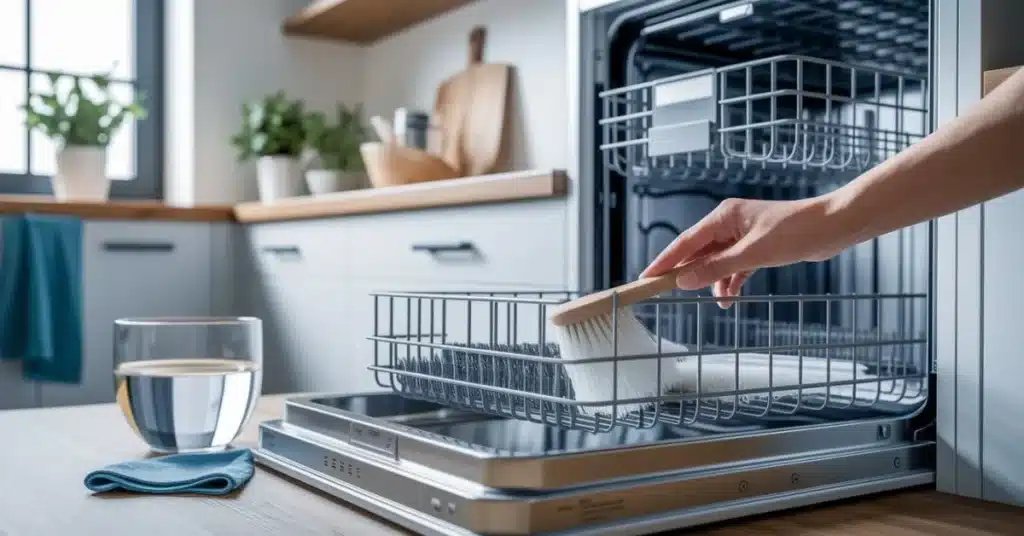
A clean dishwasher is the key to getting spotless dishes, a fresh kitchen, and a machine that lasts for years. But over time, food bits, grease, soap film, and hard-water minerals start to build up inside the tub. When this happens, you may notice bad smells, cloudy glasses, dirty plates, loud noise, or water sitting at the bottom.
The good news?
Cleaning a dishwasher is simple, fast, and does not require any special tools. In fact, a few minutes of care each week can prevent most cleaning and performance problems.
As someone who has tested many dishwashers from brands like Bosch, LG, Whirlpool, GE, Samsung, and KitchenAid, I’ve learned one thing clearly:A clean dishwasher always works better than a dirty one.
If you want to know which brands perform best, you can also check my guide on the best dishwasher brands.
This guide will show you the safest and easiest way to clean your dishwasher—step by step. You’ll learn how to clean the filter, spray arms, gasket, drain, and interior using basic items like vinegar and baking soda. You’ll also see signs that your dishwasher needs cleaning, how to deep clean for odor and mold, and what mistakes you should avoid.
Whether you have a full-size dishwasher, a portable model, or a countertop unit, the methods in this guide will help you remove dirt, improve cleaning power, and keep your machine running like new.
Now that you understand why regular cleaning matters, let’s start with the fastest and simplest way to refresh your dishwasher—something you can do in just a few minutes.
Quick Answer: The Fastest Way to Clean a Dishwasher
The fastest way to clean a dishwasher is to remove and rinse the filter, unclog the spray arms, wipe the door gasket, run a hot vinegar cycle, and finish with a baking-soda rinse. This quick method removes odors, food debris, and hard-water buildup while restoring cleaning performance.
- Remove and wash the filter under warm water.
- Unclog the spray arms with a toothpick or small brush.
- Wipe the gasket and interior door seal.
- Run a hot wash cycle with 1 cup of white vinegar.
For more details, you can check the USDA’s official guidance on vinegar use in cleaning appliances, which explains important vinegar cleaning safety guidelines.
- Sprinkle baking soda on the bottom and run a short rinse cycle.
- Leave the door open to air-dry and prevent moisture buildup.
This simple routine works for most U.S. dishwashers, including Bosch, Whirlpool, GE, LG, Samsung, and KitchenAid models.
And if you’re planning to upgrade your machine soon, you can check my complete dishwasher buying guide to find the right model for your home.
A quick clean helps, but it’s important to know when your dishwasher actually needs attention. Here are the signs to look for before problems get worse.
Signs Your Dishwasher Needs Cleaning
A dishwasher does not get dirty in a day. Dirt builds up slowly, and you will start to see early warning signs. If you notice any of the things below, your dishwasher needs cleaning right away.
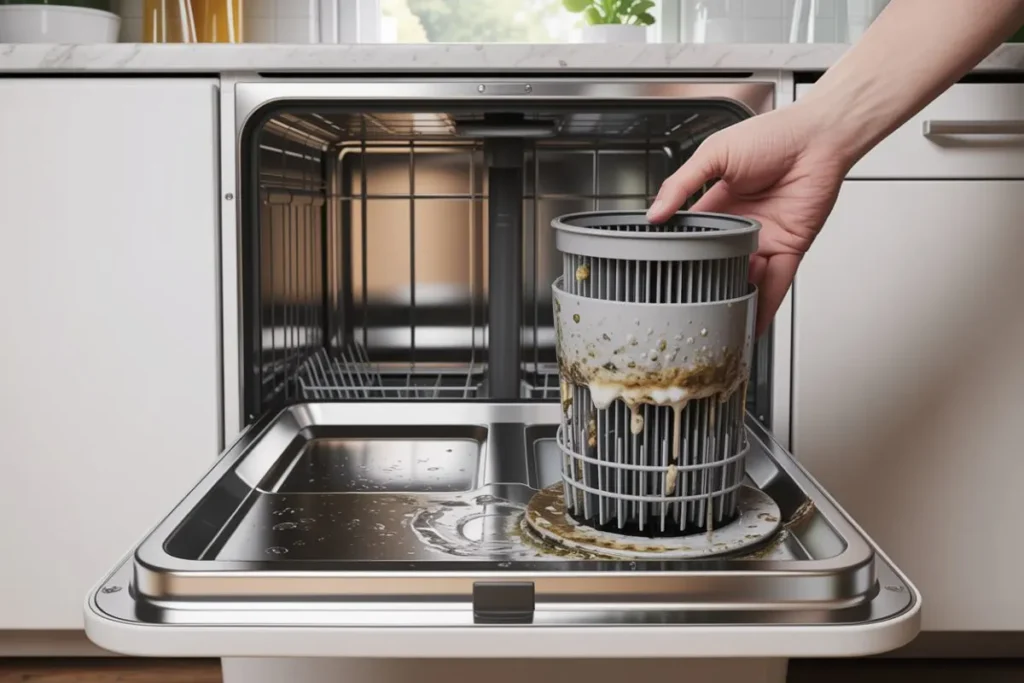
Bad smell when you open the door
Food stuck in the filter or gasket often causes this smell. You may also see mold inside the door.
Cloudy or spotted glasses
This happens when minerals collect inside your dishwasher. It is common in places with hard water.
Food left on dishes
A blocked spray arm or a dirty filter stops water from reaching your plates.
Water sitting at the bottom
If water does not drain, the filter, drain hole, or sump may be blocked.
Mold, mildew, or slimy dirt
Moisture trapped inside the machine helps mold grow. This happens when the dishwasher is not cleaned often.
Loud or grinding noise
Something may be stuck in the spray arm or pump area. This needs quick attention.
Dishes are still wet after a wash
Low rinse-aid levels or blocked vents can stop dishes from drying.
White chalky marks inside the tub (common in U.S. homes with hard water)
This means hard-water minerals are building up. You will see this a lot in states like Texas, Florida, Arizona, and Nevada.
For an official overview of hard water levels across different U.S. states, you can check the USGS hard water map.
If you want to understand what happens inside the machine and why these issues appear, you can read my full guide on how does a dishwasher work.
Expert Note
In my tests, most dishwashers start to smell or leave marks when the filter is not cleaned for 2–4 weeks.
When to Clean
If you see even one of these signs, clean your dishwasher now. This will help it wash better, smell fresh, and last longer.
Now that you know the early warning signs, let’s look at the simple tools and supplies you’ll need before you start cleaning.
What You’ll Need to Clean Your Dishwasher
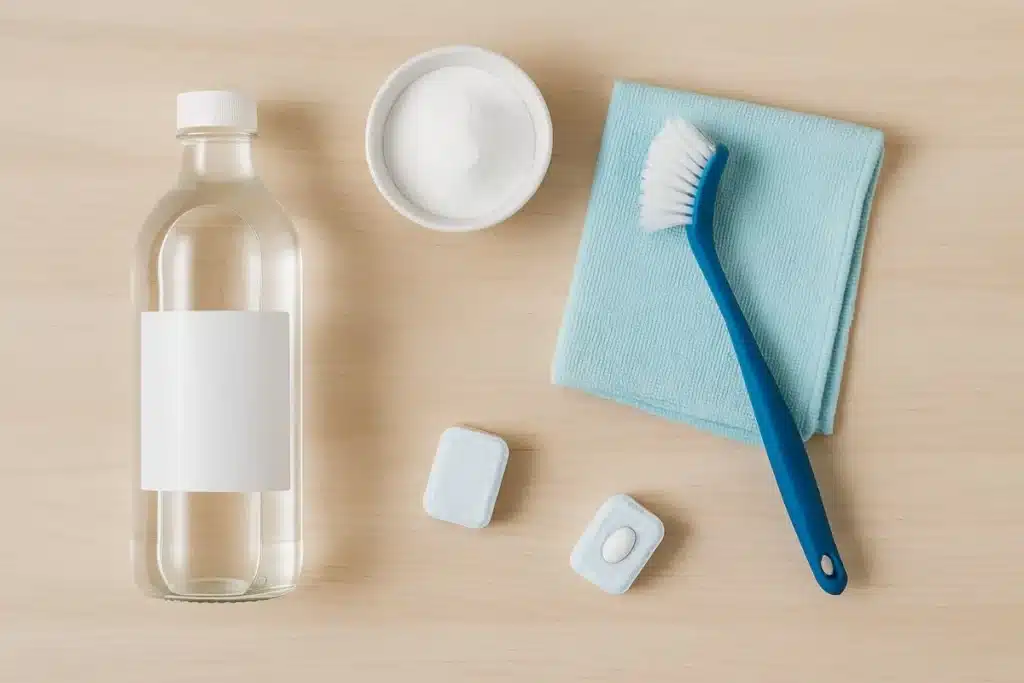
You do not need special tools to clean a dishwasher. Most of the items below are already in your kitchen. They are safe for stainless steel and plastic tubs in all modern dishwashers.
Essential Supplies
These are the basic things you need to get started:
- White vinegar — helps remove dirt and bad smell
- Baking soda — keeps the inside fresh and bright
- Soft brush or old toothbrush — great for cleaning the filter and spray arms
- Microfiber cloth — good for wiping the door and gasket
- Dish soap (outside only) — never use dish soap inside the dishwasher
Helpful Extras (Optional)
These items make deep cleaning easier and faster:
- Dishwasher cleaner tablets — good for monthly deep cleaning
- Descaler — needed if you live in a hard-water state, such as Texas, Arizona, Florida, or California.If you want a science-based explanation of what hard water is and how it affects appliances, you can check the EPA water hardness information.
- Rinse aid — helps dishes dry better and reduces water spots
Expert Note
From my tests, white vinegar and baking soda work well for daily and weekly cleaning. Cleaner tablets and descalers help when your dishwasher has heavy buildup.
Once you have everything ready, you can begin the actual cleaning. Here is the same step-by-step method I use when testing dishwashers.
How to Clean a Dishwasher (Easy Step-by-Step Guide)
Here is the easy way to clean your dishwasher. These steps are the same ones I use when I test dishwashers in my reviews.
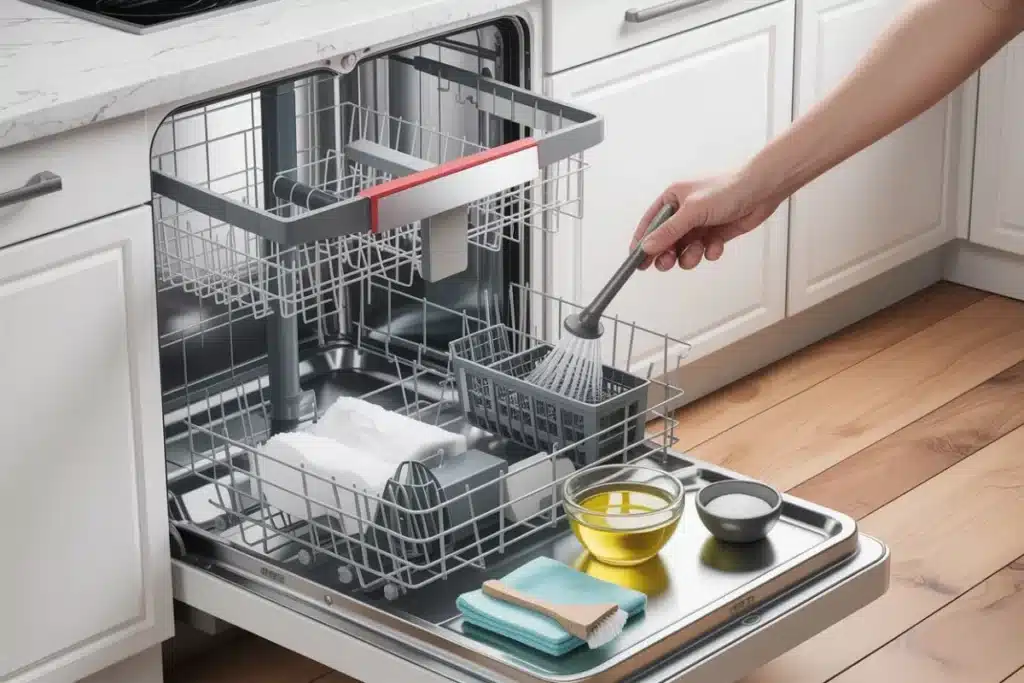
Empty the Dishwasher and Remove the Bottom Rack
Start with an empty dishwasher. Pull out the bottom rack and place it aside. Now you can see the filter, drain, spray arms, and sump.
Pro Tip: If you have a small or portable dishwasher, the space may feel tight. However, the steps are the same.
Clean the Dishwasher Filter (Most Important Step)
A dirty filter is the main reason for bad smell and poor cleaning.
How to remove it
Turn the filter counterclockwise. Lift it straight up.
How to clean it
Rinse the filter under warm water. Brush the mesh with a soft brush. Remove food bits, grease, and sticky dirt.
Expert Note
Bosch filters have three parts. Whirlpool filters open easily. LG filters are larger and catch more dirt.
A dirty filter can cause smell, poor cleaning, noise, or water that does not drain. Never skip this step.
Clean and Unclog the Spray Arms
Spray arms push water around your dishes. If the holes are blocked, your dishes will not get clean.
How to clean them
Remove the spray arms. Use a toothpick to clear the holes. Rinse them under warm water.
Shake them to let dirt fall out.
Why this helps
Clean spray arms improve water flow and make dishes cleaner.
Tip: If your dishwasher sounds loud, the spray arms may be blocked.
Clean the Door Seal and Gasket
The rubber seal can trap food and mold.
What to do
Wipe it with warm soapy water. Brush the folds with a toothbrush. Pay attention to the corners.
Why it helps
It removes bad smells and stops mold from growing.
Expert Note: Brands like Bosch and KitchenAid have deeper gasket grooves.These areas hold more dirt and need extra care.
Clean the Drain and Bottom Area
If you see water sitting at the bottom, the drain may be blocked.
What to check
Remove food bits around the drain. Make sure the sump area is clear. Look for small items like seeds, pasta, or labels.
Run a Vinegar Cleaning Cycle
Vinegar helps remove grease, smell, soap film, and light mineral marks.
How to use vinegar
Pour 1 cup of white vinegar into a bowl. Place the bowl on the top rack. Run the dishwasher on the hottest cycle.
Safety Note
Vinegar is safe for stainless steel and plastic tubs. It works for all major U.S. dishwasher brands. If you want to confirm vinegar safety from a medical and chemical standpoint, you can read Healthline’s guide on is vinegar safe for cleaning appliances.
Run a Baking Soda Rinse Cycle
Baking soda keeps the dishwasher fresh and bright.
How to use it
Sprinkle half a cup of baking soda on the bottom. Run a short rinse cycle.This helps remove smell and light marks inside the tub.
Air-Dry and Clean the Outside
Open the door a little after cleaning. Let the dishwasher dry for 1–2 hours.Wipe the outside with a microfiber cloth. If you have a stainless steel front, use a small amount of vinegar water.This stops moisture and future smell.
If your dishwasher still smells, looks dirty, or leaves residue even after basic cleaning, the next steps will help you deep clean it properly.
How to Deep Clean Your Dishwasher (Odor, Mold, and Hard
If your dishwasher still smells bad after basic cleaning, or if you live in a hard-water area, you need a deep clean. These steps are based on real tests across many dishwasher brands.
1. Deep Odor Removal (Bad Smell Fix)
A bad smell often means food, grease, or mold is stuck inside the dishwasher.
Causes of odor:
- Food trapped under the filter
- Mold in the gasket
- Grease and soap film on the bottom
How to remove strong odor:
- Mix warm water, 1 tablespoon of baking soda, and 1 teaspoon of dish soap.
- Scrub the bottom area, especially around the drain.
- Clean the inside of the door and gasket.
- Run a sanitize cycle if your dishwasher has one.
If the smell remains:
Use a dishwasher cleaner tablet. These remove deep grease and bacteria that vinegar cannot reach.
2. Mold and Mildew Removal
Mold grows when moisture stays inside the machine. If your dishwasher has a strong odor along with mold, you can follow my full guide on how to remove bad smell from a dishwasher. It shows easy ways to remove odor, mold, and hidden buildup.
How to remove mold:
- Check the gasket because mold hides inside the folds.
- Scrub it with a mix of hot water and vinegar.
- Run a hot cycle with a bowl of vinegar on the top rack.
- Run a short rinse cycle with baking soda.
- Keep the door open for 1–2 hours after every wash.
Expert Note: Dishwashers that stay closed for long hours grow mold faster. For detailed information on mold health risks and prevention, you can check the CDC mold safety recommendations.
3. Hard Water Deposit Removal (Calcium and Mineral Buildup)
Hard water leaves white marks and makes dishes look cloudy. This is common in states like Arizona, Texas, Florida, Nevada, and California.
For a scientific explanation of how mineral buildup forms in hard water, you can read the American Water Works Association’s hard water mineral buildup explanation.
Signs of hard water:
- White film on dishes
- Cloudy glasses
- Chalky marks inside the tub
How to remove mineral buildup:
- Run a vinegar cleaning cycle.
- Use a dishwasher descaler once a month.
- Increase rinse-aid level in your dishwasher.
- Clean spray arm holes because minerals block water flow.
Why this matters:
Hard water is one of the top reasons dishwashers stop cleaning well.
4. Drainage Problems (Standing Water Fix)
Water at the bottom means something is blocking the drain.
Causes:
- A dirty filter
- Food stuck in the drain hole
- Items caught in the sump
Expert Fix:
- Remove the filter.
- Clear food bits around the drain.
- Check the drain hose. A bent hose slows water flow.
- Make sure the garbage disposal is not blocked.
If water still does not drain, the pump may need service.
5. Noise Problems (Grinding or Rattling Sounds)
Dishwashers make a soft hum. A loud grinding sound means something is wrong. If your dishwasher makes an unusual noise, you can read my full guide on why is my dishwasher so loud. It explains the common reasons behind loud sounds and what you can do to fix them.
Possible reasons:
- Food or plastic stuck in spray arms
- A hard object in the sump
- Loose rack wheels
- Hard water around spray-arm joints
How to fix noise:
- Clean spray arms well.
- Look inside the sump with a light.
- Remove any small objects you see.
If the noise does not stop, the circulation pump may need repair. For brand-verified information on unusual dishwasher sounds, you can check the official dishwasher noise troubleshooting guide from Bosch Support.
Now that you know how to solve tough cleaning issues, let’s set up a simple schedule to keep your dishwasher clean all year.
How Often Should You Clean a Dishwasher?
How often you clean your dishwasher depends on how much you use it. Here is an easy schedule that works for most homes.
Weekly Cleaning
Do these quick tasks once a week:
- Rinse the filter to remove food bits
- Wipe the gasket and door edges to stop mold
- Check for bad smell and clean if needed
Monthly Cleaning
Once a month, give your dishwasher a deeper clean:
- Run a vinegar cycle to remove grease and odor
- Run a baking soda rinse to keep the inside fresh
- Clean the spray arms so water can flow well
Every 3 Months
Do a full deep clean every three months:
- Remove hidden dirt under the filter and around the drain
- Use a dishwasher cleaner tablet to remove heavy buildup
Every 6 Months
If you have hard water, do these steps twice a year:
- Use a descaler to remove white mineral marks
- Check the drain hose for bends or blockages
- Check spray arm alignment so water reaches all dishes
Expert Note
From my tests, dishwashers cleaned on this schedule last longer and clean better. Most machines can run for 8–12 years with regular care.
Why This Schedule Helps
- Stops odors from building
- Helps dishes dry better
- Prevents mold
- Improves water flow
- Reduces repairs
- Keeps the dishwasher running smoothly
Regular cleaning is important, but doing it the wrong way can damage your dishwasher. So here are the mistakes you must avoid.
What NOT to Do When Cleaning a Dishwasher
Many people damage their dishwasher by using the wrong cleaning methods. These mistakes can harm the machine, create bad smells, or shorten its life. Avoid the things listed below to keep your dishwasher safe.
1. Do not use bleach in a stainless-steel dishwasher
Bleach reacts with stainless steel and can damage the inside of the machine. This can lead to spots, stains, and long-term rust.
2. Never mix vinegar and bleach
Mixing these two makes a harmful gas. It can cause breathing problems and is dangerous for your home.
3. Do not use rough scrubbers
Abrasive scrubbers can scratch the inside walls and the door. These scratches make it easier for dirt and mold to grow.
4. Do not use regular dish soap inside the dishwasher
Dish soap makes too many bubbles. This can cause leaks, overflow, and a messy kitchen floor.
5. Do not clean the dishwasher without removing the filter
Most dirt stays under the filter. If you skip this step, the dishwasher will still smell and clean poorly.
6. Do not close the door right after a wash
Warm air inside needs time to escape. If you close the door too soon, moisture stays inside and mold forms faster.
Why These Safety Tips Matter
If you avoid these mistakes, your dishwasher will:
- Clean better
- Smell fresh
- Use less energy
- Last longer
- Need fewer repairs
If you use a portable or countertop dishwasher, a few extra steps can help you keep it clean and running smoothly.
How to Clean Portable and Countertop Dishwashers (Simple Tips)
Portable and countertop dishwashers are great for small homes and apartments. However, they need a little extra care because they work differently from full-size models.
Why These Dishwashers Get Dirty Faster
Portable and small dishwashers often build dirt more quickly because:
- They have smaller tubs
- Their filters are tiny and clog faster
- They use shorter spray arms, so water reach is limited
- Their water pressure is lower than full-size machines
These things make regular cleaning even more important.
For Countertop Dishwashers
If you’re using a countertop model and want better cleaning performance, you can check my guide on the best countertop dishwashers. These models offer stronger wash cycles and better filtering.
For Portable Dishwashers
And if you prefer a portable unit for small kitchens, my list of the best portable dishwashers for small kitchens can help you choose a model that cleans better and lasts longer.
Special Cleaning Tips for Portable and Countertop Models
Clean the filter every week
Small filters fill with food bits quickly. A dirty filter makes the machine smell and clean poorly.
Use less vinegar during cleaning cycles
Use half the amount of vinegar you normally use. These dishwashers hold less water, so too much vinegar can leave a strong smell.
Do not overload the dishwasher
Portable dishwashers have less space and weaker water flow. Too many dishes block the spray arms and stop water from reaching every plate.
Leave the door open after every wash
Moist air gets trapped inside small tubs. Keeping the door open helps them dry and stops mold from growing.
Expert Note
In my tests, portable dishwashers perform almost like full-size models when cleaned weekly and not overloaded.
Why These Tips Matter
Following these simple steps will:
- Keep the dishwasher clean
- Improve cleaning results
- Reduce bad smells
- Help the dishwasher last longer
- Make water flow stronger
Portable machines work well—but only when cleaned more often than regular dishwashers.
You may still have questions about cleaning, safety, or troubleshooting. Here are the answers to the most common questions people ask.
Dishwasher Cleaning FAQ (Simple Answers to Common Questions)
What is the best way to clean a dishwasher?
The best way is to clean the filter, unclog the spray arms, wipe the gasket, run a hot vinegar cycle, and finish with baking soda for odor and dirt removal.
How often should I clean a dishwasher?
Clean the filter weekly. Run vinegar and baking soda once a month. Do a deep clean every three months to keep the dishwasher working well.
Why does my dishwasher smell bad?
Bad smell comes from food in the filter or mold in the gasket. Clean both and run a hot vinegar wash to remove odor fast.
Is vinegar safe for cleaning a dishwasher?
Yes. White vinegar is safe for stainless steel and plastic tubs. It removes grease, odor, and light mineral buildup during a hot wash cycle.
Can I use baking soda in my dishwasher?
Yes. Baking soda is safe and helps remove smell and small stains. Sprinkle half a cup on the bottom and run a short rinse cycle.
Why is my dishwasher not draining water?
A blocked filter, drain hole, or sump usually causes this. Clean the filter, remove food pieces, and check the drain hose for bends.
Why are my dishes still dirty after a wash?
Dirty dishes mean blocked spray arms or a clogged filter. Clean both and check water flow. Hard water can also leave white spots.
How do I clean spray arms on my dishwasher?
Remove the spray arms, clear each hole with a toothpick, rinse under warm water, and shake out dirt to restore water pressure.
Is bleach safe to use in a dishwasher?
No. Bleach damages stainless steel and is unsafe when mixed with vinegar. It can cause corrosion and harmful fumes.
How do I deep clean the inside of my dishwasher?
Clean the filter, scrub the gasket, unclog spray arms, run a hot vinegar cycle, then run baking soda to remove odor, mold, and grime.
Now that you know how to clean, maintain, and troubleshoot your dishwasher, here’s the final takeaway to help you keep it running like new.
Final Verdict: Keep Your Dishwasher Clean and Running Well
Cleaning your dishwasher is one of the easiest ways to make sure it runs well, lasts longer, and keeps your dishes truly clean. A few minutes of care each week stops bad smells, improves water flow, and protects the machine from damage caused by grease, food, and hard-water minerals.
From testing many models across brands like Bosch, LG, GE, Whirlpool, and Samsung, one thing is clear:A clean dishwasher always performs better than a neglected one.
You do not need special tools or expensive products. You simply need a steady routine:
- Clean the filter often
- Unclog the spray arms
- Wipe the gasket
- Run vinegar and baking soda cycles
- Deep clean every few months
Whether you use a full-size, portable, or countertop dishwasher, these steps will help you keep it fresh, odor-free, and powerful. With the right care, most dishwashers can last 8–12 years—sometimes even longer.
If your dishwasher smells, leaves spots, drains slowly, or makes noise, don’t panic. Most problems start from simple buildup, and the steps in this guide are enough to fix them.
A few minutes of cleaning today can save you money on repairs, help your machine work better, and give you cleaner, shinier dishes every time.
you want a long-term plan for keeping your dishwasher healthy, you can follow my full dishwasher maintenance guide. It shows simple steps to keep your machine in top shape year after year.
Clean it regularly. Run it smartly. And enjoy a dishwasher that performs like new.