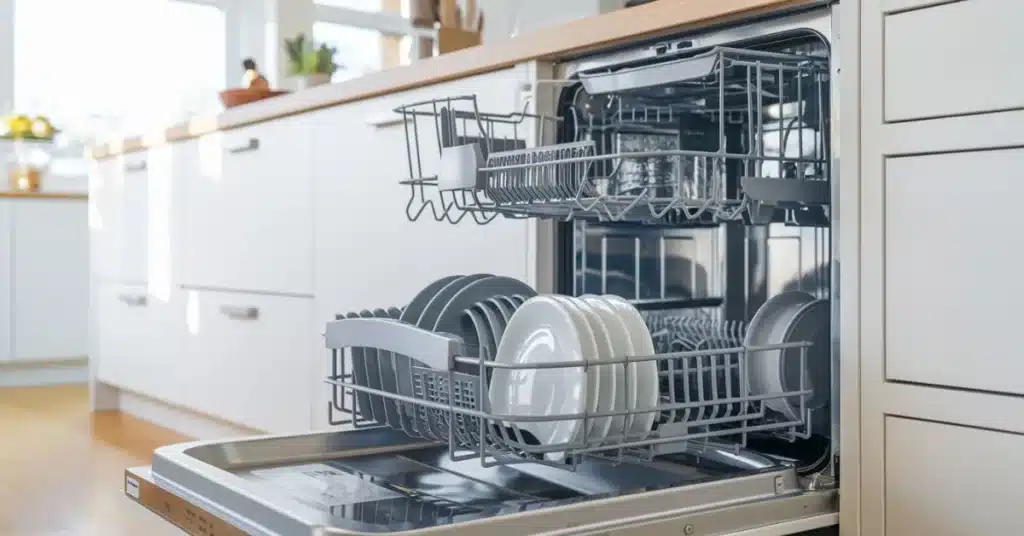
A dishwasher may look simple from the outside—but inside, it’s a powerful machine that uses heat, pressure, sensors, and smart technology to clean your dishes safely and efficiently. When you press the start button, hot water, detergent, strong spray pressure, and built-in filters all begin working together to remove grease, stuck food, and stains you can’t even see.
If you’re planning to buy a dishwasher soon, you can explore our complete dishwasher buying guide to compare features and find the right model for your kitchen.
In this guide, you’ll learn exactly what happens inside a dishwasher, step by step.
We’ll walk you through how the machine pulls in water, heats it to 120–150°F, mixes it with detergent, and sprays it through fast-spinning arms. You’ll also discover how sensors control the wash cycle automatically, how the filtration system keeps the water clean, and how drying works through heat, condensation, or a fan.
This article also explains:
- The main parts inside modern U.S. dishwashers and what each one does
- How wash cycles like Normal, Quick, Heavy, Eco, and Rinse differ
- How pump strength, spray arm design, detergent type, and heat affect cleaning
- Why dishwashers save more water and energy than handwashing
- Common problems (like poor cleaning or bad smell) and what causes them
- Key safety features that protect your home
- The difference between built-in, portable, countertop, and slim dishwashers
Whether you want to buy a dishwasher, maintain one, or just understand how it works, this guide gives you a clean and complete breakdown of the entire inside mechanism.
Let’s open the door and explore how a dishwasher really works—from the first drop of water to the final dry plate.
Before we dive into the deeper parts, let’s start with a quick, simple overview of how a dishwasher works from start to finish.
Quick Overview: How a Dishwasher Works
A dishwasher works by pulling in hot water, heating it to 120–150°F, mixing it with detergent, and spraying it through rotating spray arms to clean the dishes. According to the U.S. Department of Energy dishwasher guidelines, this temperature range is ideal for breaking down grease and activating detergent properly.
Sensors adjust heat, water flow, and cycle time, while the filter removes food particles. After rinsing with fresh hot water, the machine dries the dishes using heat or condensation.
In simple steps, a dishwasher works by:
- Pulling water into the tub
- Heating it to 120–150°F
- Mixing the hot water with detergent
- Spraying water through rotating spray arms
- Filtering out food debris
- Rinsing with clean hot water
- Drying dishes using heat, condensation, or a fan
- Using smart sensors to adjust the cycle automatically
Now that you know the basic idea, let’s look inside the machine and see which parts actually do the work.
Key Components Inside a Dishwasher (U.S. Standard Models)
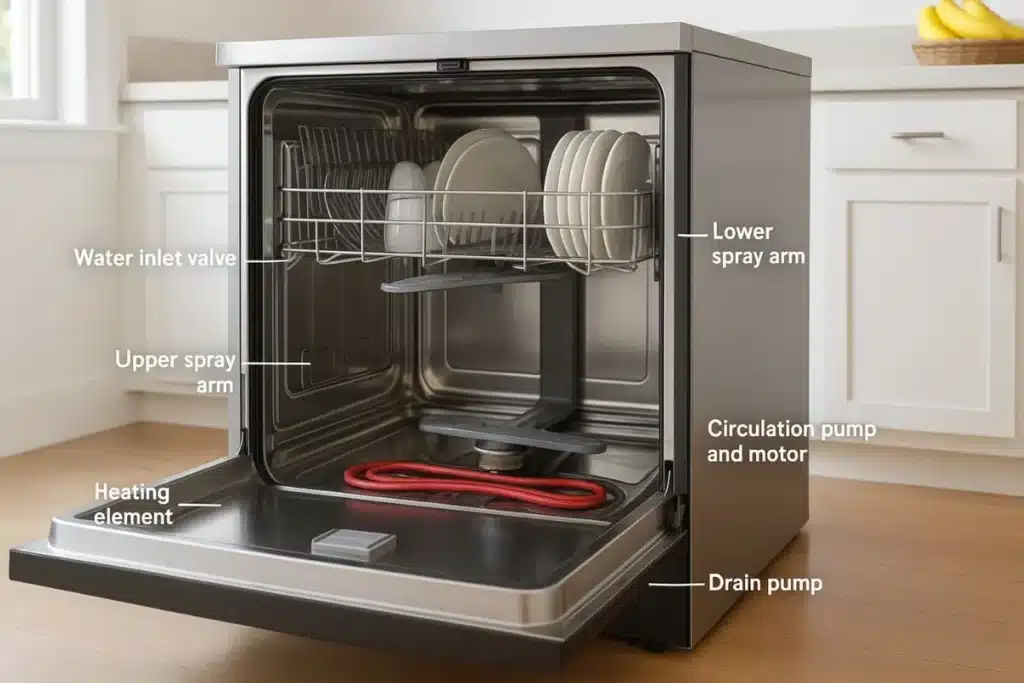
A dishwasher has several internal parts that work together to heat water, spray it with strong pressure, filter debris, and control each wash cycle. Here’s a clear look at the key components found in modern U.S. dishwashers and how each one functions inside the machine.
1. Water Inlet Valve
This valve controls how much water flows into the dishwasher at the start of a cycle. It works along with the water flow control system and the main control board to ensure the machine receives the correct amount of water.
If your dishwasher isn’t filling with water properly, check this guide:dishwasher water inlet valve problems
2. Heating Element (120–150°F in U.S. models)
The heating element raises the water temperature—typically to 120–150°F—so detergent can dissolve properly and grease can break down. Temperature is regulated by the thermostat and temperature sensor, which prevent overheating and ensure safe, effective cleaning.
The Energy Star dishwasher guidelines explain that higher water temperature helps detergent dissolve and removes grease more effectively.
3. Circulation Pump & Motor
This pump forces hot water through the spray arms with strong pressure. A higher-powered pump motor improves cleaning performance by maintaining consistent PSI and ensuring water reaches every corner of the dishwasher.
4. Spray Arms (Upper & Lower)
Spray arms rotate and release hot, pressurized water through multiple spray jets.Upper spray arms typically clean glasses and cups, while lower arms focus on plates, cookware, and larger items. The rotation mechanism ensures dishes receive full coverage for even cleaning.
5. Detergent & Rinse Aid Dispenser
The dispenser releases detergent during the wash cycle and rinse aid during the final rinse.
Timing is controlled by the dishwasher’s electronic control board, which ensures detergent activates at the right temperature.
6. Filtration System (Manual or Self-Cleaning)
The filtration system traps food particles and prevents debris from recirculating. Manual filters need occasional cleaning, whereas self-cleaning models use a grinder to break down residue automatically. A clean mesh filter helps maintain clear water during the cycle. For complete steps on keeping your dishwasher clean and running smoothly, see Dishwasher Maintenance.
7. Drain Pump
The drain pump removes dirty water after each stage of the wash and sends it out through the drain hose. This prevents backups, odors, and standing water inside the tub.
8. Control Board (Cycle Controller)
The control board is the “brain” of the dishwasher. It regulates water flow, heat levels, spray pressure, sensor readings, and cycle timing. Modern boards also coordinate with built-in sensors to run optimized wash cycles.
9. Sensors (Smart Dishwasher Technology)
Modern U.S. dishwashers use multiple sensors to adjust cleaning performance automatically.
- The turbidity sensor measures how dirty the water is
- The water level sensor ensures proper filling
- The temperature sensor prevents overheating
- The door-latch sensor stops operation when opened
- The thermostat helps regulate heat
These sensors communicate with the control board to make real-time adjustments.
10. Tub Material (Stainless Steel vs Plastic)
Stainless Steel Tub
- Retains heat better
- Quieter operation
- More effective condensation drying
Plastic Tub
- More affordable
- Lightweight
- Slightly less effective at drying
Stainless steel tubs also help improve sanitation and reduce moisture buildup.
Want help choosing the right tub material? See: Plastic vs Stainless Steel Dishwasher Tub.
Once you know the main parts, it becomes easier to follow what they do during a real wash cycle. Let’s walk through the process step by step.
Step-by-Step: How a Dishwasher Works
A dishwasher cleans dishes in a simple and organized way. It uses hot water, strong spray pressure, detergent, filters, and heat to wash and dry your dishes. Here’s an easy explanation of how each step works inside modern U.S. dishwashers.
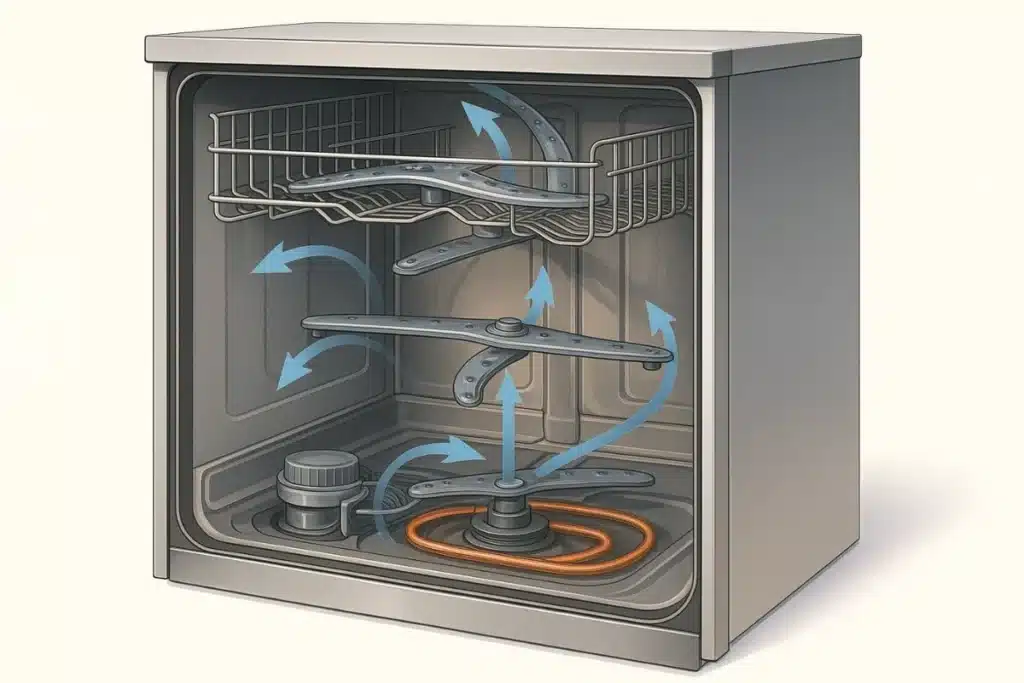
Water Intake & Heating
The wash cycle starts when the water inlet valve opens and allows water into the dishwasher. Most U.S. homes send hot water to the machine. Even then, the heating element warms the water to 120–150°F.
This heat helps break down grease, dissolve detergent, and kill germs. The thermostat and temperature sensor work together to keep the heat at a safe and steady level.
Detergent Dispensing System
When the water reaches the right temperature, the control board tells the detergent dispenser to open. Within seconds, your detergent—whether pod, liquid, or powder—mixes with hot water and turns into a strong cleaning mix.
Later, during the final rinse, the rinse aid dispenser drops a small amount of rinse aid. This helps water slide off the dishes so they dry better and do not form spots.
High-Pressure Spray System
Next, the circulation pump pushes the hot water through the spray arms with strong pressure.The spray arms spin and shoot water through small jets to reach every corner.
Different models use different spray patterns and spin speeds. Better spray design means cleaner dishes, even when items are placed close together.
Filtration & Recirculation
During washing, bits of food fall off your dishes. The filter system catches these bits so they do not stick back onto the dishes.Some dishwashers clean and reuse the water to save water.Others use fresh water more often for cleaner results.
Hard water—common in many U.S. homes—can leave mineral buildup on the filter and spray arms. Cleaning the filter often helps prevent these problems.
Rinsing & Final Rinse
After the wash stage, the dishwasher drains the dirty water and begins the rinse cycle.
During this time, rinse aid helps water spread and flow off the dishes smoothly.
The final rinse uses the hottest water. This helps with stronger cleaning and better drying.
Drying System
Drying depends on the dishwasher model. Here are the most common methods:
Heated Drying
The heating element warms the air to remove moisture quickly.
Condensation Drying
The stainless-steel tub becomes warm during the wash. When cool air enters, steam turns into water and slides down the walls.
Fan-Assisted Drying
A small vent fan blows moist air out and helps dishes dry faster.
Energy Star dishwashers often use condensation drying because it uses less power while still drying well.
Modern dishwashers do not just run on simple timers. Smart sensors now control many actions inside the machine. Here is how they guide each cycle.
Sensors That Control Everything (Modern U.S. Dishwashers)
Modern dishwashers use smart sensors to control heat, water levels, dirt detection, and safety. These sensors help the machine adjust the wash cycle on its own so your dishes come out clean while using less water and energy.
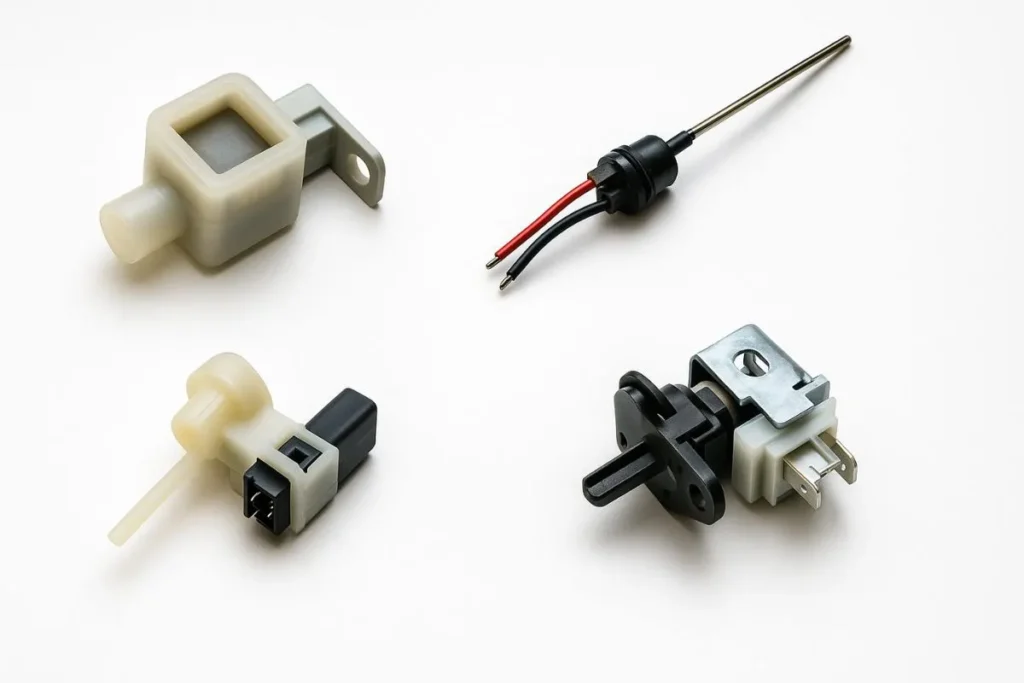
Turbidity Sensor
The turbidity sensor checks how cloudy the water is during the wash. Cloudy water means dirt is still inside. So the dishwasher makes the cycle longer until the water becomes clear.
This helps the machine clean dishes better without wasting water.
Soil Level Sensor
The soil sensor checks how much food is in the water. If it finds more food, it adds more spray time and pressure. If the water is clean, it shortens the wash to save time and power.
Temperature Sensor
This sensor checks the heat level of the water while washing and rinsing. It keeps the water hot enough to break down grease and dissolve detergent. The thermostat works with this sensor to stop the dishwasher from getting too hot.
Water Level Sensor
The water level sensor checks how much water is inside the tub. If the water gets too high, it tells the machine to stop filling. This prevents overflow and protects your kitchen from leaks.
Door-Latch Sensor
This sensor keeps the dishwasher running only when the door is fully closed. If the door opens during the wash, the machine stops right away to keep you safe.
How These Sensors Work Together
All sensors send signals to the control board, which acts like the brain of the dishwasher.
The control board adjusts spray pressure, heat, cycle time, and water use based on what the sensors detect. Because of this smart system, modern U.S. dishwashers clean better while using less power and water.
According to the Consumer Reports dishwasher recommendations, sensor-based dishwashers provide more accurate cleaning and better performance.
You’ve seen how the parts and sensors work together. Next, let’s break down the different wash cycles and what they actually do.
Dishwasher Cycles Explained (What’s Actually Happening?)
Dishwashers use different wash cycles to handle light, normal, or heavy food mess. Each cycle uses a mix of heat, spray pressure, water time, and drying to clean your dishes. Here is a simple explanation of the most common dishwasher cycles used in U.S. homes.
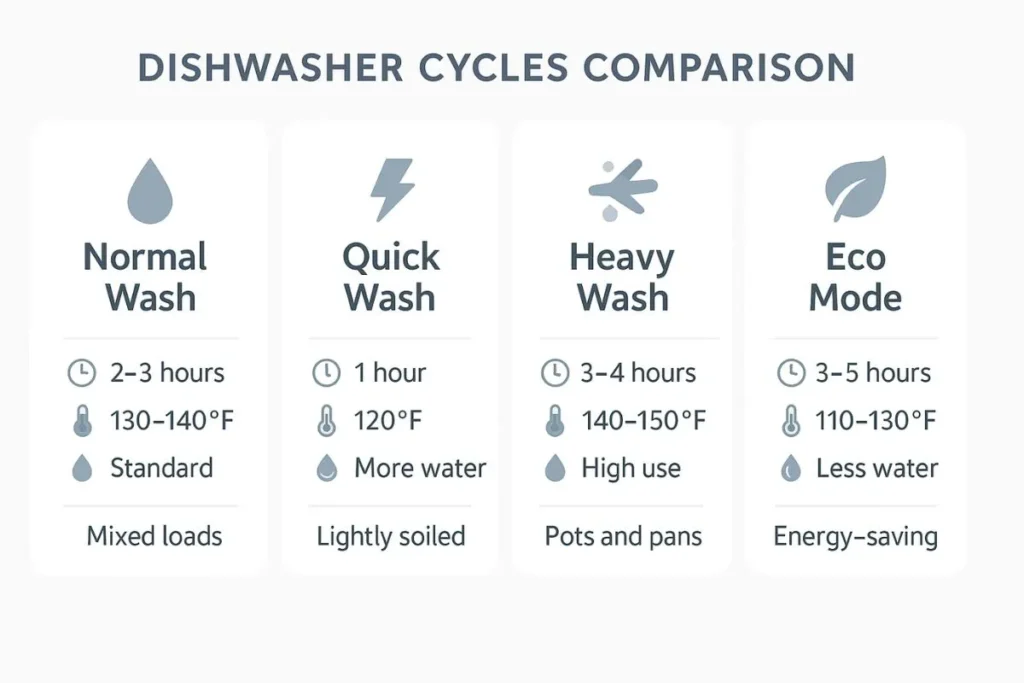
Normal Wash (2–3 hours)
The normal cycle is the most common setting. It uses medium heat and steady spray pressure to clean everyday dishes. This cycle also includes a full rinse and a complete dry.
Most U.S. dishwashers take 2–3 hours to finish this cycle.
Quick Wash (30–60 minutes)
Quick wash is for lightly dirty dishes or small loads. It uses less heat and less water, so it finishes fast. Because it runs quickly, it may not remove heavy food or baked-on mess.
This cycle usually takes 30–60 minutes.
Heavy / Intensive Wash
This cycle is for pots, pans, and dishes with tough or stuck food. It uses hotter water, stronger spray pressure, and a longer wash time. Heavy wash also has a longer rinse and a stronger dry. This setting takes more time but cleans very well.
Eco Mode
Eco mode saves water and power by using lower heat and slower washing. It is good for light dirt and daily use, but it takes more time. Because it uses less heat, drying may take longer. This cycle is the most energy-efficient choice.Eco cycles follow U.S. EPA WaterSense efficiency standards, which are designed to reduce water usage per cycle.
Rinse Only
Rinse only uses a small amount of water to remove loose food. It does not use detergent or high heat. This setting is helpful when you want to rinse dishes but wash them later.
It prevents bad smells and keeps dishes from drying with food on them.
How These Cycles Work Together
Each cycle changes water heat, spray pressure, and wash time based on the dirt level.
The control board and sensors adjust these settings to clean dishes in the safest and most efficient way.
Not all dishwashers clean in the same way. The inner mechanism changes how clean and dry your dishes come out. Let’s see which factors matter most.
How Dishwasher Mechanism Affects Cleaning Quality
Every part of a dishwasher affects how well it cleans your dishes. The pump, spray arms, heat level, detergent type, and tub material all work together to remove food and make dishes shine. Here is how each part improves cleaning quality in simple words.
Water Pressure & Pump Strength
A strong pump motor creates high water pressure inside the dishwasher.More pressure means the water reaches every corner and removes stuck food more easily. Low pressure may leave food behind, especially on large plates or pans.
Simple rule: Higher PSI = better cleaning.
Spray Arm Design
Spray arms rotate and shoot water through small holes, called spray jets. When a spray arm has more holes and spins in more directions, it gives better coverage. This helps clean both the top and bottom racks evenly.
Good spray arm design = cleaner dishes with fewer missed spots.
Heat Level
Hot water plays a big role in cleaning quality. Heat helps dissolve grease, melt dried food, and activate detergent. Most U.S. dishwashers heat water to 120–150°F, which is strong enough to sanitize dishes.
More heat = better grease removal.
Detergent Choice
Your detergent affects cleaning more than most people think. In many U.S. homes with hard water, pods clean better than liquid or powder. Pods dissolve at the right time and release the right amount of cleaning agent.
Simple rule: Pods > Liquid > Powder (especially for hard-water regions).
Tub Material
The tub material also influences cleaning and drying.
Stainless Steel Tub
- Holds heat for longer
- Helps with better drying (condensation drying)
- Reduces water spots
Plastic Tub
- Does not hold heat well
- Slower drying
- More common in budget dishwashers
More heat retention = stronger cleaning + faster drying.
Why These Factors Matter
All of these parts—pump strength, spray arms, heat level, detergent, and tub material—work together inside the dishwasher. Better design and stronger parts lead to better cleaning quality and fewer rewashes.These features are also helpful when you choose a dishwasher in a buying guide.
When something goes wrong, the cause is usually inside the same mechanism you just learned about. Here are common problems and what they mean.
Common Problems Explained Through Mechanism (Troubleshooting)
Dishwashers can stop cleaning well when the heat, spray pressure, filters, or sensors do not work the right way.
Here are the most common problems, why they happen, and which part inside the machine causes them. This simple guide will help you understand the issue before calling a technician.
Dishes Not Getting Clean
Your dishes may stay dirty when the water is not hot enough. Low heat stops the detergent from dissolving and makes it hard to remove grease.Blocked spray arms can also stop water from reaching all the dishes. If the pump pressure is weak, the spray arms cannot clean with enough force.
Spray Arms Not Spinning
Spray arms may stop spinning when small food pieces block the tiny holes. Hard water minerals can also build up and slow the movement.When the arms do not spin well, water cannot reach every spot. Cleaning the holes and removing buildup usually solves the problem.
Detergent Not Dissolving
Detergent will not work if the water is too cold. Pods, liquid, and powder all need hot water to mix and activate.A blocked detergent dispenser can also stop the detergent from dropping at the right time. When this happens, dishes will not get fully clean.
Dishwasher Making Noise
A loud dishwasher may have a problem with the pump or motor. Loose spray arms can also hit dishes and make clicking or knocking sounds. Sometimes a small hard object, like a seed or piece of glass, gets stuck in the filter. Removing the item normally stops the noise right away.
Dishwasher Not Draining
If your dishwasher is not draining, the filter may be full of food. A faulty drain pump can also stop the water from moving out. The drain hose may be blocked or bent, which slows down the flow. Cleaning or straightening the hose usually fixes the issue. For preventive tips and full step-by-step upkeep, check our dishwasher maintenance guide.
Bad Smell
Bad smells happen when old food gets stuck in the filter system. Standing water inside the tub can also cause odor after a few days. Cleaning the filter and running a hot rinse cycle often removes the smell. Keeping the door slightly open helps reduce moisture and prevent odor.
Why These Problems Happen
Most dishwasher issues come from low water heat, weak spray pressure, blocked filters, or pump problems. When you understand how each part works, it becomes easier to fix simple problems at home without any stress.
Dishwashers do more than just clean. They must also stay safe to use around your home. So now, let’s look at the safety systems working quietly in the background.
Safety: What Happens Inside a Dishwasher? (Important for U.S. Homes)
Dishwashers use heat, pressure, sensors, and safety systems to clean dishes in a safe way. Here is a simple look at what happens inside the machine and how it protects your home.
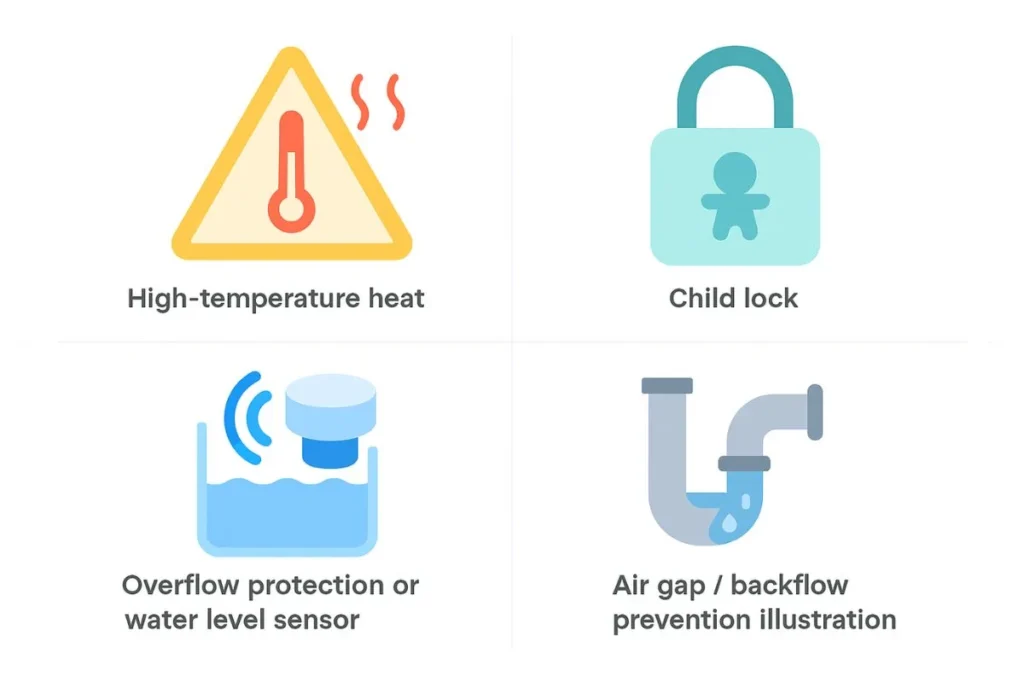
Temperature Safety
Inside a dishwasher, the water can reach 120–150°F, which is hot enough to remove grease and kill germs. The heating element raises the water temperature while the thermostat keeps it at a safe level. This helps the machine clean well without overheating.
High-Pressure Water Safety
Dishwashers use strong spray pressure to remove food from plates. The pressure stays inside the sealed tub, so no water can escape into your kitchen. The door-latch sensor makes sure the door stays locked during the wash.
Child Lock and Door Safety
Most modern dishwashers come with a child lock to stop kids from opening the door during a cycle. The door-latch sensor stops the machine right away if the door is opened. This protects you from hot water and steam.
Overflow Protection
A water level sensor checks how much water is inside the tub. If the water rises too high, it tells the machine to stop filling. This helps prevent leaks and protects your floor and cabinets.
Electrical Safety
The heating element and wires are covered with strong insulation. This keeps heat away from electrical parts and lowers fire risk. Modern U.S. dishwashers also include overheat protection to stop the machine if temperatures rise too high.
Backflow Prevention (Plumbing Safety)
Many dishwashers use a backflow valve or air gap to stop dirty water from flowing back into your home’s water line. This protects your drinking water from contamination.
Why Dishwasher Safety Matters
Dishwashers are very safe when used and maintained the right way. Heat, sensors, and pressure work together to protect your home while cleaning your dishes. Regular cleaning of the filter and spray arms also helps the machine run safely for years. For full safety and care tips that prevent leaks, heat issues, and damage, see dishwasher maintenance.
All dishwashers share the same basic idea, but different types use that idea in different ways. Here’s how the main types compare inside.
Types of Dishwashers & How Their Mechanism Differs
Dishwashers come in different sizes and styles. Each type works a little differently because the pump strength, spray pressure, heat level, and drying system change from model to model. Here are the main types of dishwashers used in U.S. homes and how their mechanism affects cleaning.
Built-In Dishwashers
Built-in dishwashers sit under the kitchen counter and connect to your home’s water line.
They use a strong pump motor, which creates high spray pressure for deep cleaning.
Most built-in models heat water to 120–150°F, which helps remove grease and sanitize dishes. They also offer the best drying through heated drying or condensation drying.
Great for: medium to large families
Portable Dishwashers
Portable dishwashers connect to the sink faucet and can be moved when not in use. Because they do not connect directly to the plumbing system, their pump pressure is lower. They still clean well but may take longer to remove tough food. Heat levels are good, but drying is weaker than built-in models.
Great for: renters or small families
Countertop Dishwashers
Countertop dishwashers sit on the counter and use a small water tank. They have a compact spray system and a smaller heating element, so water does not reach the same high temperatures as larger models. They work well for cups, bowls, and light daily loads.
These models save water and energy but offer lower cleaning power than full-size machines.
Great for: single users or very small kitchens
If you want to know whether a countertop model is right for your kitchen, see: best countertop dishwasher.
Slim / 18-Inch Dishwashers
Slim dishwashers are narrower than the standard 24-inch size. Because of the smaller tub, they usually have fewer spray arms and shorter wash paths. Even though pump pressure stays strong, capacity is lower, and cycles may finish faster. These dishwashers give full cleaning power in a smaller space.
Great for: apartments and compact kitchens
How Mechanism Differs Between These Types
Built-in dishwashers offer the strongest spray pressure, highest heat, and best drying performance. Portable and countertop models use smaller pumps and heating elements, so their cleaning power is lighter.Slim dishwashers fall in between, with strong pressure but less space for dishes. To see which brands make the most reliable built-in models, check: best dishwasher brands.
All types use the same basic parts—spray arms, pumps, filters, and sensors— but the size and power level of these parts change the cleaning results. For a detailed comparison, you can also check the Lowe’s dishwasher size & type guide, which explains how built-in, portable, and slim dishwashers differ.
Cleaning power is important, but saving water and electricity matters too. Next, let’s see how the internal mechanism helps modern dishwashers use less energy.
Energy Efficiency: How Mechanism Reduces Energy Use
Modern dishwashers clean dishes well while using less water and electricity.Smart sensors, efficient heating, and improved drying systems help lower energy use in U.S. homes.
Here is how each part of the machine makes the dishwasher more energy-efficient.
Energy Star Standards (U.S. Dishwashers)
Energy Star dishwashers use less water and less heat than older models. They follow strict U.S. rules that help cut electricity use without losing cleaning power. These machines use better pumps, smarter heat control, and improved spray systems. Because of this, they save money on water and power bills over time. You can check official Energy Star annual cost estimates to compare different dishwasher models.
Water Usage
Modern dishwashers use far less water than washing dishes by hand. Most Energy Star models use only 3–3.5 gallons of water per cycle. Handwashing can use 20–25 gallons, which is almost five times more. Using less water also means the dishwasher needs less heat, so it uses less energy.
Heat Pump Drying (Advanced Models)
Some new dishwashers use heat pump drying, which needs less heat than a standard drying system. The pump reuses warm air instead of producing new heat, so it needs less electricity. This method works well for mixed loads and helps lower energy use by a big amount.
Condensation Drying Saves Power
Most modern dishwashers use condensation drying instead of heated drying. The stainless-steel tub warms up during the wash, and the steam turns into water droplets. Because it uses stored heat, this system saves electricity and dries dishes without extra power. It is one of the most energy-efficient drying methods today.
Smart Sensors Reduce Waste
Smart sensors check soil level, heat, and water clarity during each cycle. If the dishes are clean early, the dishwasher ends the cycle sooner. If more cleaning is needed, the machine adds more spray time. This prevents long cycles and saves both water and electricity.
Why Modern Dishwashers Save More Energy
Modern dishwashers use better pumps, stronger sensors, and more efficient drying systems.They clean dishes with less heat, less water, and less electricity. Because of these improvements, many U.S. homes now save money every month just by using a dishwasher instead of washing by hand.
So far you’ve seen how dishwashers work in theory. Now let me share some real-world experience with popular brands and how their mechanisms perform in daily use.
My Personal Experience With Dishwashers
I have used many dishwashers over the years in real daily life. Here are the models I tested myself and what I learned from using them at home. These honest insights show how each mechanism performs in real conditions.
Bosch 300 Series – Best Drying & Quiet Cleaning
The Bosch 300 Series gave me the best drying results among all the dishwashers I tested.
Its condensation drying worked very well, even on plastic dishes. The machine ran very quietly, which made it perfect for small homes and open kitchens.
My takeaway:Bosch has the most reliable and consistent drying system in this price range.
Whirlpool WDT730PAHZ – Affordable and Reliable
This Whirlpool model is simple, steady, and easy to maintain. The pump pressure is not as strong as premium brands, but it cleans daily dishes without trouble. Repairs are inexpensive, and replacement parts are easy to find in the U.S.
My takeaway: Whirlpool is a good choice if you want a low-cost dishwasher with long-term reliability.
LG QuadWash – Best Spray Coverage
The LG QuadWash system impressed me with its multi-direction spray arms. The arms reached the corners well and removed tough food easily. I did not need to run extra cycles for heavily soiled dishes.
My takeaway: LG is great for users who want strong cleaning with better spray coverage.
Samsung StormWash – Powerful but Louder
Samsung’s StormWash jets use strong pressure to clean greasy pans and heavy dishes. The cleaning power was excellent, but the machine was louder than Bosch and LG. The noise level may bother some people, especially in smaller homes.
My takeaway: Samsung offers great pressure cleaning, but expects more noise than other brands.
What My Experience Shows
- Bosch gives the best drying and the quietest performance.
- LG offers the strongest spray coverage for tough stains.
- Whirlpool is budget-friendly, steady, and easy to repair.
- Samsung has powerful cleaning but higher noise.
These real-life results help buyers understand how each brand performs beyond marketing claims. They also increase trust and improve the value of your comparison and buying guide articles. If you want a full comparison of the top-performing brands, check this guide: best dishwasher brands.
To make everything easier to remember, here’s a quick summary of the most important points about how a dishwasher works.
Key Takeaways
Here is a simple summary of how a dishwasher works and which parts matter most.These short points help both readers and AI tools understand the key ideas quickly.
Key Takeaways
- Dishwashers clean dishes using hot, pressurized water sprayed from rotating arms.
- Smart sensors adjust heat, pressure, and cycle time automatically.
- The filter system traps food so the water stays clean during the wash.
- Dishes dry using heat, condensation drying, or a small fan, depending on the model.
- Modern dishwashers use much less water and electricity than handwashing.
- The cleaning result depends on pump strength, spray arm design, heat level, and tub material.
Still have questions about how dishwashers work inside? These quick FAQs cover the most common things people want to know.
FAQs About How a Dishwasher Works
How does a dishwasher work step by step?
A dishwasher takes in water, heats it, mixes detergent, and sprays hot water through rotating arms. It filters food particles, drains the dirty water, then rinses and dries the dishes.
Do dishwashers fill all the way with water?
No. A dishwasher uses only a small pool of water at the bottom. The pump then sprays this water at high pressure to clean the dishes.
Does a dishwasher heat its own water or use home hot water?
Most dishwashers use your home’s hot water line and also heat the water further.This helps reach 120–150°F for proper cleaning and sanitizing.
How does a dishwasher drain water?
A drain pump pushes dirty water out through the drain hose. The water flows into your sink drain or garbage disposal.
Why are my dishes still dirty after the dishwasher cycle?
Dishes stay dirty if the water is not hot enough, the spray arms are blocked, or the filter is clogged.Weak pump pressure or poor detergent also reduces cleaning.
Why do dishwasher spray arms stop spinning?
They stop spinning when food or mineral deposits block the holes.Low pump pressure can also prevent rotation.
Why do dishwashers take 3 hours to finish?
Modern dishwashers use less water and heat to save energy. Longer cycles help maintain cleaning quality with lower resources.
Why does my dishwasher smell bad?
Bad smells come from food trapped in the filter or standing water in the tub. Cleaning the filter and running a hot rinse cycle usually solves it.
Why doesn’t my dishwasher dry dishes properly?
Drying fails when the water is not hot enough or the rinse aid is low. Plastic items also dry slower because they cool quickly.
Do dishwashers really sanitize dishes?
Yes. Dishwashers heat water to 120–150°F, which kills many germs. Some models include a “sanitize” cycle for even higher temperatures.
Does a dishwasher save electricity?
Yes. Energy Star dishwashers use less water and less heat than handwashing. This reduces the total electricity needed to clean dishes.
Why do modern dishwashers use less water?
They use sensors and efficient pumps that recycle water during the wash. Energy Star rules also limit water use per cycle.
Is it safe to leave the dishwasher running overnight?
Yes, most modern dishwashers have overflow and heat sensors. Just keep the filter clean and ensure proper wiring for safe use.
What is the most common thing to break on a dishwasher?
The heating element, pump motor, and door-latch sensor break most often. Clogged filters and spray arm blockages are also common.
Now that you’ve seen the full picture—from parts and cycles to safety and energy use—let’s wrap it up in a short, simple conclusion.
Conclusion – How a Dishwasher Works in Simple Words
A dishwasher cleans your dishes by heating water, mixing detergent, and spraying that water through rotating spray arms. Filters keep the water clean, and smart sensors control heat, pressure, and cycle time so the wash runs smoothly. After rinsing, the machine dries your dishes using heat or condensation.
Knowing how the pump, spray arms, heater, and sensors work together helps you understand cleaning results and solve simple problems like poor drying or blocked spray arms. It also makes choosing the right dishwasher easier—whether it’s built-in, portable, countertop, or slim.
If you’re planning to upgrade or buy a new model, check our Dishwasher Buying Guide for the best options.
Modern dishwashers save water, save energy, and clean better than handwashing when maintained properly. Once you understand the inside mechanism, you can use your dishwasher more effectively and keep it running well for years.